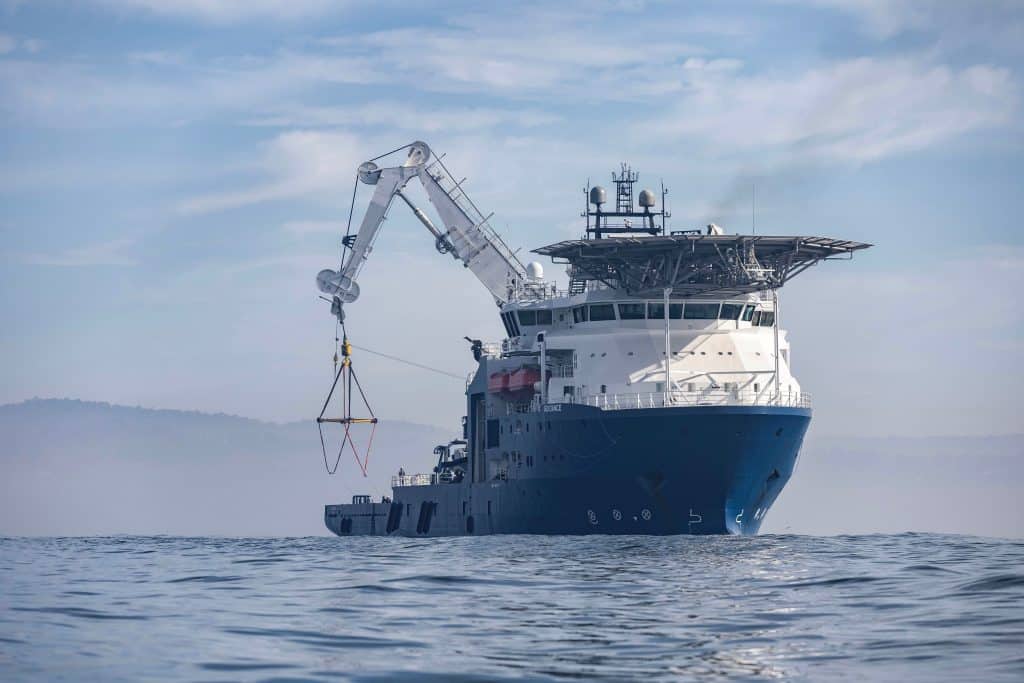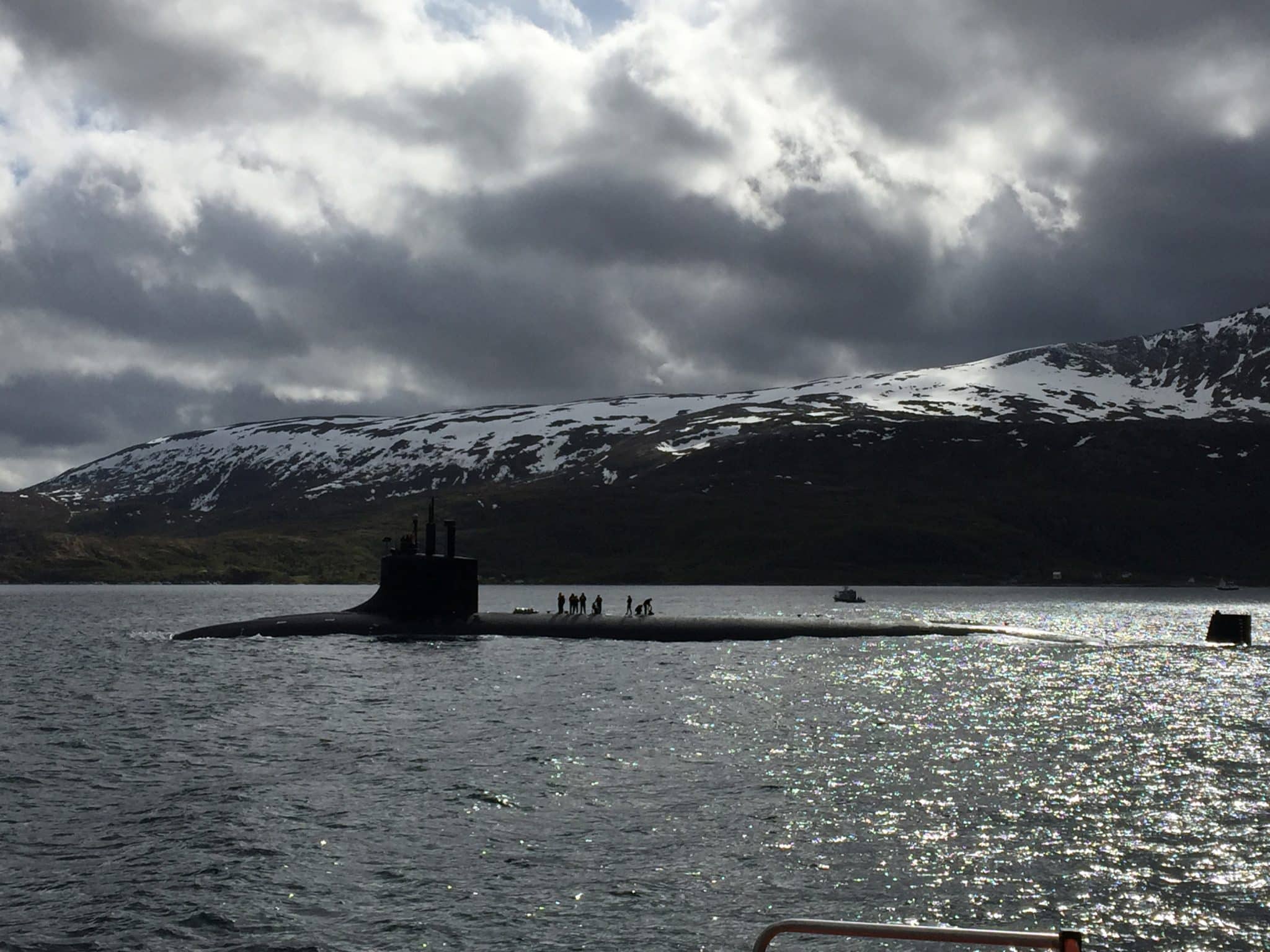
The US Navy (USN) is seeking “seabed superiority” in both offensive and defensive operations around the ocean floor as part of enhancing asymmetric advantage in underwater warfare, the USN’s Commander, Submarine Force (COMSUBFOR) told the annual Combined Naval Event 2026 (CNE26) conference.
Incidents of threats to critical undersea infrastructure (CUI) in the Baltic Sea and elsewhere across the Euro-Atlantic theatre have driven NATO submarine forces’ and other alliance assets’ focus on seabed security. However, alliance navies – in particular, the USN – have been actively developing capability and capacity to exploit the seabed domain in both defensive and offensive operational terms: this is critical in constructing NATO deterrence and defence against adversary underwater warfare developments.
For the USN itself, developing both defensive and offensive seabed warfare capability is a primary line of effort COMSUBFOR is delivering on, under the Chief of Naval Operations’ (CNO’s) ‘Fighting Instructions’ for generating an integrated battleforce.
“Today, as we’re talking, we are deploying seabed warfare capability. This is for survey. This is for attribution. This is for the full spectrum of operations, both defensive and offensive,” COMSUBFOR Vice Admiral Richard Seif told the CNE26 conference.
Vice Adm Seif is also responsible for the USN’s Atlantic-based submarine operations (as COMSUBFOR Atlantic), plus being the undersea domain lead, responsible for COMSUBFOR’s strategic vision, and principal undersea warfare advisor to all NATO strategic commanders (as Commander, Allied Submarine Command).
“On defensive and offensive seabed warfare capability, this really, really is a growth area and something we’re really moving out on,” Vice Adm Seif added. “On the offensive side, it’s the ability to dominate and have what I call ‘seabed superiority’.”
“We talk about sea control. We talk about air superiority. I’d like you to think in terms of dominating, controlling the undersea, controlling the seabed, and having seabed superiority,” he explained.
In aiming to achieve seabed superiority, Vice Adm Seif underlined two primary goals for the USN.
First, regarding delivering seabed warfare capability for both defensive and offensive operations, the admiral said “What we need to do is deliver it at scale and [generate] continuous presence and capability.”
“We have to normalize that, so it’s not an occasional ability or occasional capability: it’s something we can ‘plug and play’ all the time,” he continued.
Second, regarding delivering defensive and offensive seabed warfare operations, central to this is closing up ‘blue’ kill-chains and breaking up ‘red’ kill-chains, Vice Adm Seif explained.
The admiral added that defeating the ‘red’ kill-chain in securing CUI is a task that involves outputs like conducting seabed surveys, assessing change detection, and generating attribution, and can be considered in both defensive and offensive contexts, for example in delivering homeland defence of national exclusive economic zones (EEZs) or as forward-deployed capability to support combatant commanders, respectively.
Building defensive and offensive seabed warfare capability at scale also brings a change in conceptual thinking. There is strong focus amongst NATO navies on building wide-area surveillance and enhanced maritime domain awareness underwater, and this is key to helping scale up such capability. However, Vice Adm Seif explained, this needs to be layered with targeting capability and weapons capacity. “I want us to elevate this discussion,” he said. “I don’t want to be aware, I don’t want to surveil; I want to execute kill-chains. The way we’ll do that is all-domain, wide-area search capability, fully integrated and overlaid with targeting.”
“It’s all about the wide-area search capability – but not just the ability to search and find, but to execute the full kill-chain,” he added.
This includes assessing use of appropriate capability against the right target, for example using a straightforward munition to kill an uncrewed vehicle or sending a more exquisite system or platform against a ‘red’ command-and-control (C2) or targeting node.
One area of intent within the USN’s campaign plan to deliver on its strategic, operational, and tactical requirements in the underwater domain is integrating uncrewed and crewed platforms in a ‘hybrid’ fleet. “What that looks like to us is ‘teaming’,” Vice Adm Seif said.
“It’s systems that extend the reach of our crewed platforms; extend the reach of our theatre undersea warfare commanders. That could be torpedo-tube launch-and-recovered (TTL&R) vehicles. That could be other systems that increase payload and increase that reach,” the admiral continued. “It can also be controlling the seabed.”
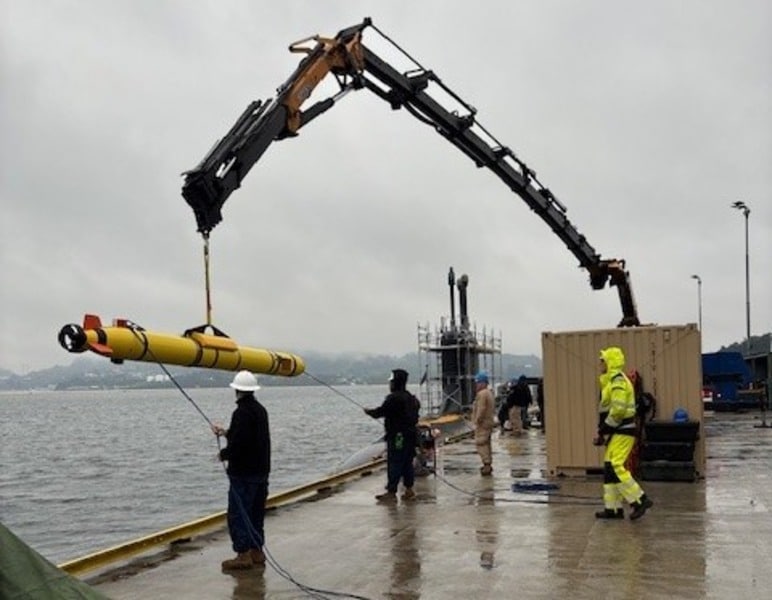
“We did sign out on a subsea/seabed warfare campaign plan specifically tailored towards uncrewed vehicles and uncrewed systems,” Vice Adm Seif said. He explained that the USN has the ‘full menu’ of uncrewed underwater vehicles (UUVs) to meet its needs, from man-portable systems deployed from a diver lock-out trunk on a submarine to extra-large UUVs (XLUUVs) that are effectively used as ‘payload trucks’.
Connecting these vehicles and developing effective C2 of them underwater is crucial, given the challenges of communicating underwater, he added.
The USN is also focusing on what industry can further provide to boost underwater capability. For example, as regards the growing TTL&R capability to operationally deploy UUVs from submarines, Vice Adm Seif noted that the navy is working with industry to generate effector and other payload options, alongside sensors. Such options could offer, for example, capability to deploy seabed markers like deep-ocean transponders that can support UUV navigation.
The final issue the admiral illustrated as an example of how the USN builds defensive and offensive seabed warfare capability is relations with allies and partners. “It’s an enduring capability we have in theatre. This gets right back to how we have to do this together with our allies and partners,” Vice Adm Seif said.
“We have long-standing relationships with some allies and partners that get after certain mission sets and capabilities … but I would say the sky is the limit, particularly in the subsea/seabed warfare area, as we have more emerging capability, and more emerging countries [operating capability],” he continued. “Our ability to integrate together is going to continue to grow.”
One underwater lesson learned from recent events in the Gulf regarding multinational co-operation, the admiral explained, is the need to be able to co-operate on tasks like mine-countermeasures operations in contested environments.
Naval News Comment
Central to the navy’s in-theatre seabed warfare capability in the Euro-Atlantic theatre is the Virginia-class nuclear-powered attack submarine (SSN) USS Delaware, which since 2025 has been operating there embarked with a REMUS 600 UUV deployed using TTL&R capability. The navy developed this set-up under its ‘Yellow Moray’ programme.
Such capability embarked in an SSN enables the boat to send out forward sensing presence into waters that are too shallow or deep for the submarine itself, and allows the submarine to prioritise tackling the tasks for which its exquisite skills are best suited, while the UUV conducts the ‘3-D’ (dull, dirty, and dangerous) tasks like sustained sensing across a wide area, a chokepoint, or an ASW barrier.
Reflecting allies’ input in helping to build sustainable presence and capability for defensive and offensive seabed operations, the UK Royal Navy has also recently tested a TTL&R UUV capability, from its Astute-class SSNs.