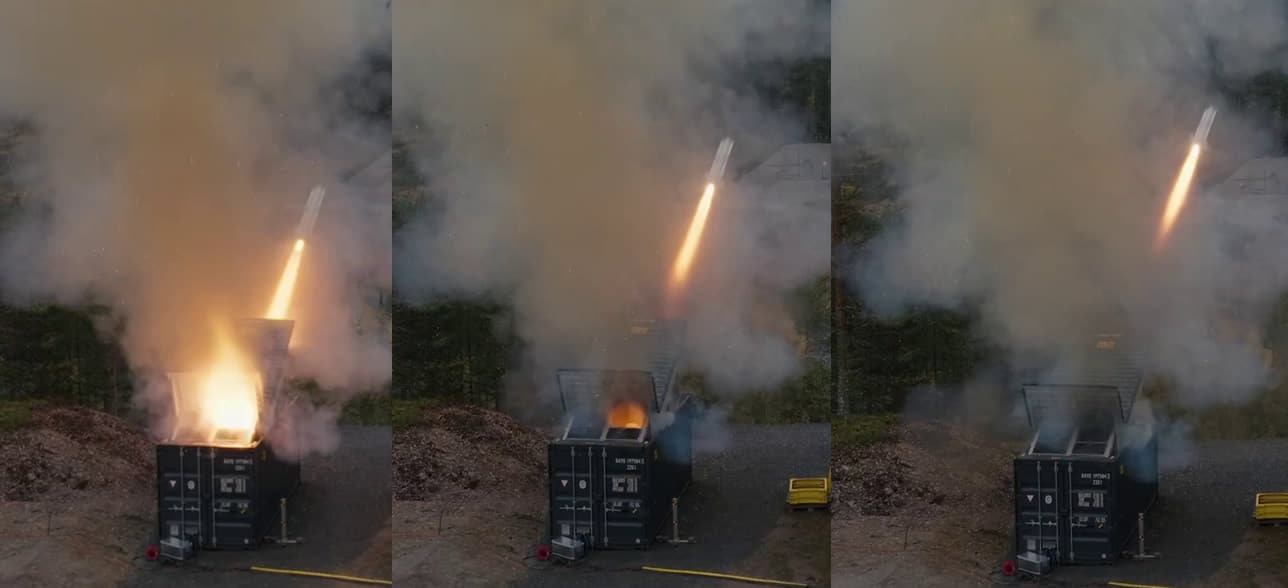
Kongsberg has successfully demonstrated a containerised Naval Strike Missile (NSM) transportation and launch system designed for rapid deployment to land sites, truck-mounted applications, or as a modular fit for maritime platforms.
The prototype installation, packaging four NSM missile canisters into a standard 20 ft ISO shipping container, was tested on an undisclosed military range facility in Norway at the start of October. The company-funded demonstration is intended to reduce time to market and serve as a risk reduction for potential customers seeking a ‘mission module’ solution.
In service or on order for 15 customers in both ship-based and coastal defence applications, NSM was originally developed by Kongsberg to meet the Royal Norwegian Navy’s requirements for a highly discriminative, low-observable surface-to-surface guided weapon able to penetrate shipboard defences and operate effectively in both blue water and littoral environments. Capable of ranges in excess of 250 km, NSM is a highly autonomous weapon combining GPS-aided midcourse guidance with an advanced dual-band imaging infrared seeker embedding automatic target recognition functionality.
According to Ståle Mortensson, vice-president business development and strategy in the Emerging Business unit of Kongsberg’s Missiles & Aerostructures business, the company’s decision to self-fund the prototyping and test of a mission module is reflects market interest in a containerised solution. “The ability to distribute and redeploy modules is a natural trend that is being followed by many customers,” he told Naval News.
“For us, this is a market development initiative under which we are making an early investment to reduce non-recurring engineering, and help potential customers understand how they could install and use such a capability. So it is about shortening the time to market, and reducing risk.”
Ståle Mortensson, vice-president business development and strategy
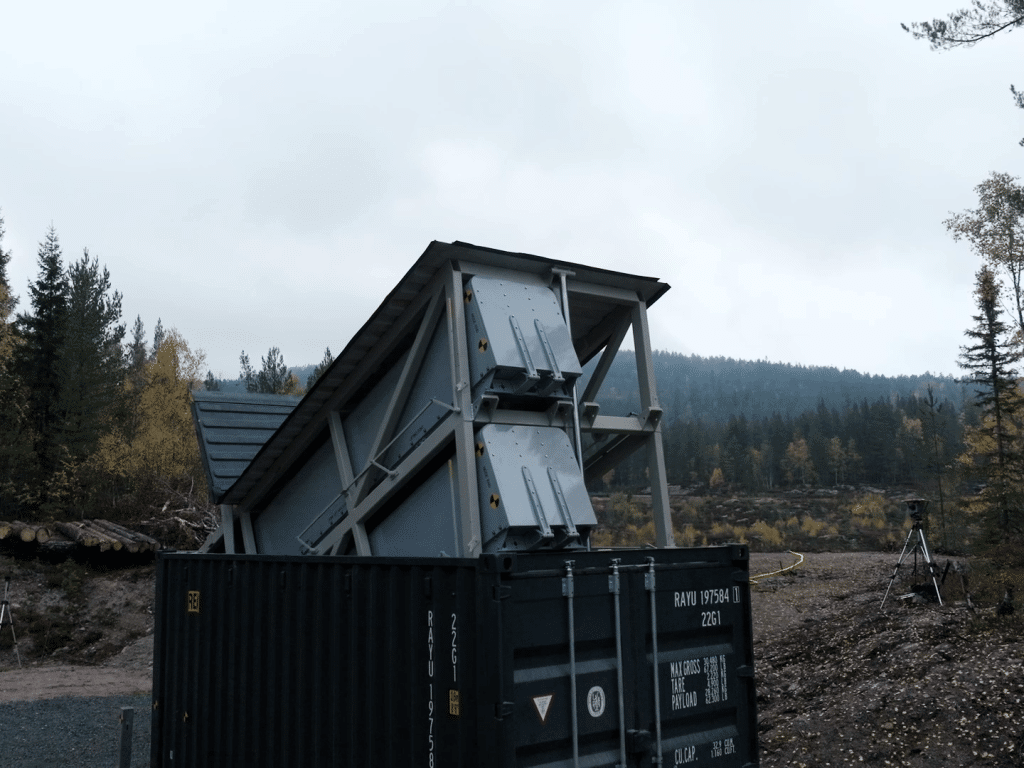
The prototype container installation built up by Kongsberg builds on the company’s prior work to package a four-pack NSM launcher, and associated Missile Firing Unit, into a truck-mounted coastal defence system. It has also been informed by the company’s involvement in the US Navy/Marine Expeditionary Ship Interdiction System programme, and ongoing work to integrate NSM into the Royal Danish Navy’s Standard Flex container system.
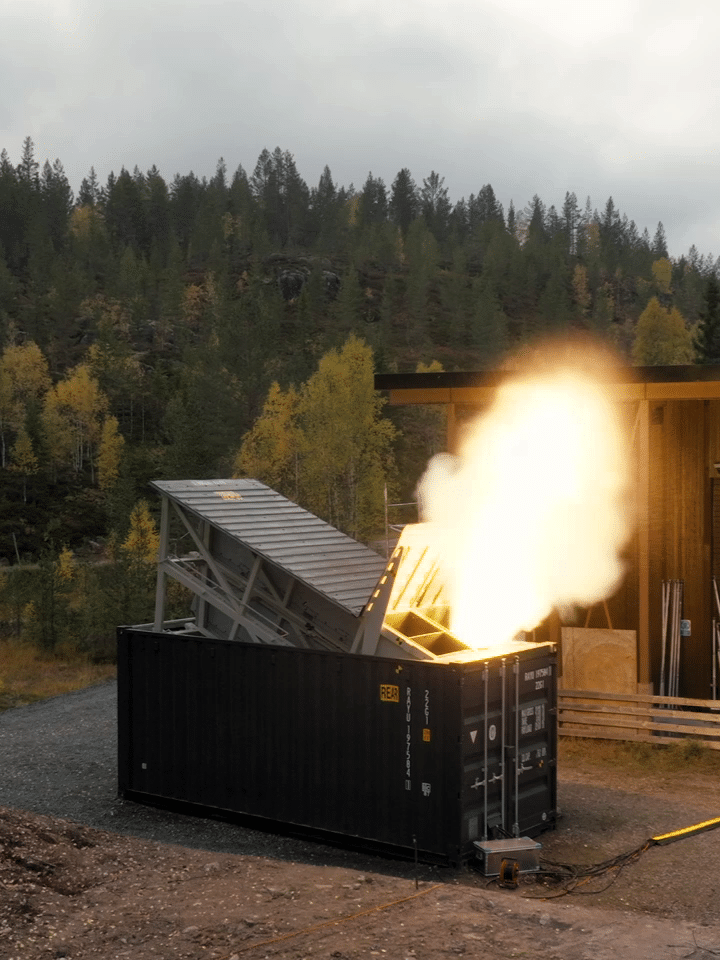
The 20 ft container installation accommodates four encanistered NSM missiles on an elevating structure. The container roof opens just prior to launch, allowing the launcher unit inside to raise, fire, then retract.
A live launch using a NSM Ballistic Test Vehicle was conducted at a firing range on 1 October. This was followed by a restrained firing to demonstrate blast management.
“We were able to package the full four-pack, the elevating mechanism and the blast management inside the container,” said Mortensson. “We also found room for a generator and an electronics compartment. Only the mission planning needs to be external.”
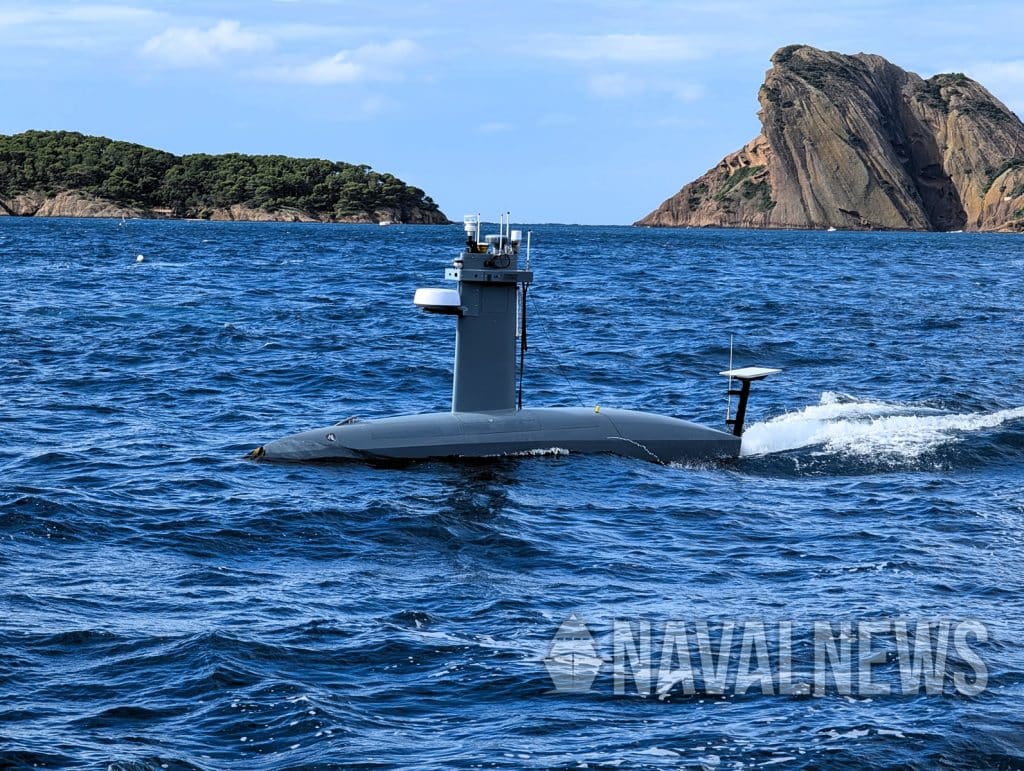
Kongsberg sees three main applications for container-based NSM installations; a mobile truck-mounted capability; for rapid deployment/redeployment to ground sites; and as a modular fit for both crewed and uncrewed vessels.
According to Mortensson, the performance observed from the prototype demonstration has left Kongsberg in a much better position to discuss the integration of an NSM mission module with platform OEMs. “On a ship, for example, it is very important to understand issues around footprint, installation and handling,” he said. “We are now better able to inform customers about ship design and topside impacts like securing points, blast management and fly-out angles.”