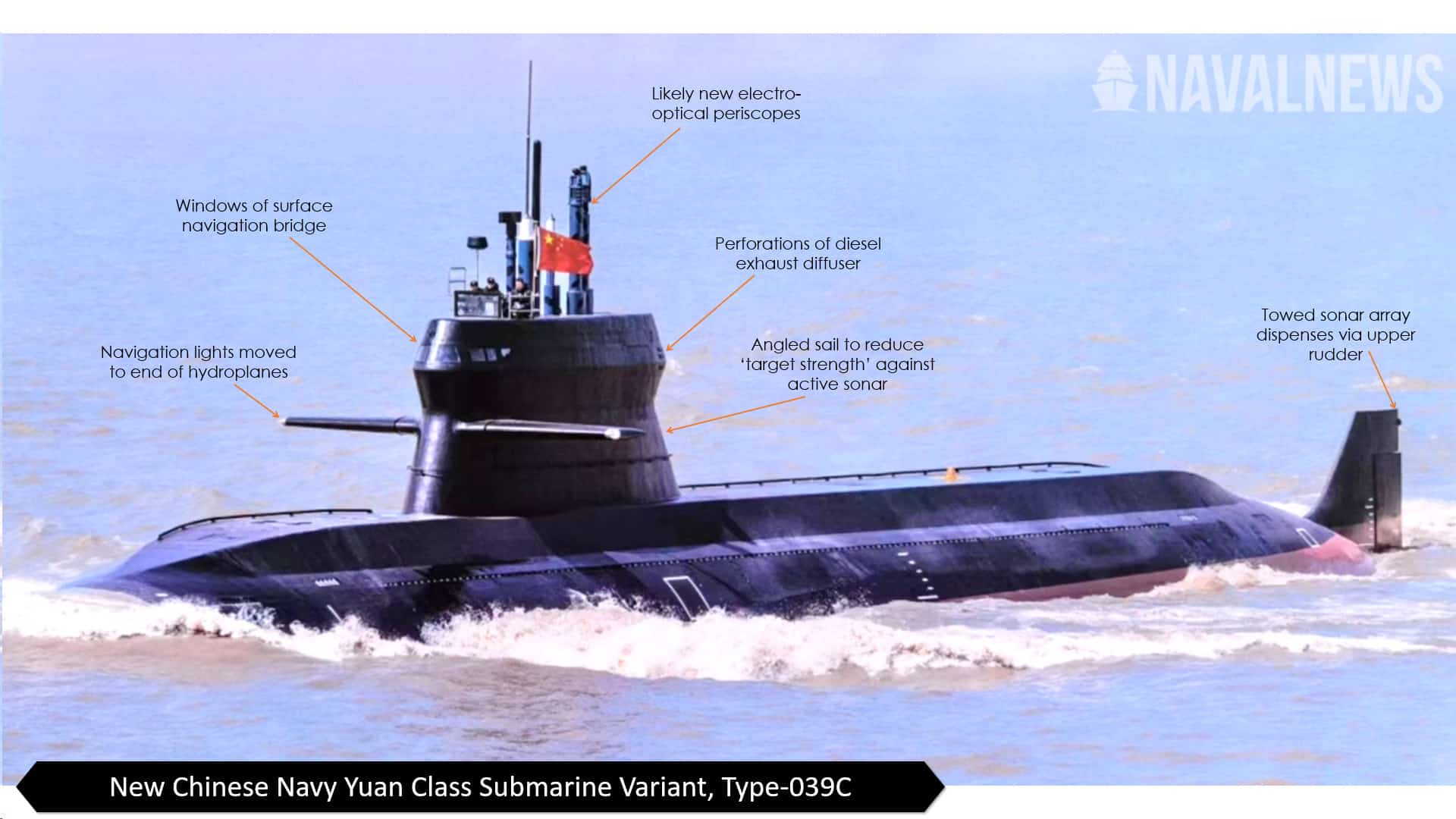
China is building submarines at an impressive rate and has the capacity to build them at levels unrivalled by any other country. The Yuan-class, their latest non-nuclear powered attack type, is the most numerous class of AIP (air-independent power) submarine in the world. And now these have been seen with new and unusually shaped sails, hinting at the implementation of advanced technologies.
It is now almost certain that the distinctive shape of the sail on the latest Type-039C Yuan class submarines is to increase survivability. The angled sides are a stealth defense; reducing the ‘signal strength’ of the submarine from the enemy’s active sonar.
This was already the leading explanation, but evidence has come to light to reinforce this assessment. Chinese academics published an analysis in the Polish based Archives of Acoustics journal. They measured the impact of the designs on sonar stealth. Their study used strikingly similar sail designs.
The Stealth Trend
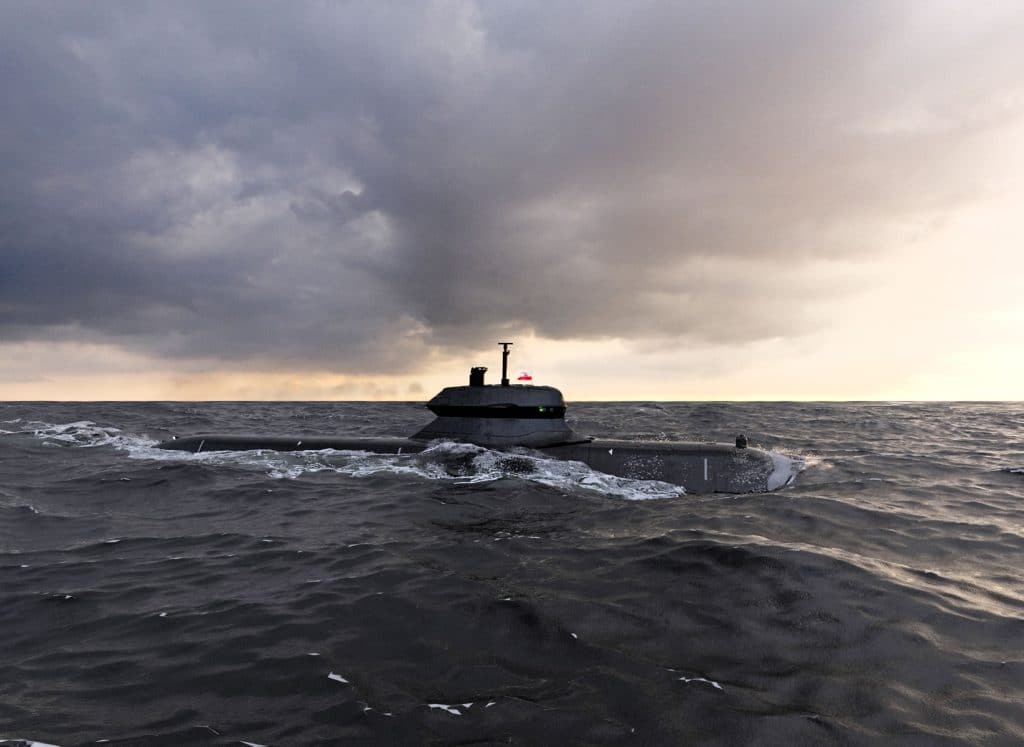
Angled stealth shaping is an emerging trend in submarine design. Similar principles will be found on Sweden’s A-26 class the next German submarine, the Type-212CD class. The A-26’s approach focuses on the sail in the same way as the Chinese sub. The 212CD takes it further but encasing the entire submarine in an angled outer hull. The additional outer hull will increase drag so it is clearly a trade-off the Germans feel comfortable making. Other submarines are expected to have similar thinking, but currently the Chinese boat is the only type in the water.
The trend reflects the growing importance of active sonar in undersea warfare. It is much more desirable to detect an enemy passively, by just listening, than at emit a sonar signal. Active sonar does this, bouncing sound off the target and measuring the rebounds. This means that the target can hear you long before you detect them, typically twice the distance.
During the Cold War, which is the era where most popular knowledge on submarines is rooted, passive sonar was king. However passive detection relies on the enemy submarine being noisy. As submarines have become ever quieter, passive detection has become less useful.
So active sonar is expected to play an increasing part in underwater warfare, even among submarines. At the same time, advances in uncrewed underwater vehicles (UUVs) offer navies a way to move the active sonar emitters away from the main submarine and onto an expendable drone. The tactics and technologies are still coming together, but the direction is clear. So it is not surprising that submarine designers are willing to sacrifice hydrodynamics to incorporate these new sail shapes.
Not An Invisibility Cloak
The size of the stealth features on the Chinese submarine suggest that it is intended to work against medium frequency sonars. It will be less effective against lower frequency sonars which have long wavelengths. But those only tell the enemy that something is there, not what it is. They will also be less effective against short wavelength sonars such as those on a torpedo. But that is also where the submarine’s other stealth feature, a rubberized anechoic coating, plays a part.
So we can deduce that the new stealth shaping is mainly aimed at complicating classification. Medium frequency active sonar can be used to classify or identify the target. With the new shaping the enemy will have difficulty determining the true nature of the submarine. This may cause delays or miscalculations which the submarine can use to its advantage.
The new shaping will only reduce the signal strength by a few decibels. Even so, combined with the sound absorbing rubber coating covering the flour side of the boat, it may be enough to save the submarine.