In a statement announcing the DCP – which is titled ‘Delivering the UK’s Nuclear Deterrent as a National Enterprise’ – the Ministry of Defence (MoD) reiterated that the UK will “sustain [its] nuclear deterrent for as long as it is required – maintaining the current in-service Vanguard fleet and sovereign warhead, while progressing with the new Dreadnought-class submarines, bringing them into service in the early 2030s, as well as developing a new replacement sovereign warhead”.
“The threats facing the UK and our allies are increasing in scale, complexity, and diversity, which is why our nuclear deterrent is as important now as it has ever been,” Secretary of State for Defence Grant Shapps said, in the statement. He added that the increasingly contested and volatile nature of international security were reinforcing this need.
The statement’s wording sent a deterrence message itself, reiterating the UK’s commitment to operating, maintaining, and replacing its submarine-based continuous at-sea deterrent (CASD) capability.
In the DCP, Shapps outlined the rising global nuclear risks. He noted Russia’s use of nuclear rhetoric in its war with Ukraine, China’s expanding nuclear weapons numbers and capabilities, North Korean nuclear sabre-rattling, and Iran’s production of highly enriched uranium. In this strategic context, the UK’s CASD-based deterrent counters threats to both national and NATO interests.
The DCP also reiterated the UK’s nuclear deterrent posture. “The purpose of nuclear deterrence is to preserve peace, prevent coercion, and deter aggression. A credible, independent nuclear deterrent remains essential to guarantee our security,” it stated.
The DCP set out the UK’s long-term approach to delivering its nuclear deterrent requirement. Key components of this approach include investing in:
- the UK’s sole submarine-building shipyard at Barrow-in-Furness;
- other parts of the submarine-based deterrent capability infrastructure, including the boats’ home port at HM Naval Base Clyde, Faslane,
- the Atomic Weapons Establishment (AWE) at Aldermaston, Berkshire;
and core skills required to design, build, operate, and maintain the submarines and other capability elements, with these skills including specialist scientists, engineers, welders, and project managers as well as UK Royal Navy (RN) submariners.
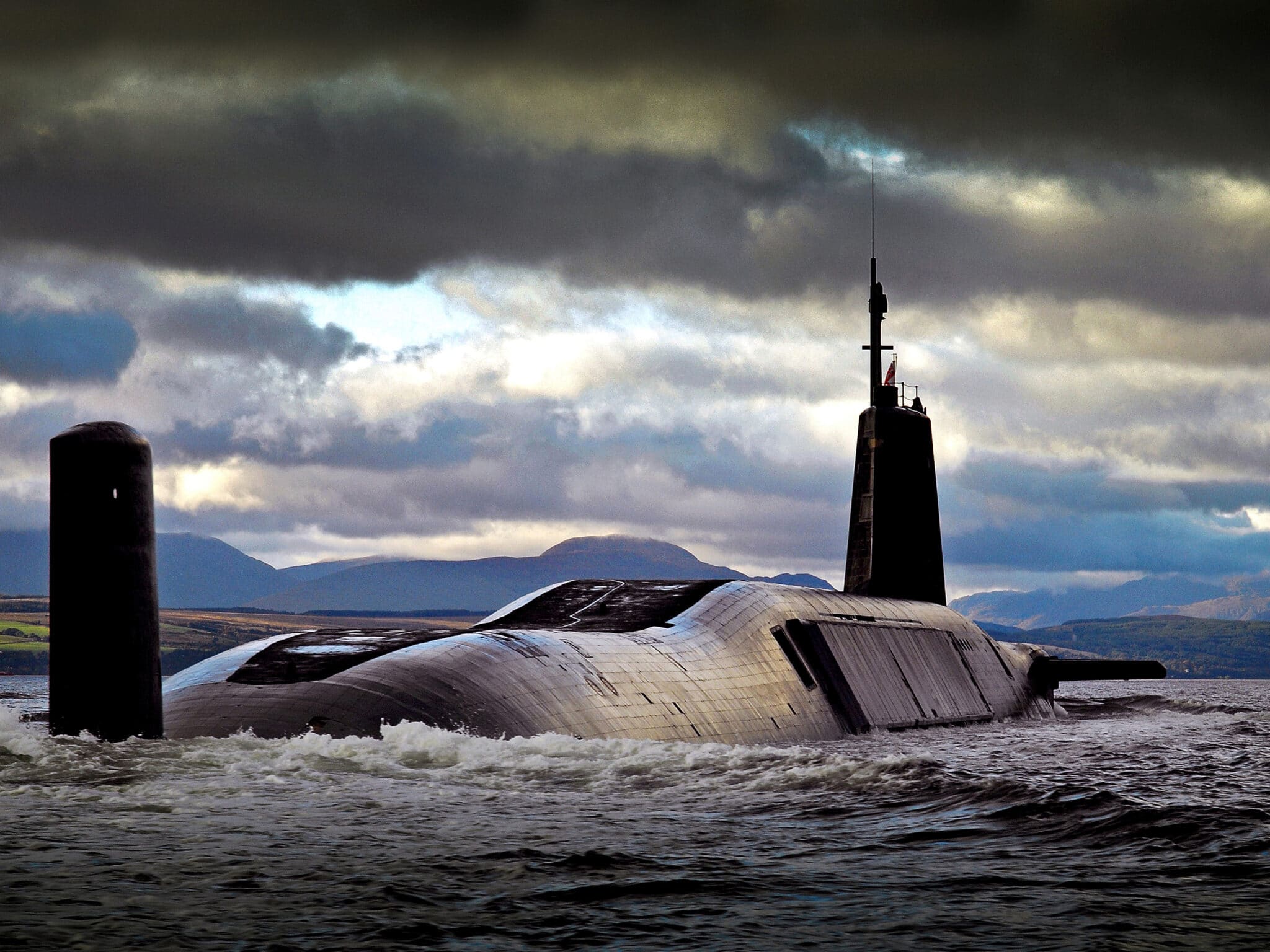
The core components of the UK’s CASD-based deterrent are: four nuclear-powered ballistic missile submarines (SSBNs), with one permanently on patrol; the Lockheed Martin Trident II D-5 submarine-launched ballistic missile (SLBM); and a UK-designed and -built warhead fitted to the missiles.

The DCP reiterated the UK’s commitment to replacing the four in-service Vanguard-class SSBNs with four Dreadnought-class SSBNs, with the first new boat due on patrol in the early 2030s. Here, underlining the need to retain the deterrent capability, the DCP noted, “[the UK is] now in a period of heightened risk and volatility that is likely to last beyond the 2030s.”
The Trident missiles onboard the new boats will carry a new warhead. The UK has already updated its existing warhead, completing transition in 2023 from the Mk4 to the Mk4A with the replacement of non-nuclear components, the DCP noted. It added that AWE is already developing a new warhead as a long-term capability, under the Replacement Warhead Programme, with the warhead known as the Astraea A21/Mk7. This new capability will take advantage of improved technology and manufacturing, delivering a design to meet future threats and be safety-assured through-life.
As regards infrastructure, the DCP noted that ongoing work at Faslane is delivering additional dock and maintenance berthing spaces, plus state-of-the-art submarine training facilities, as part of readying the base not only for Dreadnought but for the RN’s next-generation nuclear-powered attack submarine (SSN), to be built under the Australia/UK/US AUKUS strategic partnership.

As regards core skills across the personnel side of the enterprise, the DCP noted that the RN is a member of the nuclear skills taskforce (NSTF). It underlined that the RN will seek to increase submarine service recruitment, and improve retention by enhancing access to nuclear sector-wide opportunities to enable submariners to ‘zig-zag’ careers between the submarine service and industry. The DCP also highlighted the RN’s investment in state-of-the-art facilities, including training simulators, to enhance a submariner’s skillset and cross-sector career appeal.
Submarine service recruitment and retention remain core focus areas for the RN. According to recent media reports, submarines on CASD patrol have been deploying for more than 200 days, compared to habitual patrols of usually half that time. This points to possible recruitment and retention pressures, and the need to improve availability across the in-service Vanguard boats.