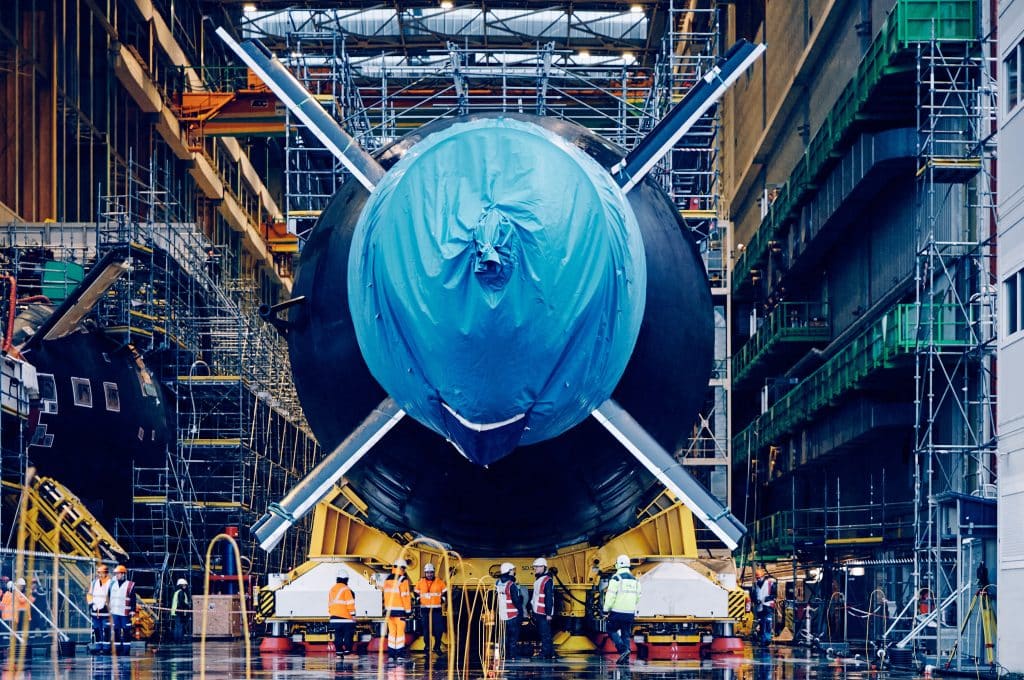
The 2025 edition of Exercise Mare Aperto, the ambitious training event of Italy’s Defence in the maritime domain, has concluded on April 18, after three weeks of high-intensity activities in the Central Mediterranean. A composite fleet of over 100 assets among ships, submarines, aircraft, helicopters, surface, underwater and air unmanned assets and vehicles belonging to eight NATO countries took part, along with the participation of over 6,000 military personnel and observers from 27 international navies.
Conducted by the Italian Navy, “this year edition stood out for its innovation, complexity and operational relevance. A real stress test for the naval units and all the Departments involved, engaged in an integrated and synergic way in all its components: from the crews of the naval and underwater platforms to the flight groups and detachments, from the riflemen of the San Marco Marine Brigade to the staff of the Commander in Chief, of the complex and specialized Commands, from the communication centres to the logistical and maintenance support bodies,” said the Italian Navy conclusive press statement.
“The Exercise Mare Aperto edition 2025 has confirmed itself as a virtuous model of international, joint and inter-agency cooperation,” said the Italian Navy. In addition to the contribution of Italian Air Force and Army, Carabinieri, Guardia di Finanza and Italian Coast Guard, among the international actors, Mare Aperto 25 saw the participation of the Permanent NATO Naval Groups – the Standing NATO Maritime Group 2 and the Standing NATO Mine Counter Measures Group 2 – alongside the European Maritime Force (EUROMARFOR), which operated jointly, strengthening interoperability in a multinational context. In this perspective, Exercise Mare Aperto took place in conjunction with the NATO enhanced vigilance activity Neptune Strike, under the guidance of the STRIKFORNATO Allied Command, “confirming the full integration of the Italian Navy, as a pillar of national Defence, in the allied complex and its operational readiness in a multilevel context,” stressed the statement.

“The exercise developed in a high-intensity scenario, pushing each asset to the limit of its operational capabilities. Particular emphasis was given to the planning and conduct of the manoeuvre, carried out according to the NATO methodology, with a flexible, reactive and effective approach in generating effects. The staff involved operated in a dynamic context, characterized by tight rhythms, increasing complexity and the need for continuous adaptation, enhancing professional skills and interoperability between forces,” highlighted the planning cell.
The Exercise was conducted in the Central Mediterranean waters and airspace, mainly in the Tyrrhenian Sea and around the coasts of Sardinia and its main ports, in river environment near Rome, with a large-scale CBRN (Chemical, Biological, Radiological and Nuclear) exercise, which involved a broad spectrum of actors both at sea and ashore at Civitavecchia port. Conducted yearly, Mare Aperto registers the usual participation of almost all the Italian Navy Fleet except for ships and submarines participating to national and international operations alongside assets under maintenance or in port. As an example of everyday activities, the Italian Navy currently has seven of eight in service Bergamini-class FREMM frigate operational around the Mediterranean and other Ocean basins.

Delivered in early December 2024, particularly significant was the participation, for the first time, of the multi-role amphibious assault ship (LHD) Trieste, protagonist of the operations conducted in synergy with the other units of the Amphibious Task Group (ATG), the San Giorgio, San Marco and San Giusto LPDs. The landing force operated according to the principles of Distributed Maritime Operations (DMO), with the participation of the Italian Navy’s San Marco Marine Brigade and Italian Army’s Pozzuolo del Friuli Brigade units including the Lagunari Regiment, conducting assaults in the coastal area of Capo Teulada range (Sardinia) and river environments, as demonstrated by the activities along the Tiber river and Italian Navy’s operational headquarters at Santa Rosa area near Rome.
For the first time, according to the statement, the Trieste operated alongside the aircraft carrier Cavour, marking a crucial step in strengthening the Navy’s expeditionary capacity. “With a Carrier Strike Group equipped with fifth-generation F-35B aircraft (alongside AV-8B Harrier II Plus) and an Amphibious Task Group based on a latest-generation major platform, Italy confirms its position among the few nations capable of expressing a true Expeditionary Strike Group (ESG), consolidating its role as a credible player in security, stability and deterrence at an international level,” underlined the statement.
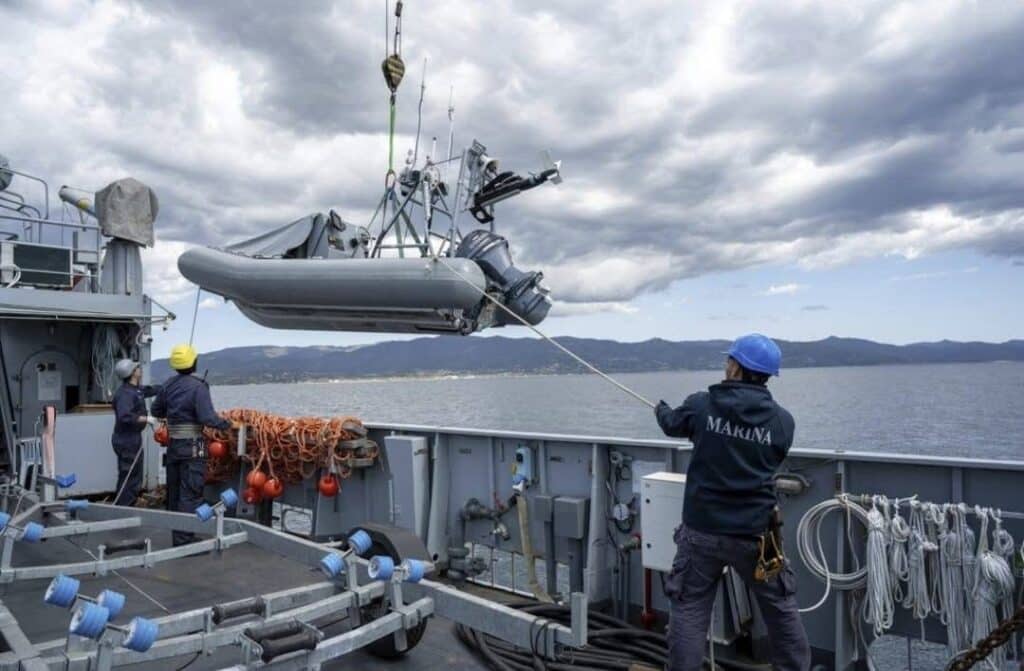
The two main Italian Navy’s Fleet platforms were sided by a composite fleet including the Doria, Duilio and Mimbelli guided-missile destroyers, an undisclosed number of submarines among which the U212A Venuti, Sauro modernized Gazzana and Longobardo but also other U212As as Naval News understood, the logistic support vessels Vulcano and Etna, the Thaon di Revel PPA/MPCS, Bergamini-class FREMM frigates (Bergamini, Carabiniere, Alpino, Margottini) and the two Comandanti-class Cigala Fulgosi and Foscari OPVs, alongside the Alghero, Rimini and Viareggio Gaeta-class MCMVs and the Gorgona-class auxiliary units Caprera and Capri. These were sided by the assets of the SNMG2 including the Turkish frigates Kemalreis and Gaziantep, Spanish Navy Álvaro de Bazán frigate and Patiño replenishment vessel, the SNMCG 2 with the participation of Turkish Navy Güngör Durmus support vessel and the MCMVs from the Turkish (Akçay), Spanish (Duero), Greek (Evropi) and French (Céphée) and Italian (Numana) Navies, alongside the European Maritime Force (EUROMARFOR) headed by the Italian Navy Bergamini FREMM frigate already mentioned, and the Portuguese frigate Francisco de Almeida.
One of the distinctive elements of the 2025 edition, emphasized the statement, “was the ability to combine operational realism and changing environmental conditions, which made the training even more adherent to real scenarios, testing the adaptability of the departments even in challenging weather conditions.”
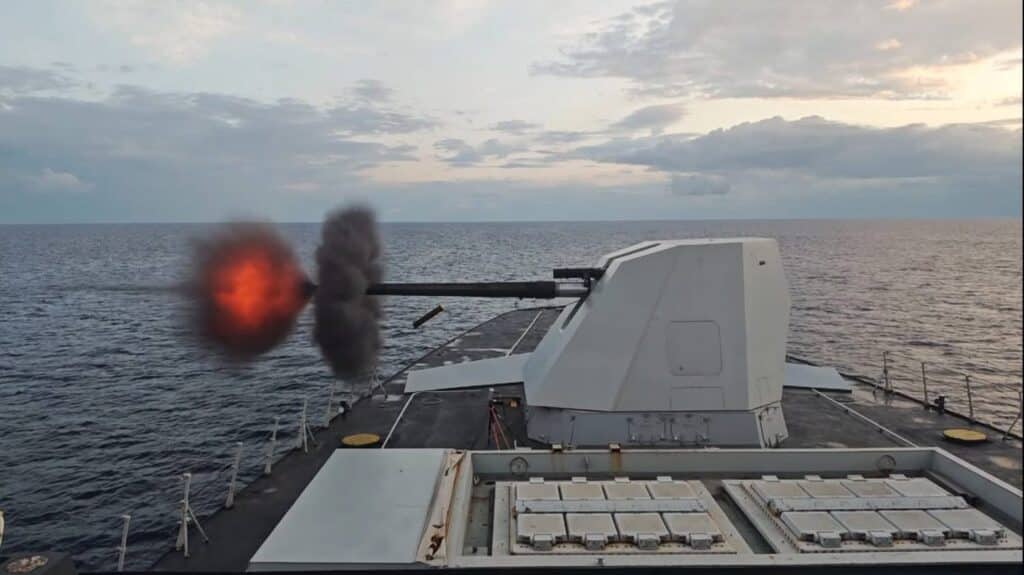
Among the main innovations, “the introduction of new naval and air targets for live-fire exercises, including at night, increased the realism of the training activities.” According to the video and images released during the Mare Aperto 2025 activities, Italian Navy frigates, destroyers and MPCSs were pictured with the Leonardo 127 LW, Super Rapido and Compatto main guns shooting to current and new air targets including Banshee Whirlwinds and J80s alongside Snipes from UK QinetiQ company, and surface target such as the used LCATT and new Hammerhead Mk IIs also by QinetiQ. The emphasis on electronic warfare, with the use of missile seeker simulators and the activation of countermeasures, allowed the crews to effectively deal with complex threats.

Particular attention was devoted to the protection of underwater national infrastructures and line of communications within the Exercise ITAMINEX 2025 dedicated mainly to mine countermeasure’s operations with the participation of Italian Navy’s MCM Command and NATO SNMCG 2 assets already mentioned as well as Italian Navy’s auxiliary vessels embarking both underwater and surface unmanned vehicles. The manned and unmanned assets were operated in simulated training scenarios and in real clearance activities, leading to the discovery of 13 unexploded ordnance dating back the Second World War. According to the Italian Navy statement, four of them have already been safely neutralized, while clearance operations are underway for the remainder, which will be completed in the weeks after the exercise conclusion with the involvement of the competent local authorities.
Among the most significant challenges, the Italian Navy reports “the testing of alternative communication systems in the absence of satellite support has allowed testing the resilience and autonomy of operational networks in contexts with degraded connectivity. Central, moreover, is the integrated approach to the cyber and space domains, which are increasingly decisive in the conduct of modern operations.”
Great attention was paid to the cognitive dimension, according to Italian Navy. “Cognitive warfare activities, among the most complex demonstration of hybrid threats, were at the centre of a scenario that saw, for the first time, the introduction of wargaming as a tool for analysis and decision support.” This context also included the experimental adoption of simulated social platforms, through which crews, staff, research centres of Centro Alti Studi Difesa (CASD), Centro Studi Internazionali (Ce.S.I.), Centro Studi di Geopolitica e Strategia Marittima (CeSMar) and university students, were confronted with communication dynamics typical of the information domain. “An activity that reflects the ongoing technological evolution and the commitment to the proactive management of hybrid threats, particularly in the cognitive sphere, confirming the Italian Navy’s desire to promote interaction between the operational and academic dimensions.”
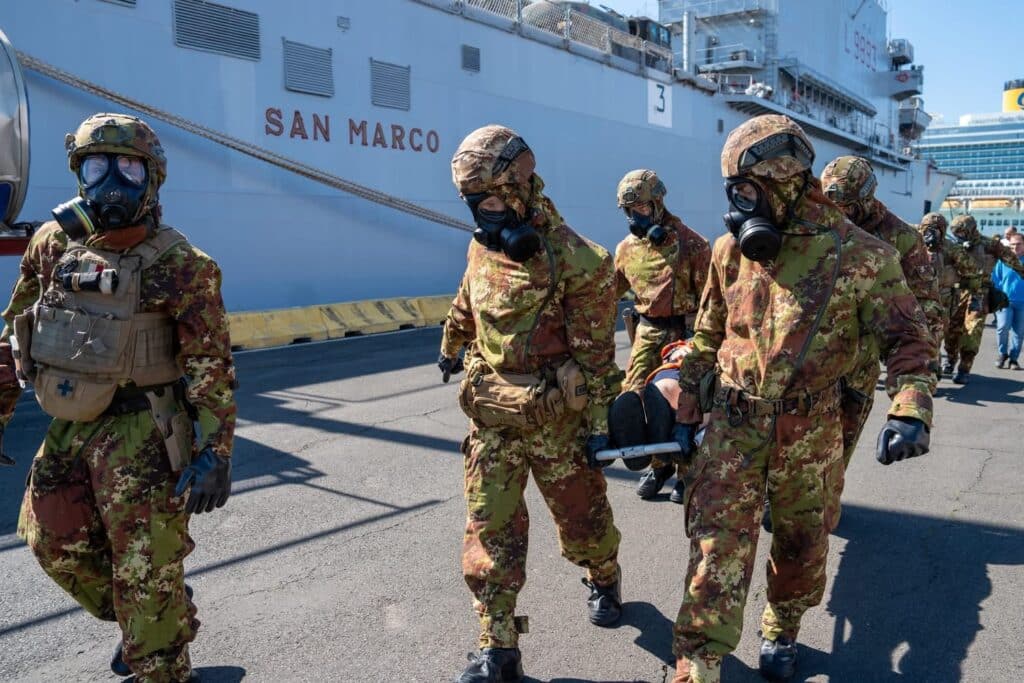
On the joint and inter-agency side, the Italian Air Force contributed to the Exercise Mare Aperto alongside the Italian Army and Carabinieri. A large six-day long CBRN exercise (8-14 April) was conducted among the Central Tyrrhenian Sea and Rome area with the participation of Italian Armed Forces, Civil Protection, Fire Brigade and other civil agencies, simulating a terrorist attack with injuries on a civilian ferry. As part of the exercise, the latter was boarded at sea by San Marco marine teams but while the terrorists have already left, traces of radioactive material were found on the ship requiring the intervention of the Multirole Exploitation and Reconnaissance Team (MERT) of the Italian Army’s 7° regiment CBRN Cremona which ascertained the attack nature while personnel simulating passengers were treated at Civitavecchia port on board the San Giorgio LPD. Intelligence activity brought to the interception and the neutralization of the terrorist group by San Marco Marine teams alongside the Tiber river with the cooperation of Italian Army units and the recovery of the chemical agent with the support of a Carabinieri specialized unit and unmanned systems. “A choral commitment that demonstrated the effectiveness of the country system in managing complex emergencies, to protect national security and the community.”
From a logistical point of view, the exercise highlighted the effectiveness of the synergy between operations and support: from the teams of embarked technicians to the naval supplies of fuel, materials and ammunition, to the full involvement of the Logistics Command and the national industry. “A result that confirms the ability of the Navy to prepare and support a complex, interconnected maritime force ready to face the challenges of the present and the future.”