The U.S. Marine Corps performed its first Indo-Pacific anti-submarine warfare operations off the deck of USS George Washington (CVN 73) and USS America (LHA 6), an important test that validates long-range Osprey tiltrotor aircraft in the anti-submarine mission set. The addition of the MV-22B as an anti-submarine warfare platform allows for farther reach compared to Navy MH-60Rs that currently perform anti-submarine warfare work from deployed ships.
The test, which took place in the Philippine Sea, paired a Marine Corps MV-22B with two Navy MH-60R Seahawks, part of a larger America ESG and George Washington CSG team.
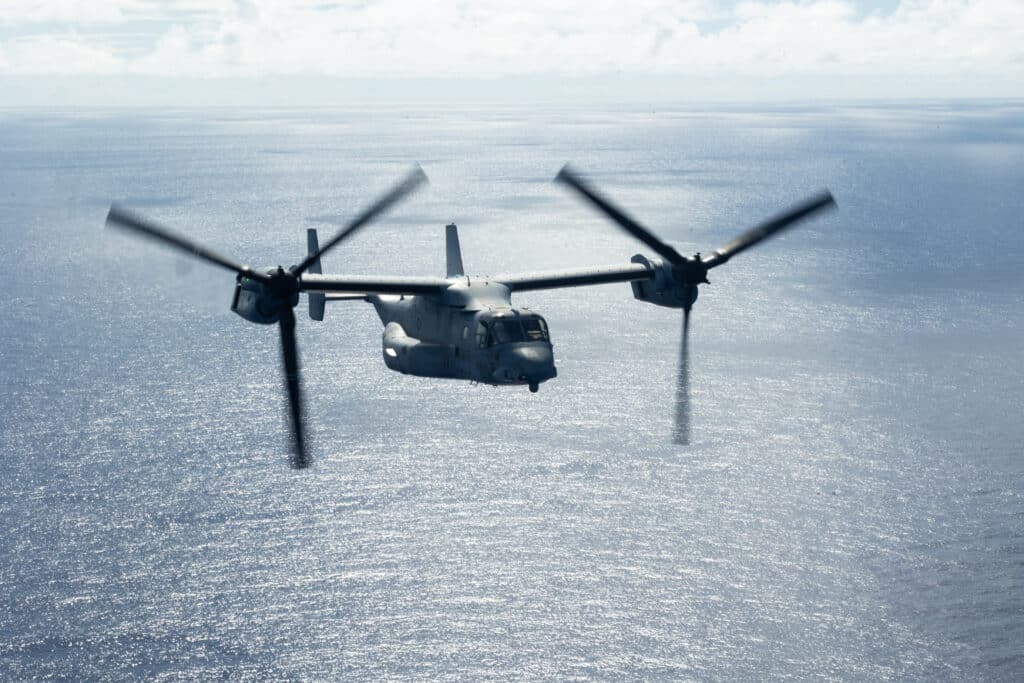
“The Marine Corps has spent the past five years re tooling to fight in the Pacific and the submarine threat can’t be ignored. The MV-22B complements the Navy’s capabilities so well that it’s hard to believe this wasn’t thought of sooner. We’ve validated the utility of both amphibious warships and littoral forces, demonstrating the ability to fight as the landward component of the fleet.”
Colonel Niedziocha, Commanding Officer, 31st Marine Expeditionary Unit
The Marine MV-22B loaded AN/SSQ-62F DICASS sonobuoys while onboard the George Washington, the latest generation of directional command active sonobuoys built by Ultra Maritime.
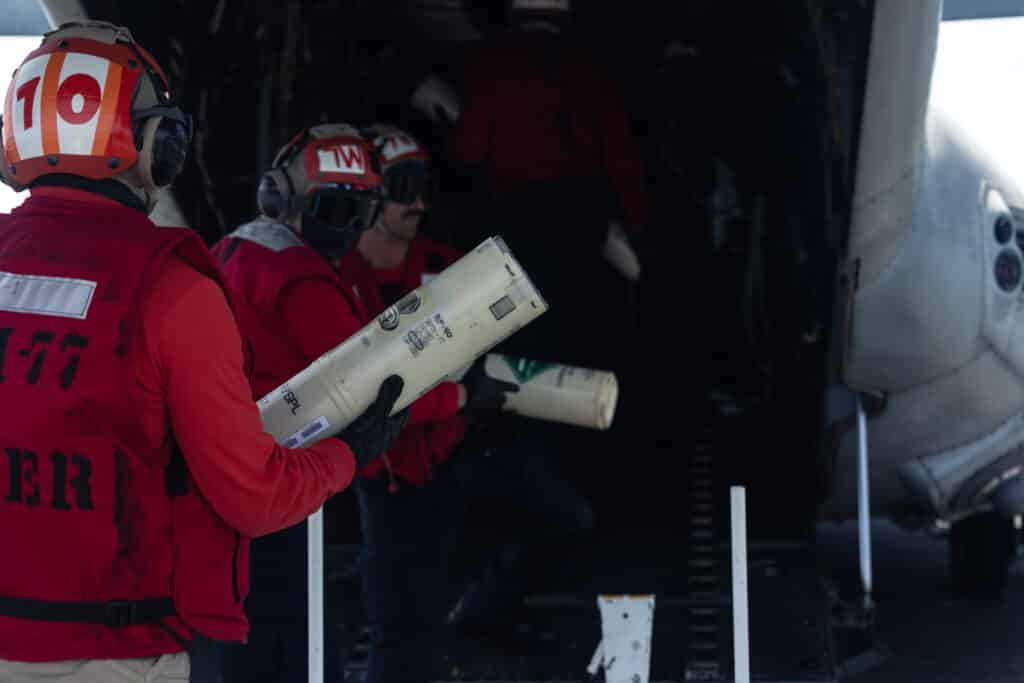
The U.S. Marine Corps and U.S. Navy did not disclose specifics of the anti-submarine warfare test. It is the second known test of the MV-22B with sonobuoy deployments.
According to the Marine Corps, pairing anti-submarine warfare capabilities with the MV-22B “leverages the unique range, speed, and carrying capacity capabilities of the MV-22B through the deployment of advanced sensors and integration with U.S. Navy capabilities, allowing for rapid response and persistent surveillance”.