The NATO Seasparrow Project Office is seeking next-generation variant in the long-running series of interceptors amid modern air and missile threats from Russia and China, according to new documents.
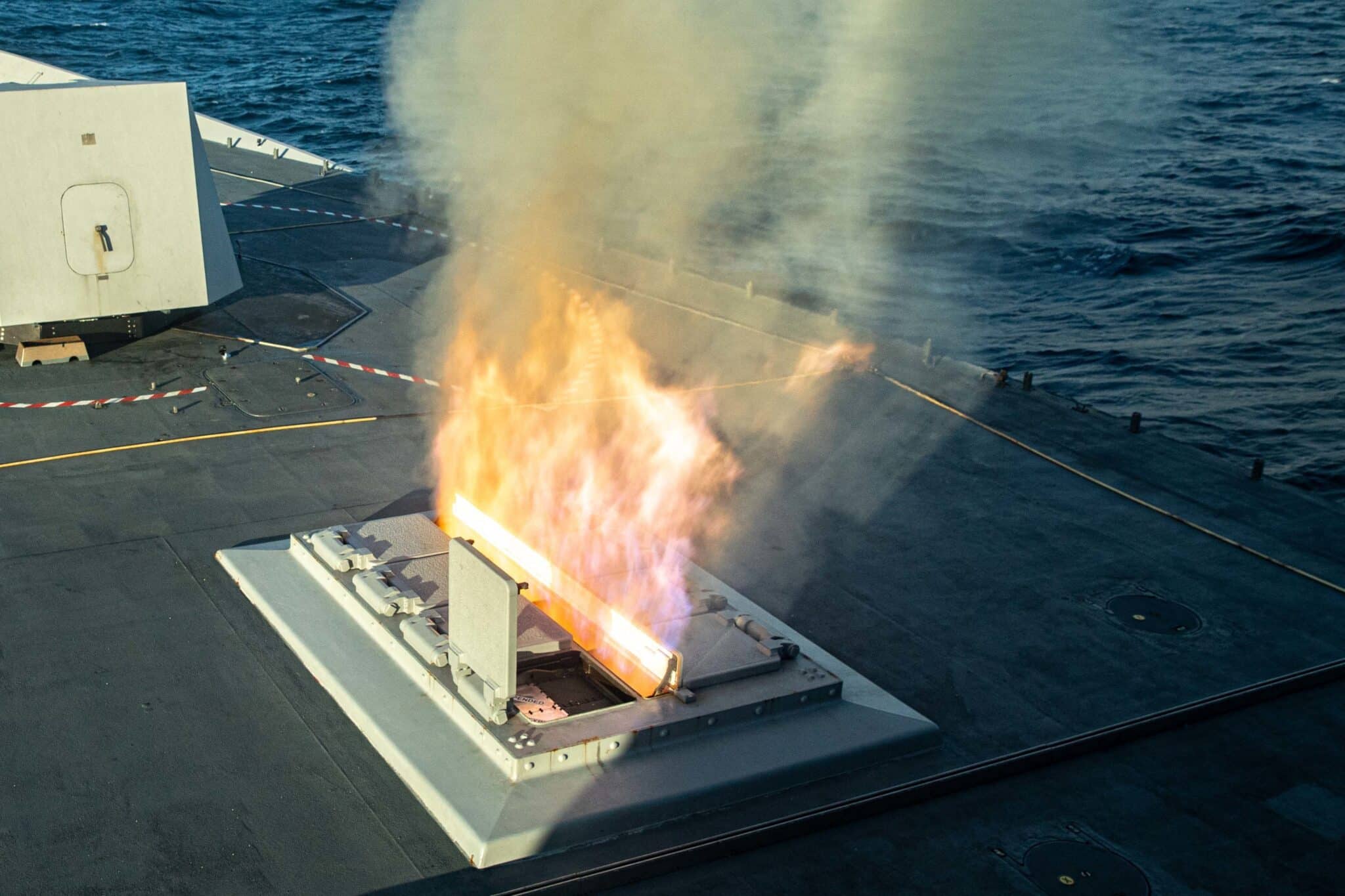
An industry day notice from the office dubbed the future missile as Next Significant Variant. The Evolved Seasparrow Missile (ESSM) Block II successor is expected “to engage current and future threats.” This missile should also maintain the same ten-inch-diameter that allows existing ESSMs to be quad-packed into the Mark 41 vertical launching system and Mk.29 trainable launchers. ESSM Block II has a top speed over Mach four and can intercept targets out to 50 kilometers, according to RTX, formerly known as Raytheon.
“Drivers for development include stressing simultaneous engagement scenarios, the need to develop fully releasable technologies using open architecture standards for all consortium partners to openly share, and the need to maintain capability with current consortium systems to the greatest extent possible while limiting ship support,” reads the document.
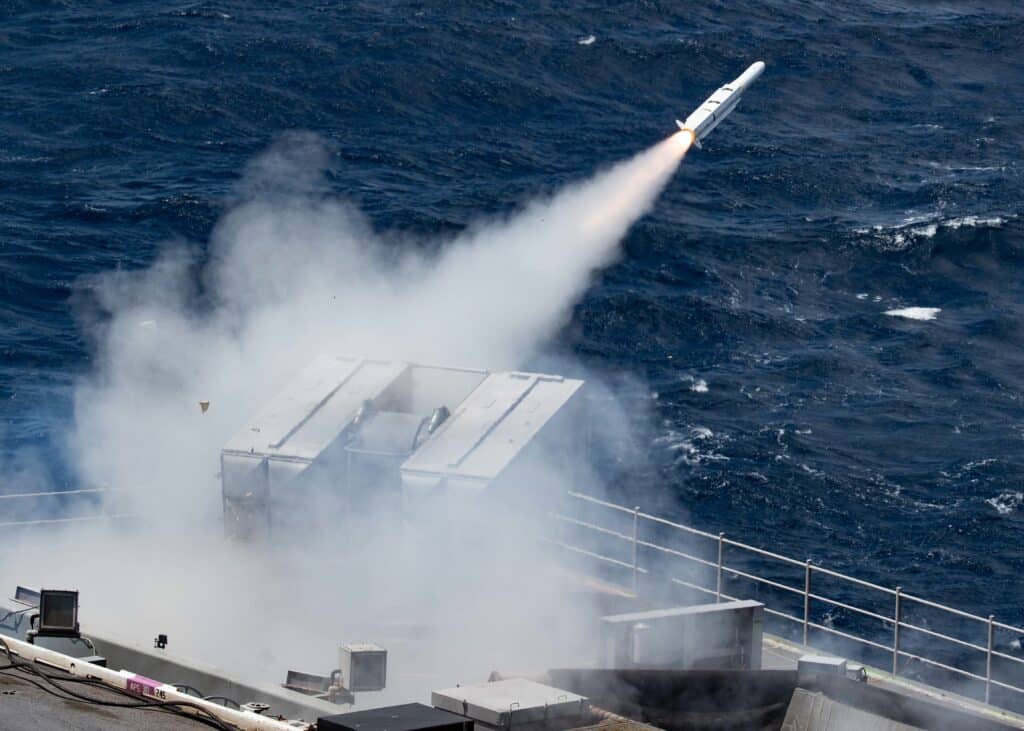
RTX has constructed and designed the Seasparrow and ESSM variants of the consortium since the 1960s in collaboration with international partners across the 12-nation-group. These missiles, which were designed to provide warships with a defense against anti-ship missiles and aircraft, have armed navies across the world for decades. Today, missile from the project office are fielded on frigates, destroyers, amphibious assault ships, and aircraft carriers. The need for effective interceptors has only grown amid the proliferation of missiles and low-cost unmanned aerial vehicles, which have wrecked havoc in the Red Sea and Ukraine in recent years.
Demand for Seasparrow missiles has increased in-line with contemporary threats, including a $250 million contract from Japan’s Mitsubishi Electric Corporation (MELCO) for ESSM Block 2 licensed production in June.
NATO and U.S. fleets have also faced renewed Russian and Chinese missile threats, particularly in the realm of supersonics, ballistics, and hypersonics. While the industry day notice did not specify what threats the Seasparrow successor would tackle, it did note that these details would be addressed in a classified briefing.