After providing an overview of the French Navy’s largest exercise, POLARIS, Naval News shares final feedback on the event and offers insights into the naval combat operations conducted, including an amphibious landing witnessed firsthand.
As mentioned in the first part, the POLARIS exercises seek to make naval combat as realistic as possible, and as a result concede nothing about the outcome of the ships involved in the scenario, where almost any move is permitted within the constraints previously indicated. Naval News was also able to witness a troop landing manoeuvre.
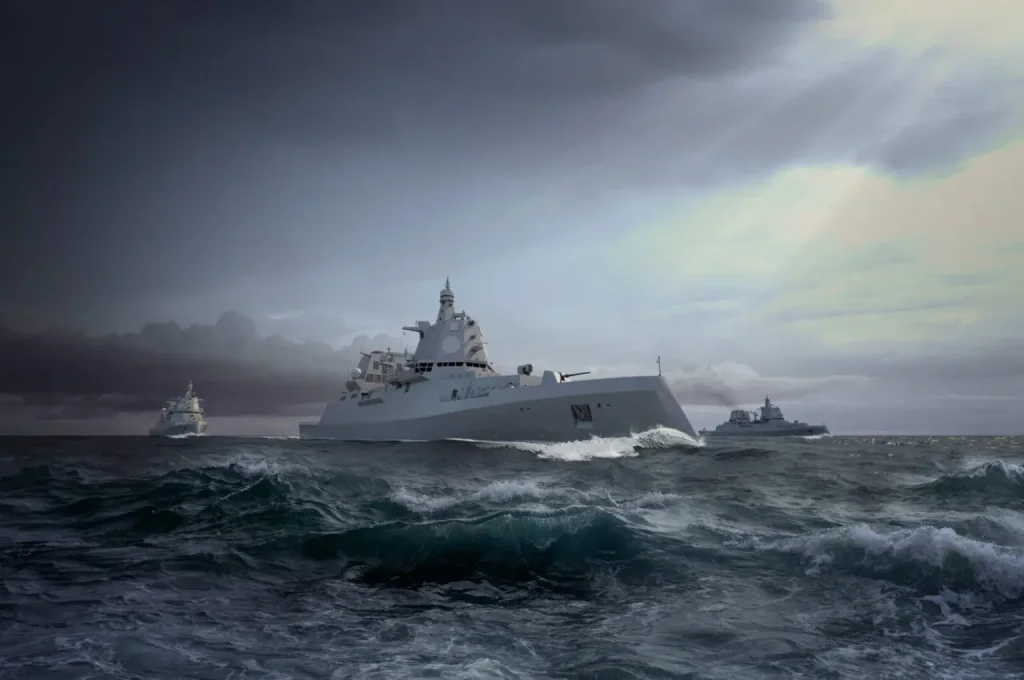
To pit two roughly equal forces against each other in the naval combat phase, the French Navy (Marine Nationale) called on NATO’s SNMG 1, made up of 6 ships reinforced by a French Suffren-class submarine, which played the ‘red force’. The ‘blue force’ was made up of 5 frigates and 5 LHDs. In addition to these surface units, ATL2 MPAs, Rafales Marine from the French Navy and the French Air and Space Force, special forces from the French Navy and helicopters and infantry from the French Army were also present.
Intense naval combat

During the press conference, the officers in charge of the scenario revealed a few details of the combat and some feedback from the exercise. However, the final outcome and the tactics employed remain confidential.
The scenario described a country taken over by paramilitary forces and assisted by a foreign force. The objective of the blue force was to regain control of strategic points. To achieve this, a red force had to be defeated at sea, so that the coasts could be secured and troops landed on the ground to liberate the strategic locations.
During the second phase – phase of the naval combat, the officers suggested that a great deal of damage had been caused on both sides with water leaks, loss of communications, etc. More importantly, “several ships were sunk or torpedoed”, explained Rear Admiral Martinet.
Naval News enquired about the causes and the type of vessels affected, but neither the officers nor the Navy’s media department would comment.
The organizers also reported the loss of “some ASW aircraft, shot down by fighter jets”. From this damage, the Navy drew “the importance of firepower” and “the importance of being lethal from the first shots” or risk being sent to the bottom immediately afterwards.
“Both forces suffered damage up to and including the complete neutralisation of ships. As we said at the press conference, firepower is everything. When lethal weapons are used, which was the case for both forces, the damage is rapid and significant. The exercise showed that mastery of the different fields and environments enabled us to be in the most advantageous position in air-sea combat at the decisive moment of opening fire”, Marine Nationale’s media department added.

As important as the combat itself, logistics were at the heart of the exercise. As mentioned in the first part, there was no way of cheating when it came to refuelling with food or ammunition. According to what was said at the press conference, the need for refuelling was more than necessary, implying heavy fire either for defensive or offensive actions. “Refuelling every 4 days minimum and always under threat” explained the officers. One FREMM Commanding Officer (CO) had to open fire with the 76mm main gun while carrying out a refuelling at sea.
“Each force was free to use the tanker according to the decision of the task force commander. Self-defence training during refuelling at sea is part of the operational qualification of vessels. The decision to fire during refuelling was the Commanding Officer’s decision, in accordance with the rules laid down in his task force”, explained the Marine Nationale’s media department.
Another aspect of the exercise, which is not often taken into account in general, was the requirement for vessels’ COs to find ways of rescuing shipwrecked personnel from sunken ships. “This forces us to coordinate and find sometimes unconventional ways of assisting shipwrecked crew under constant threats.”
Landing sequence

Once the combat at sea was over and the maritime access secured for the landing of the ground troops, Naval News witnessed the landing manoeuvre and was able to go aboard ‘Dixmude’ – one of the Mistral-class LHDs – to understand the whole amphibious operation.
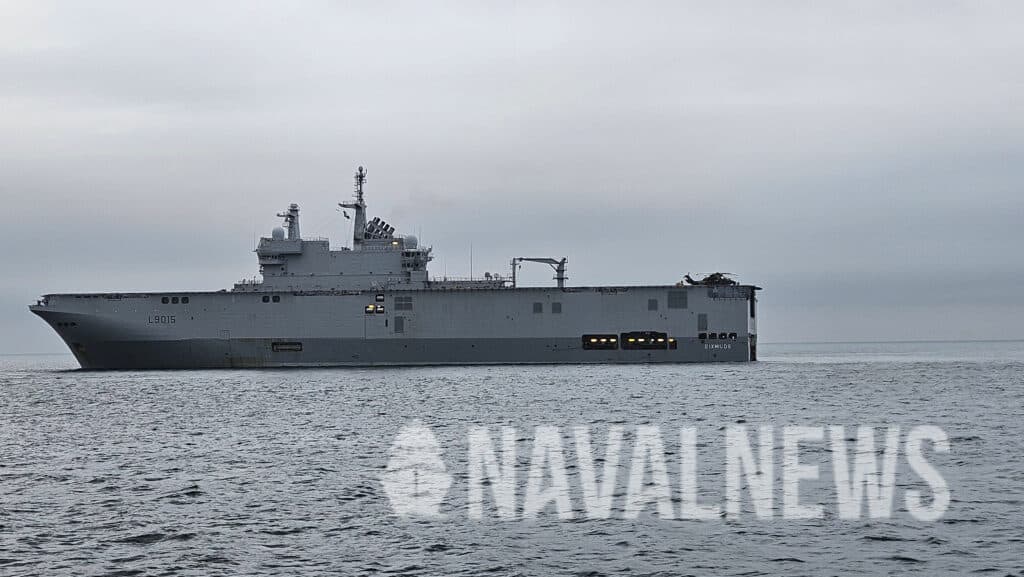
Three French Mistral-class LHDs, one Italian San Giorgio-class LPD, and one Bay-class landing ship went into action to carry out the rest of the operations with units of American Marines and Brazilian, Spanish, British, Italian and French equivalents.
For carrying the troops on land, POLARIS 25 deployed a large part of the French amphibious flotilla with around 4 EDARs (large landing crafts) and 4 to 6 EDAS (landing crafts). Italian AAV-P7 amphibious vehicles and a British Mexeflote were added as troop transports.
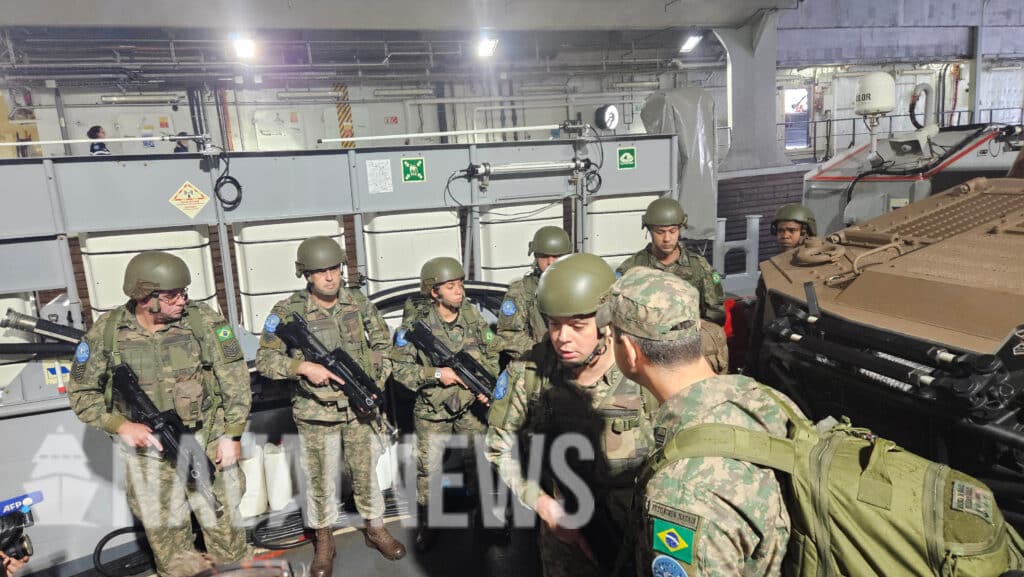
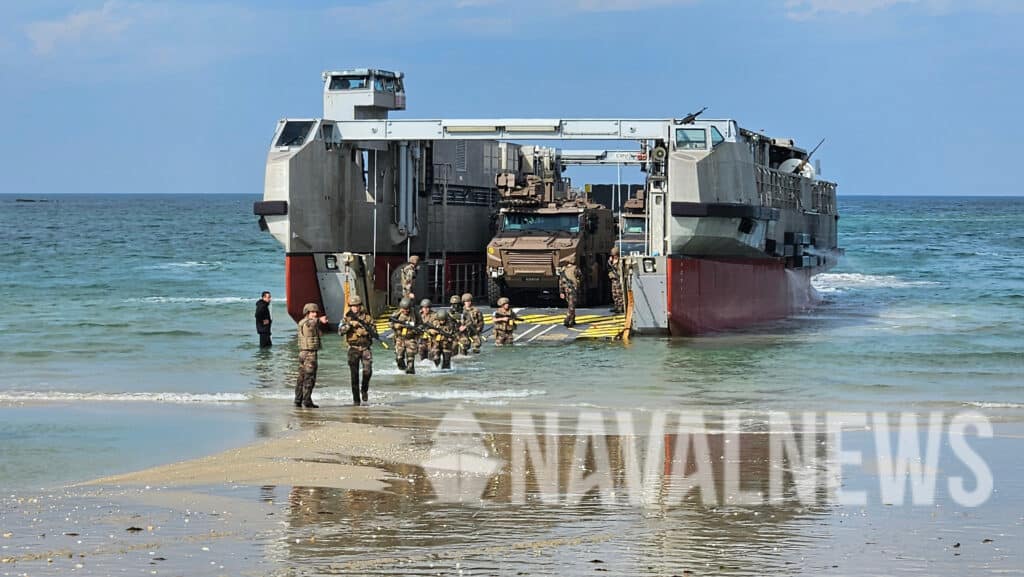
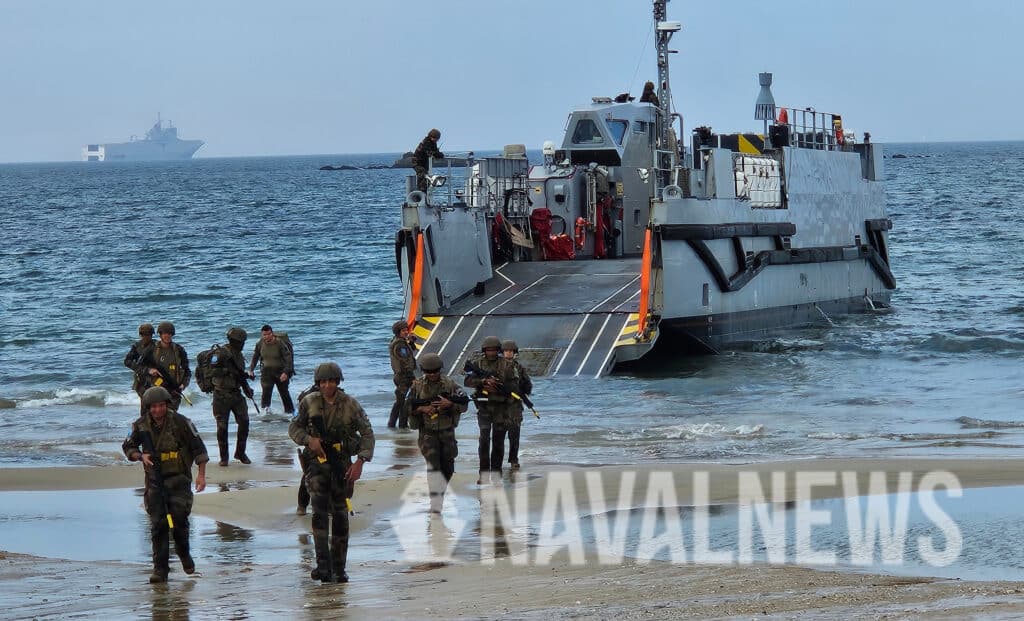
The landing operation, which involved dropping Commandos behind enemy lines, engineers to secure six beaches and the bulk of the troops in waves, lasted 12 hours. 1,500 soldiers landed that day. It should be pointed out that the coastal threats were relatively low, with only a few ‘red force’ air defence units in the way.
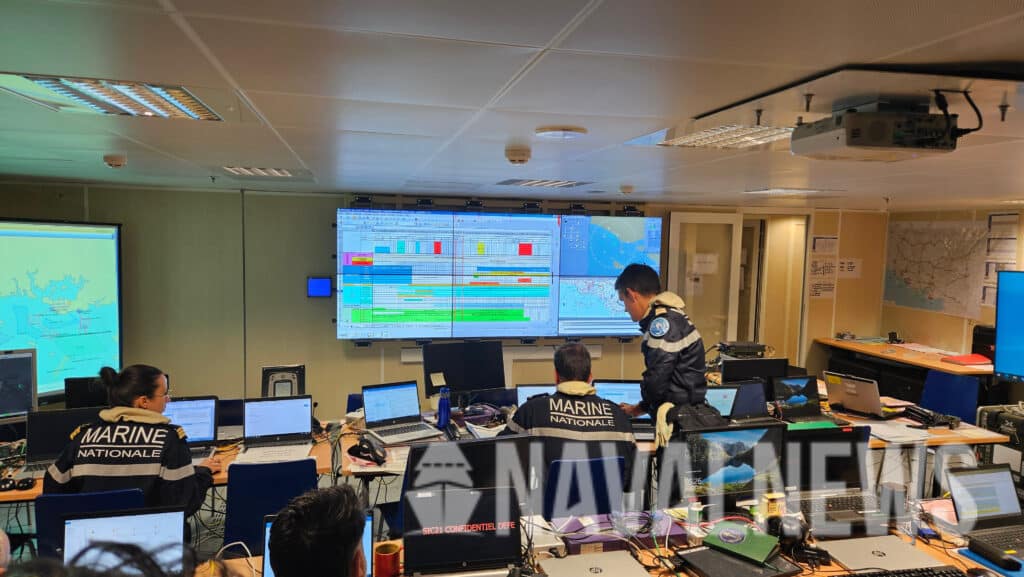
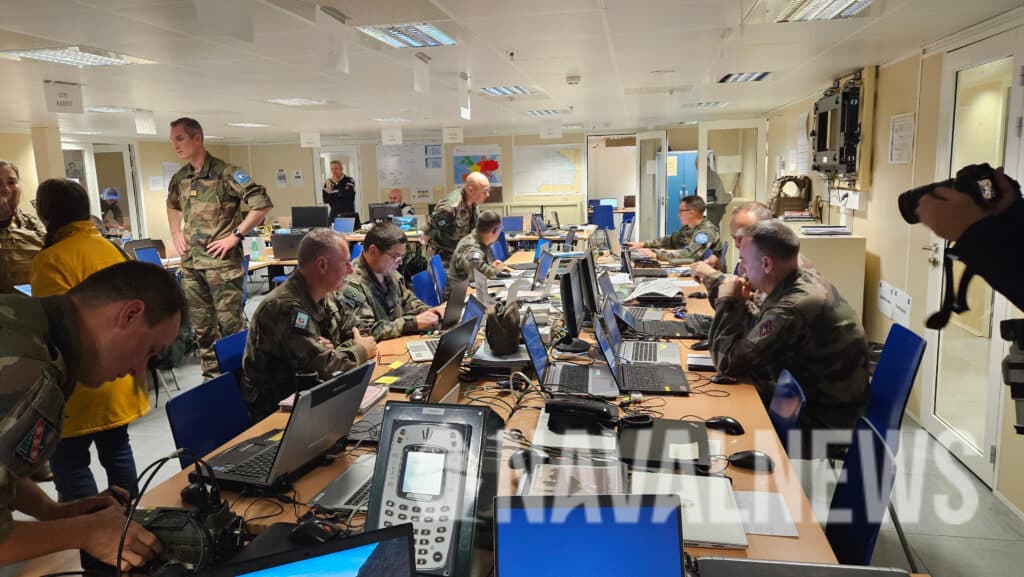
As the Admiral in charge of the ‘blue force’ points out, the principle of amphibious operations requires a fair amount of surprise in order to maximise the chances of success. To achieve this, the ‘blue force’ ‘s Task Force staff made great use of deception manoeuvres, whether through “raids, ‘false landings’ or informational influence”. They also spread the landing across six beaches in order to cross enemy lines as quickly as possible and to avoid having all forces blocked on one beach due to strong defences. On D-Day, this type of tactic seems to have worked, given that the enemy forces were concentrated mainly 150km further south, and sporadic resistance was present.
As regards securing the maritime approaches, “the LHDs simulated the landing of US Marine units with their HIMARS on islands off the landing zone in order to create a A2/AD area and secure the operation” said ‘Dixmude’ Commanding Officer.
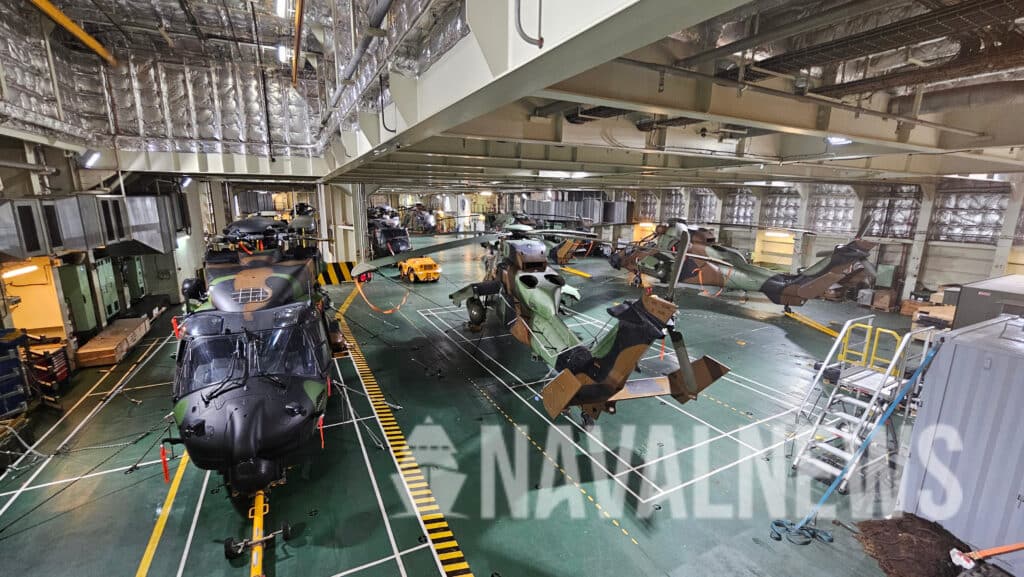
Obviously incorporating an air-sea and air-land dimension, POLARIS 25 provided an opportunity to test new manoeuvres combining the Army’s Tiger attack helicopters, the Navy’s NH90s and S-100 UAS in new scenarios.
“Polaris 25 was an opportunity for the NH90 Caiman Marine to train in formation with the Army’s Tiger helicopters in a self-defence scenario for a LHD under unmanned vehicle threat”, the Navy’s media department told Naval News.
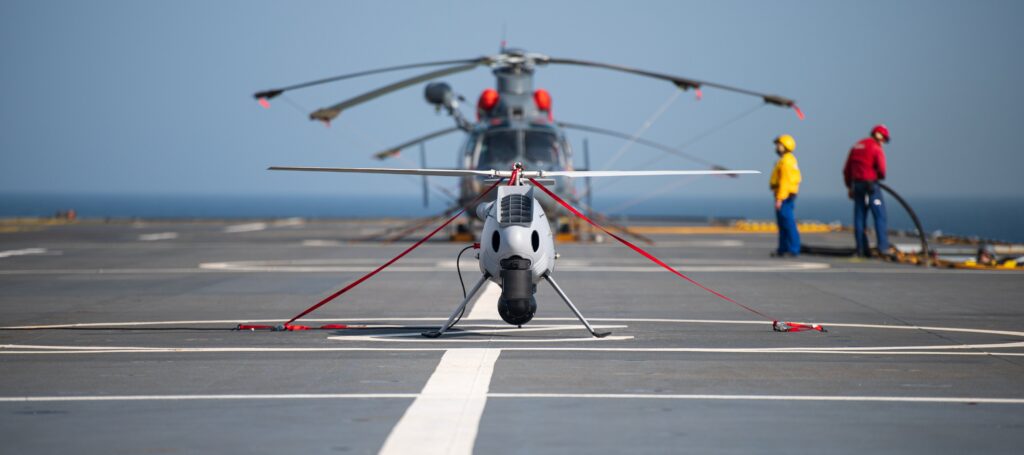
With the use of UAVs now fully integrated into these operations, the Navy’s S-100 has been heavily used, particularly for reconnaissance. The CO of the LHD said that one of the flight lasted around 7 hours, a first for an S-100 in the French Navy. Another first was that the image stream captured by the S-100 could be transmitted directly to land units disembarking, enabling them to adapt their manoeuvres. “It’s a major added value for landing units to know what’s happening beyond the beach so that we can adapt our operations. It also demonstrates the ability to strengthen synergies between Army and Navy units, which is essential for amphibious operations,” explained the Colonel of the 2nd Marine Infantry Regiment (2e RIMa).