The US Navy (USN) is continuing to develop different generations of its REMUS autonomous underwater vehicle (AUV) family for submarine torpedo-tube launch and recovery (TTL&R), with the successful trial of a REMUS 620 medium AUV from a test fixture in early October.
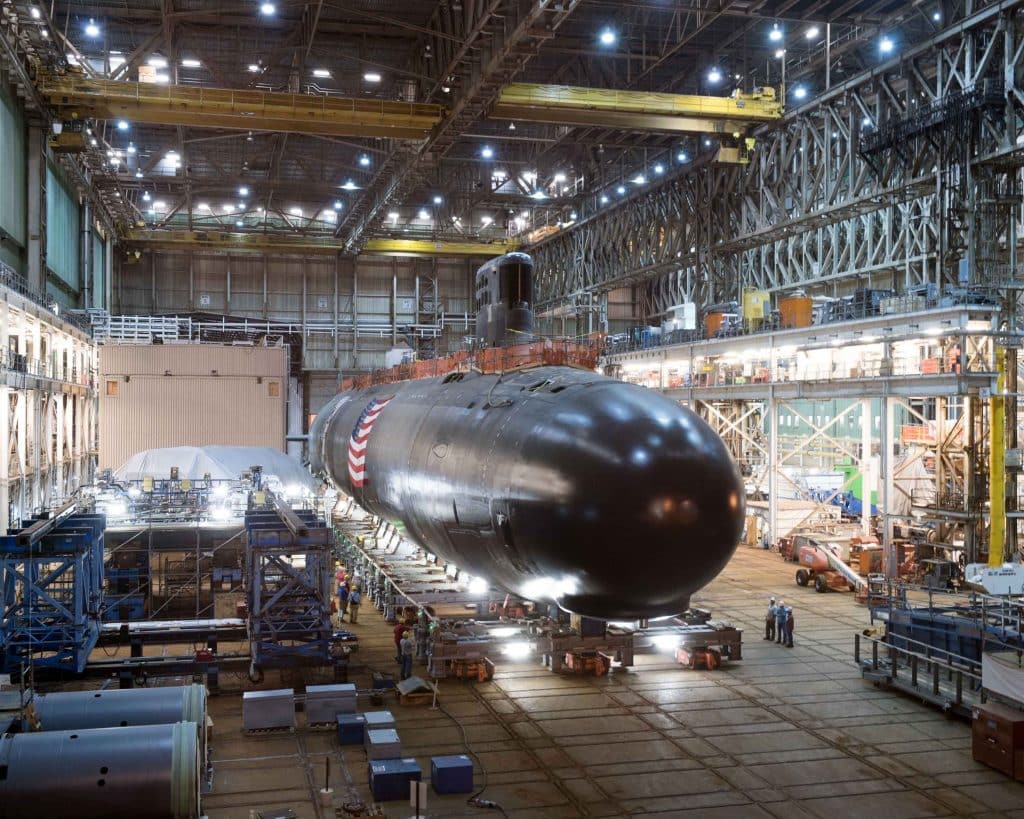
In a statement, Huntington Ingalls Industries (HII) – one of the USN’s two Virginia-class nuclear-powered attack submarine (SSN) builders, alongside General Dynamics Electric Boat – said the test was the first torpedo-tube recovery and ‘swimout’ of a 620 vehicle. The statement also referred to the successful test as a key milestone in the USN’s development of SSN-launched uncrewed underwater vehicle (UUV) operations.
The first REMUS vehicle to be developed with this capability was the REMUS 600. Under the ‘Yellow Moray’ operational programme, the vehicle is now deployed operationally onboard the Virginia-class SSN USS Delaware. Speaking at the Combined Naval Event 2025 conference in the UK in mid-May, Vice Admiral Rob Gaucher – the USN’s Commander, Submarine Forces (COMSUBFOR) – declared that capability as operational. The admiral added this was the first step along the navy’s pathway to having UUVs deployed on at least one SSN ‘24/7, 365’.
The latest REMUS 620 trial, which occurred at Seneca Lake, NY, saw a joint team from the USN’s Naval Undersea Warfare Center Division Newport (NUWC Newport), HII, and Woods Hole Oceanographic Institution (WHOI) use a 1:1 scale Virginia torpedo tube and ‘shutterway’ (torpedo-tube external door) test fixture to carry out an in-water evaluation of the vehicle’s ability to conduct the required navigational and communications protocols to dock safely with a shock and fire enclosure capsule (SAFECAP) system loaded into the submerged, fixed Virginia tube. The vehicle also demonstrated a successful reverse ‘swimout’ launch and separation.
The test was the next step in a process underway for several years, but now being accelerated to meet the navy’s operational requirement for rapid capability deployment.
“We leveraged WHOI’s previous three years of TTL&R work, lessons learned, and expertise to greatly accelerate our progress in successfully getting to this important milestone,” Duane Fotheringham, president of the unmanned systems group in HII’s Mission Technologies division, said in the statement.
Key technology lessons learned related to vehicle control, communications protocols between the vehicle and the submarine interface, and the vehicle’s autonomous decision-making protocols, areas iterated repeatedly over those three years by WHOI as it developed the capability for the USN, Fotheringham told Naval News.
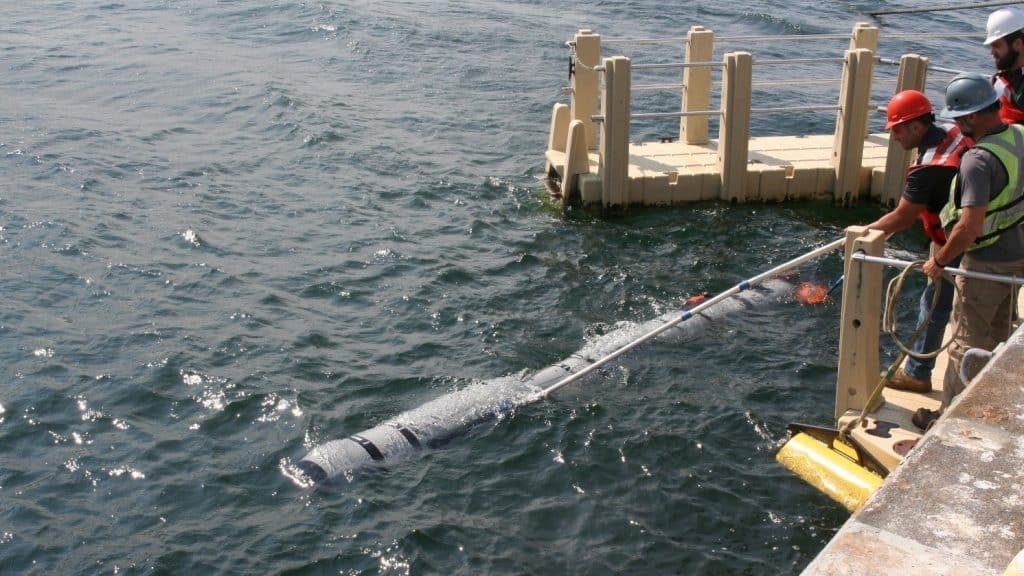
The latest test was a significant step up as it used a free-swimming vehicle, Fotheringham added. Tests conducted in July had involved ‘dry fit’, end-to-end checks at a land-based facility to confirm REMUS 620’s physical compatibility with SAFECAP. The checks were based on deploying the ‘All-Up Round’ system into the Virginia-class Cradle Payload Integration Facility (VCCPIF), which is based around the boat’s Mk71 torpedo tube.
The significance of the latest test was also reflected in the timeframe, with the success coming less than seven months after docking technology from the ‘Yellow Moray’/REMUS 600 programme was integrated into the 620. “Despite a highly compressed schedule, our teams rapidly conducted testing runs, quickly evaluated the data, and made substantive adjustments to the vehicle,” Carl Hartsfield, director and senior programme manager at WHOI’s Oceanographic Systems Lab, said in the statement.
A striking element of the test was the use of reverse ‘swimout’ for vehicle launch and separation.
“Reverse ‘swimout’ simplifies the TTL&R process,”
Carl Hartsfield, director and senior programme manager at WHOI’s Oceanographic Systems Lab
“Forward ‘swimout’ would require that the vehicle be disassembled and turned around in the torpedo room after recovery. It would also require two latching mechanisms, to restrain the vehicle by the tail before launch and by the nose after recovery: with reverse ‘swimout’, the latching remains consistent for TTL&R.”
“Swimming into the tube to a constrained condition is the hardest part of the cycle – and you need the vehicle moving forward with maximum control to do it,” Hartsfield added.
Regarding the TTL&R programme’s acceleration, Hartsfield said WHOI and NUWC Newport initiated a rapid spiral development effort on ‘Yellow Moray’ in 2021, including applying a ‘fail fast’ mentality, leading to successful testing in December 2023. He also highlighted REMUS’s science/defence dual-use nature as enabling a cross-domain development culture that benefited both groups.
Author’s Comment
The USN’s accelerating TTL&R capability development requirement has both operational and wider strategic drivers.
In operational terms, SSN TTL&R UUV operations enable the boats to support efforts to secure critical underwater infrastructure against the emerging seabed threat. For example, in previous trials, Delaware’s sister submarine USS New Mexico delivered an effector down to the seabed, via deploying a UUV and special forces divers from its lockout trunk: once outside the boat, the divers operated the UUV remotely.
In strategic terms, the Australia/UK/US (AUKUS) strategic accord Pillar 2 focus on generating new concepts and capabilities based particularly around AUVs is driving the partner navies to deliver more new technology outputs to operators.