The UK Royal Navy (RN) is building its contribution to North Atlantic deterrence and defence, at national and NATO levels, around three operational concepts: ‘Atlantic Bastion’, ‘Atlantic Shield’, and ‘Atlantic Strike’. These integrated concepts are central elements of the RN’s plan to transform its warfighting readiness in the face of a growing naval threat in the North Atlantic, by delivering a ‘hybrid navy’ combining high-end crewed platform outputs and mass provided by uncrewed systems.
The three concepts – ‘Atlantic Bastion’, ‘Atlantic Shield’, and ‘Atlantic Strike’ – were discussed in detail by General Sir Gwyn Jenkins, the RN’s First Sea Lord and Chief of Naval Staff, at the navy’s ‘International Sea Power Conference’, co-hosted with the Council on Geostrategy in London on 8 December.
Details for ‘Atlantic Bastion’ were set out in the UK’s Strategic Defence Review (SDR), published in June. At the DSEI defence exposition in London in September, Gen Jenkins outlined some capability elements for the other two areas.
However, in his sea power conference keynote remarks, the First Sea Lord presented the three concepts as an integrated, layered, overall construct. This construct is core to the RN’s transformation into a warfighting, hybrid navy, he explained.
“At its heart, it’s about the Atlantic fleet,” the First Sea Lord said. “It’s about three overlapping concepts: ‘Atlantic Bastion’, which is the protection of our sensitive waters and the lines of communication for NATO; ‘Atlantic Shield’, which is our contribution to air defence from our vulnerable north; and ‘Atlantic Strike’, which is about creating the advantage that if an aggressor is foolish enough to strike us, they will know we can strike back.”
On ‘Bastion’, Gen Jenkins continued: “This innovative concept of connecting autonomous sensors in the Atlantic [will] be our ‘eyes and ears’. It’s not just technologically innovative: it’s innovative in the way we are conducting procurement.” Here, he highlighted how the RN has given industry a problem set to help the service solve, rather than providing a long list of over-specified requirements, and that the navy is integrating its own test and experimentation facilities and capabilities with those of industry to enable ‘Bastion’ capability development in lock-step.
“Next year, we will have our first sensors in the water; we will issue our contracts for ‘Atlantic Bastion’ as a service,” Gen Jenkins added.
The UK Ministry of Defence has announced previously that ‘Atlantic Net’ – the first part of ‘Bastion’ – will deliver its underwater intelligence, surveillance, and reconnaissance (ISR) outputs as a service through a contractor-owned, contractor-operated, naval oversight (COCONO) model.
Building an Atlantic bastion

Leading the conference keynotes session, speaking alongside the First Sea Lord, Luke Pollard – UK Minister for Defence Readiness and Industry – said ‘Atlantic Bastion’ illustrated how the stronger demand signal and increased investment the UK was generating is building a more capable navy.
“When the Defence Secretary [John Healey] unveiled new partnerships with 20 companies this morning, he selected a group of people to help with the innovative technologies for the ground-breaking ‘Atlantic Bastion’ programme,” Pollard said. “‘Atlantic Bastion’ is an important step towards a hybrid RN, where an artificial intelligence-powered shield of sensors, autonomous vessels, and traditional naval and air assets come together as a hybrid navy, protecting the North Atlantic from surface and sub-surface threats – a layered network of tripwires and firepower, of human expertise and machine intelligence, defending the undersea lifelines of our economy.”
“That’s why today we’ve unveiled 20 Phase One contracts with 20 companies, from primes to small-and-medium enterprises to tech firms, worth a total of GBP4 million,” Pollard continued. “That will lead to a GBP35 million investment in the most promising innovations within 12 months, to make ‘Atlantic Bastion’ the new high-tech, hard-power guardian of our sea.”
“But it’s not just ‘Bastion’,” the First Sea Lord added. “I said at DSEI we would get our first autonomous escort in the water within two years, and we will. It’s a key component of ‘Atlantic Shield’, and we must prove it can work.”
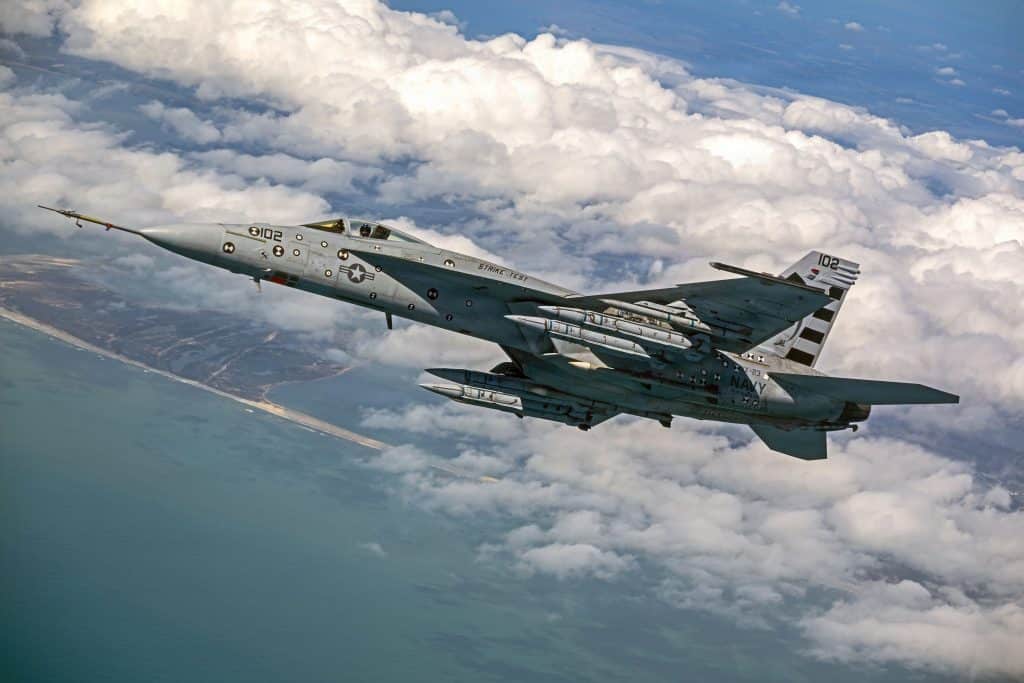
“We will get a demonstrator for our ‘fast-jet’ fighter capability off the carrier next year, because it’s a key component of ‘Atlantic Strike’.” Here, he said, the RN and UK Royal Air Force (RAF) are working closely together. In October, the RN issued a request for information for Project Vanquish – the requirement for a fixed-wing short take-off/landing autonomous collaborative platform.
Atlantic Strike
Another core ‘Atlantic Strike’ component will be the UK’s Commando Force. Noting that the Royal Marines Commandos have been undergoing transformation since prior to the Russo-Ukraine war, focused on developing small, resourceful, independent teams carrying the best technology and operating at extended range, Gen Jenkins – a Royal Marines Commando himself – said the force is being re-roled (as set out in SDR) to focus its new approach on the High North, including working alongside allies like the Netherlands, the US, and of course Norway. “The Norwegian coast is essential to protecting NATO,” he added.
Summing up his discussion of the RN’s three-layered concept, Gen Jenkins said:
“This is not future technology. This is stuff that is here now – and we have a plan to deliver it.”
Strategic partnering

Importantly, the First Sea Lord continued, this delivery plan includes integrated input from allies. Here, Norway is emerging as a particularly close partner.
Following Norway’s decision, announced in August, to select the RN’s Type 26 anti-submarine warfare (ASW) frigate to meet its own future frigate requirement, the two countries announced on 4 December fuller details of a wider naval partnership. Under what is called the ‘Lunna House Agreement’, the two navies will together enhance training and wargaming, develop strike capabilities, and build uncrewed system fleets.
These collaborative capability investments have particular relevance for the RN’s new operational concepts, including ‘Atlantic Bastion’.
“We really need allies,” Gen Jenkins told the conference. “That’s why I was so pleased last week when the Norwegian defence minister [Tore O. Sandvik] said he wanted to join us in ‘Atlantic Bastion’. He wants to connect the new Type 26 ships we will run as a combined ASW fleet in the High North to ‘Atlantic Bastion’.”
“I want others to join us as well,” Gen Jenkins concluded. “Together, we will build a network that we can connect to our systems and capabilities. And we will – we will – remain in control in the Atlantic.”
Naval News Comment
‘Atlantic Bastion’ is a primary capability and operational development focus for the RN, as the service seeks to secure the underwater battlespace to enable operations for its submarine-based continuous at-sea deterrent, to build ASW-based deterrence and defence against what it sees as a growing Russian submarine threat, and to enhance capacity to secure critical undersea infrastructure (CUI). Addressing these and other underwater tasks through deploying large numbers of uncrewed underwater vehicles will present a ‘presence’ challenge for any adversary operating in the North Atlantic.
Now-well-established lessons from the Russo-Ukraine war – and from Yemen-based Houthi rebels targeting Red Sea shipping – underscore the need to defend against ballistic and cruise missile, and uncrewed aerial vehicle, threats in an integrated manner. So, ‘Atlantic Shield’ will be the RN’s contribution to UK and NATO integrated air and missile defence in the North Atlantic.
‘Atlantic Strike’ is all about projecting power at and from the sea, including through carrier strike groups, amphibious forces, and long-range missile capabilities.