Japan’s Chief Cabinet Secretary Minoru Kihara, on May 11, welcomed New Zealand’s decision to consider the upgraded Mogami-class frigate as a candidate for the Royal New Zealand Navy’s future frigate programme, calling it beneficial for strengthening deterrence in the Indo-Pacific.
Speaking at a press conference, Kihara said a potential New Zealand acquisition of the “Upgraded Mogami,” known in Japan as 06FFM or New FFM, could significantly improve interoperability among the Japan Maritime Self-Defense Force (JMSDF), the Royal Australian Navy (RAN), and the Royal New Zealand Navy (RNZN).
Kihara, who previously served as Japan’s defence minister from 2023 to 2024, said:
“It could lead not only to improved interoperability among the three countries, including the Australian Navy, but also greater mutual complementarity. From the perspective of strengthening deterrence in the Indo-Pacific region, this would be beneficial,”
His remarks came only days after New Zealand formally confirmed that it is considering Japan’s upgraded Mogami-class frigate and the UK’s Type 31 frigate as the two finalists for its future frigate programme.
At first glance, the competition may appear relatively modest. This is because the RNZN currently operates only two frigates. Yet strategically, the implications could be far larger. If Wellington ultimately selects the upgraded Mogami-class frigate, the same Japanese-designed frigate class could form the backbone of Japanese, Australian and New Zealand frontline surface fleets, potentially reshaping trilateral naval interoperability in the Indo-Pacific while further strengthening Japan’s emergence as a defense exporter.
Wellington officially shortlists Japan’s New FFM
On May 7, New Zealand Defence Minister Chris Penk announced that Wellington had begun discussions with both the RAN and the UK’s Royal Navy regarding future frigate replacement planning and sustainment arrangements.
“Our decision to prioritise discussions with our partners and focus on considering the Japanese Mogami-class frigate selected by Australia and the UK’s Type 31 frigates reflects our need to be interoperable and leverage efficiencies,” Penk said.
The RNZN’s two Anzac-class frigates — HMNZS Te Kaha and HMNZS Te Mana — entered service in 1997 and 1999 respectively and are expected to reach the end of their design life by the mid-2030s. Under New Zealand’s 2025 Defence Capability Plan, replacement of the Anzac-class frigates has been identified as an indicative investment priority for the 2029–2039 period.
Why the New FFM is attracting attention
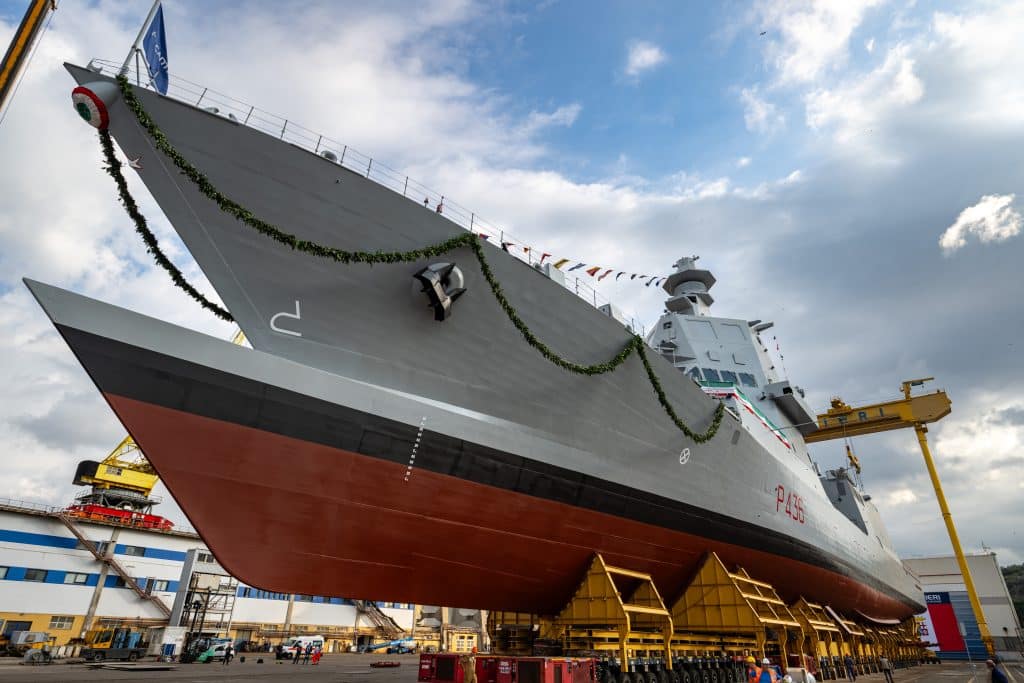
Japan’s upgraded Mogami-class design is an enhanced evolution of the JMSDF’s current Mogami-class frigate. Developed primarily by Mitsubishi Heavy Industries (MHI), the New FFM increases full-load displacement from about 5,500 tons to around 6,200 tons. Tokyo plans to budget funding for the construction of 12 ships between FY2024 and FY2028, with the first two scheduled to enter service in fiscal 2028.
One of the frigate’s key advantages is its advanced automation. The ship is designed to operate with a crew of roughly 90 personnel — substantially fewer than comparable Western frigates — making it attractive for smaller navies facing manpower shortages.
The Australian configuration is expected to include 32-cell Mk 41 Vertical Launch Systems capable of firing ESSM Block 2 missiles, as well as Kongsberg Naval Strike Missiles (NSM). The vessel also integrates multifunction sonar systems, Mk 54 lightweight torpedoes and mine warfare capability.
Australia selected the New FFM in August 2025 under the SEA 3000 General Purpose Frigate programme. Canberra plans to acquire 11 ships, with the first three to be built in Japan and the remainder in Western Australia. The lead ship is scheduled for delivery in 2029.
Australian officials have emphasized a “minimum-change” approach to reduce integration risks, although the RAN configuration will still incorporate Australian and U.S. systems including ESSM Block 2, NSM and Mk 54 torpedoes.
Britain’s Type 31 remains a serious rival
Japan’s main competitor is the UK’s Type 31 frigate based on Babcock’s Arrowhead 140 design. The design has already secured export orders from Poland and Indonesia and is scheduled to enter Royal Navy service in 2027, although the programme has experienced schedule delays.
Britain also retains advantages through longstanding institutional ties with New Zealand. The two countries cooperate closely within the Five Eyes intelligence-sharing framework, while the Royal Navy maintains a mature sustainment network.
Interoperability could decide the outcome
The decisive factor may not be which frigate is individually superior, but which ship New Zealand can operate alongside most effectively. Penk’s statement strongly hinted at this logic. He referred first to “the Japanese Mogami-class frigate selected by Australia” before mentioning the UK Type 31 and repeatedly emphasized interoperability and efficiency.
The current Anzac-class frigates themselves were jointly developed and procured by Australia and New Zealand. Shared logistics, training infrastructure, maintenance systems and spare parts arrangements became essential force multipliers for the smaller RNZN. If Wellington selects the New FFM, a modernized version of the “Anzac model” could emerge for the Indo-Pacific era, with shared supply chains, sensors, weapons and operational planning structures.
China’s growing maritime assertiveness also appears to be accelerating closer defense coordination among Japan, Australia and New Zealand.
In October 2025, RNZN Chief of Navy Rear Admiral Garin Golding met then Japanese Defense Minister Gen Nakatani and conveyed Wellington’s interest in the New FFM, according to Japanese media reports.
Challenges nevertheless remain for Japan’s defense industry. Tokyo has limited experience exporting complex frontline surface combatants, and long-term sustainment and industrial participation packages remain relatively untested compared to established Western defense exporters. Ultimately, New Zealand’s frigate competition may become more than a procurement decision. It could serve as a test of whether Japan is prepared not only to build advanced warships, but also to sustain long-term strategic defense partnerships across the Indo-Pacific.