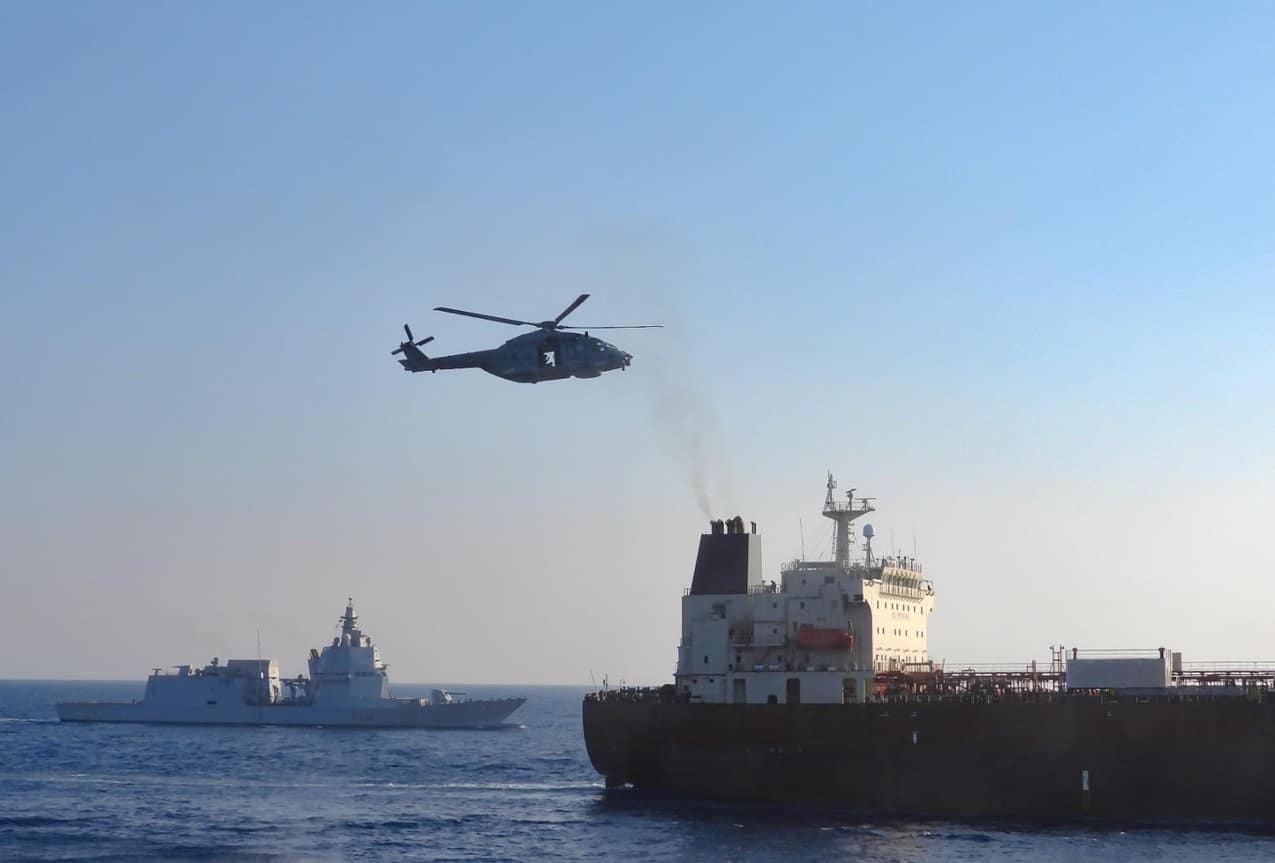
The Italian Navy’s PPA ITS Thaon di Revel has boarded the EU-sanctioned Shadow Fleet tanker Toa Payoh in the central Mediterranean during an Operation EUNAVFOR MED IRINI mission.
The inspection took place on 2 August in international waters west of Pantelleria, the Italian island located between Sicily and Tunisia. According to the Italian Ministry of Defence, the tanker had departed Cotonou, Benin, on 16 July and was sailing towards Istanbul. The vessel was operating under a declared Cameroonian flag.
Toa Payoh is listed under European Union sanctions and is described by Italian authorities as part of Russia’s so-called shadow fleet. These vessels are generally associated with oil transport networks used to maintain Russian crude exports outside conventional Western shipping, insurance, and financial channels.
The operation was led by Thaon di Revel, currently serving as the flagship of Operation IRINI. The ship is the lead vessel of the Italian Navy’s Paolo Thaon di Revel-class Multipurpose Offshore Patrol Vessels, known in Italy as PPAs. Designed for a broad range of missions, the class combines the endurance and aviation facilities of an offshore patrol vessel with the combat-system architecture of a frontline surface combatant.
Italian officials said the master of Toa Payoh initially did not provide the requested cooperation. In response, a military boarding team was launched by helicopter from Thaon di Revel and inserted onto the tanker to carry out a nationality and flag-verification inspection.
The boarding lasted approximately two hours and was completed without incident. The Italian Ministry of Defence stated that the collected documentation and information are now being examined by the relevant authorities.
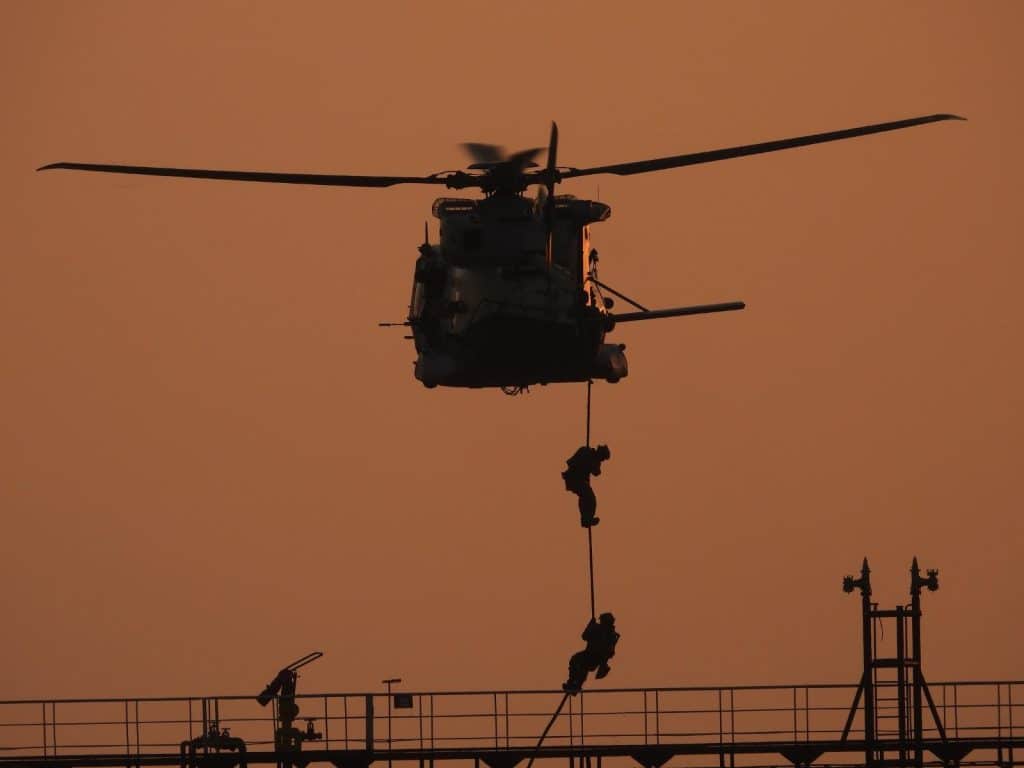
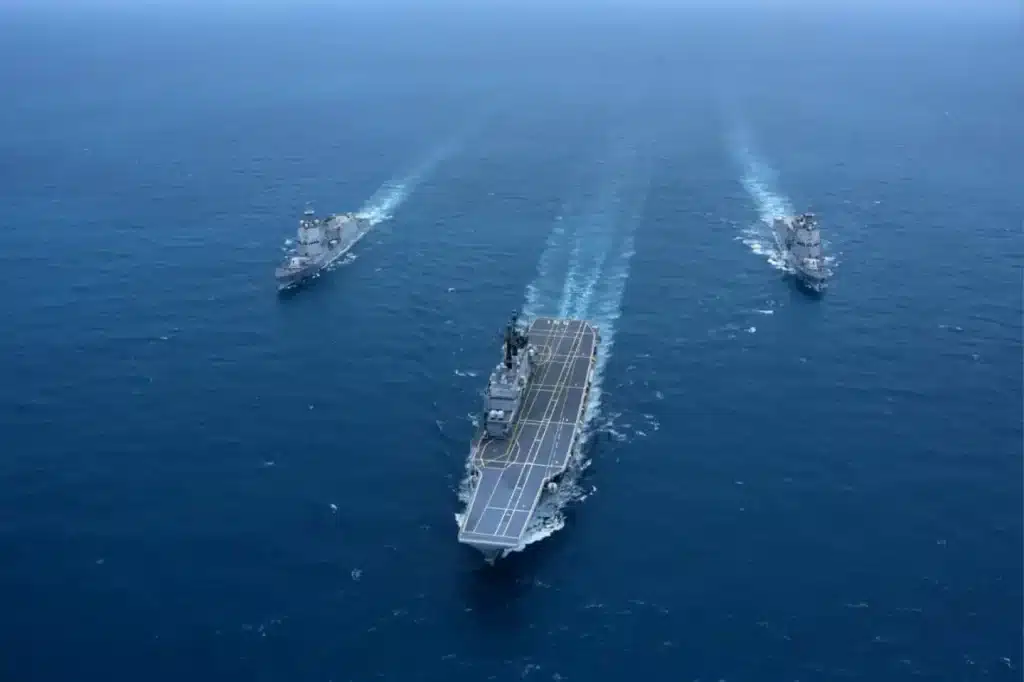
The multinational nature of the mission was notable. The Hellenic Navy frigate Kanaris supported the operation at sea, while a Polish M28B1R Bryza maritime patrol aircraft provided airborne surveillance. The aircraft operates in support of IRINI from Sigonella Air Base in Sicily, a key hub for maritime patrol activity in the central Mediterranean.
Operation IRINI was launched by the European Union in 2020 to enforce the United Nations arms embargo on Libya. Its core missions include monitoring illegal arms shipments, collecting information on illicit petroleum exports from Libya, and contributing to the disruption of human-smuggling networks. Its naval assets may also conduct visits and inspections when the legal conditions are met.
In this case, Italy cited Article 110 of the United Nations Convention on the Law of the Sea. The provision permits a warship to verify a merchant vessel’s nationality in specific circumstances, including a reasonable suspicion that a ship is without nationality or is not entitled to fly the flag it claims.
The Toa Payoh inspection follows another recent IRINI boarding involving the tanker South Star, reportedly inspected on 20 July over suspicions concerning its flag status. The two cases indicate that European naval authorities are applying greater scrutiny to sanctioned shipping transiting the Mediterranean.
However, the inspection did not automatically amount to a seizure. IRINI’s mandate allows the verification of nationality and documentation, while any subsequent legal action depends on the findings of the inspection and decisions by competent national authorities.
For the Italian Navy, the operation demonstrated the utility of the PPA design in a real-world maritime-security scenario. Thaon di Revel combined maritime surveillance, helicopter operations, boarding capability, and command functions while operating alongside Greek and Polish assets under an EU flag.
Russia’s shadow fleet has proven to be a lifeline to an otherwise economically embattled regime, allowing the exportation of Russian oil without incurring the price caps or sanctions penalties put in place. To avoid any economic retribution, the vessels, most of them tankers, fly different flags which indicate a separate country of origin. This allows them to stealthily carry Russian crude oil to unsanctioned destinations, where said oil is processed and eventually put onto the market.
This is the second time the Italian Navy boards a Russian shadow fleet vessels. The United States initiated what is now a trend amongst Western states, seizing a total of 7 oil tankers accused of aiding of sanctioned countries. In European waters, France, Belgium and the UK have previously boarded suspicious Russian vessels.