South Korea’s DAPA has officially signed the main contract with Hanwha Ocean for the detailed design and construction of the first-in-class KDDX destroyer, targeting delivery to the ROK Navy by 2032.
South Korea’s Defense Acquisition Program Administration (DAPA) announced on July 31 that it has officially signed the contract with Hanwha Ocean for the detailed design and lead ship construction of the ROK Navy’s Next-Generation Destroyer (KDDX).
The formal signing moves the KRW 7.8 trillion (US$5.7 billion) program out of the selection phase and directly into active realization. The first-in-class KDDX is scheduled for delivery to the Republic of Korea (ROK) Navy in 2032.
The signing follows Hanwha Ocean’s selection in June 2026, when the shipbuilder outscored rival HD Hyundai Heavy Industries (HD HHI) by 0.5867 points in DAPA’s formal evaluation.
The outcome represented a major shift in South Korea’s naval shipbuilding landscape. Historically, HD HHI handled detailed design and lead ship production for major surface combatants—having completed the KDDX basic design phase in December 2023—while Hanwha Ocean (formerly DSME) typically led submarine design and lead boat construction. However, a persistent 1.2-point security deduction applied to HD HHI over past procurement irregularities ultimately tipped the competitive balance in favor of Hanwha Ocean.
With all review and objection procedures now concluded, DAPA and Hanwha Ocean have finalized the main contract, cementing Hanwha Ocean’s position as the primary shipbuilder for the ROK Navy’s next-generation surface flagship.
Digital Twin and other new technologies
During the detailed design and construction phase, engineers will convert basic design parameters into finalized production blueprints while integrating several new technologies:
- Digital Twin Framework: Implementation of digital twin-based design and shipbuilding techniques to streamline construction and support life-cycle maintenance.
- Multi-Layered Anti-Drone Suite: Integration of a dedicated multi-layered counter-UAS (unmanned aerial system) architecture to respond to emerging modern threat vectors.
- Integrated 5G Network: A high-bandwidth 5G-based wired/wireless communications environment embedded across the ship to enable network-centric warfare.
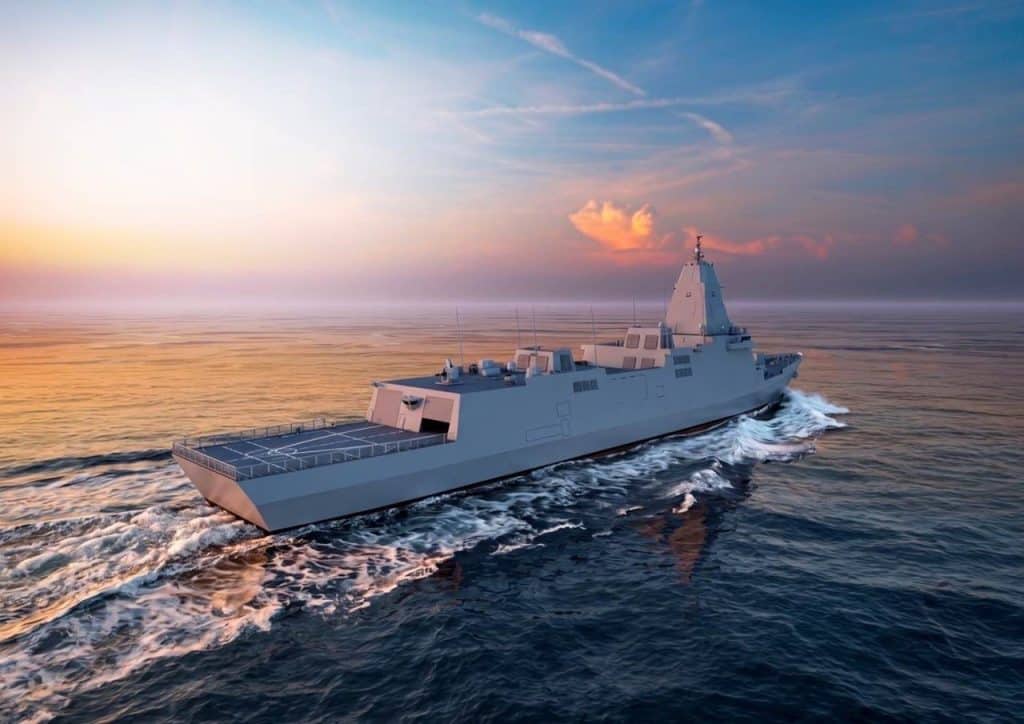
KDDX: The Core of ROK Navy’s Future Task Flotilla
The KDDX program aims to build six 6,000–7,000 ton-class stealth destroyers designed to replace the aging Gwanggaeto the Great-class (KDX-I) destroyers. The class will form the backbone of the ROK Navy’s Task Fleet Command.
Unlike the existing Sejong the Great-class (KDX-III) Aegis destroyers, which rely heavily on American systems, KDDX is envisioned as South Korea’s first fully indigenous Aegis-equivalent combatant. Major domestically developed systems aboard the ship include:
- An integrated dual-band S/X phased-array Multi-Function Radar (MFAR) housed in an Integrated Mast (I-MAST).
- Indigenous Combat Management System (CMS) and advanced sonar suites.
- Domestically produced surface-to-air and strike weaponry launched via KVLS-I and KVLS-II cells.
- An Integrated Electric Propulsion System (IEPS) designed to reduce acoustic signature and support future high-energy weapons.
Jung Jae-jun, Head of DAPA’s Advanced Capabilities Program Bureau, stated: “The KDDX project is a national initiative bringing together top-tier warship construction and defense industry capabilities. We plan to explore various execution strategies—including for follow-on vessels—to ensure the timely deployment of warships optimized for future operational environments and to drive growth across the entire defense sector.” He added, “Building on the success of the KDDX project, we will also further strengthen the global competitiveness of K-warships in export markets.”