The Australian Department of Defence in a statement on September 11 announced that the Royal Australian Air Force (RAAF) has reached Initial Operational Capability (IOC) with both the Long Range Anti-Ship Missile (LRASM) and the Joint Air-to-Surface Standoff Missile – Extended Range (JASSM-ER). The event follows multiple successful test launches over the last two years and one launch conducted by an RAAF P-8A Poseidon using an LRASM missile as part of a SINKEX at RIMPAC 2026.
Official media release by Australian Department of Defence
The Royal Australian Air Force has delivered a significant milestone for advanced long-range strike capabilities, with initial operational capability declared for the AGM-158C Long Range Anti-Ship Missile (LRASM) and the AGM-158B Joint Air-to-Surface Standoff Missile – Extended Range (JASSM-ER).
The LRASM is an air-launched precision guided, semi-autonomous missile, designed to destroy high-value, well-defended maritime targets at ranges in excess of 370 kilometres.
The JASSM-ER is an air-launched precision guided, long-range land strike cruise missile, designed to locate, identify and defeat targets from ranges of up to 900 kilometres from the launch aircraft.
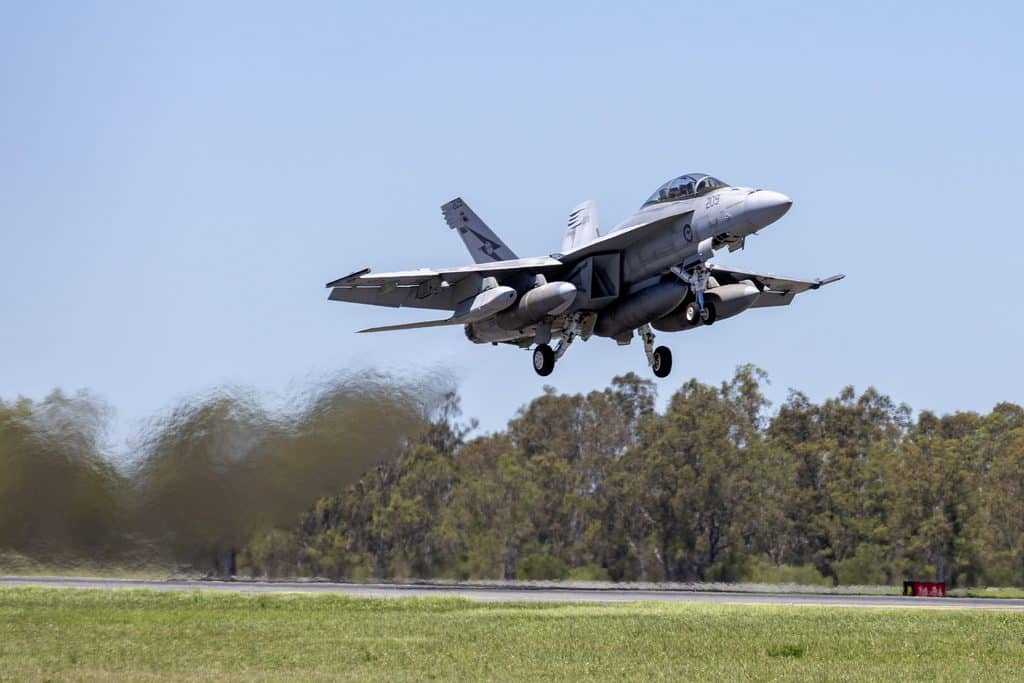
Chief of Air Force, Air Marshal Stephen Chappell, DSC, CSC, OAM said the Royal Australian Air Force has demonstrated it is ready to conduct long-range, survivable and lethal maritime and land strike, from F/A-18F Super Hornet aircraft, against highly defended targets.
“By acquiring a suite of long-range maritime and land strike missiles Air Force will increase the lethality of our air combat aircraft and avoid increasingly sophisticated air defences.”
“We are continuing to develop and grow Air Force’s ability to precisely strike targets at long-range.”
“This will allow Air Force, as part of the integrated, focused force, to further enhance deterrence by holding potential adversary forces and infrastructure at risk from a greater distance.”
Operational testing includes validation of weapons preparation and loading, as well as targeting and successful weapon engagement by F/A-18F Super Hornet aircraft. In February 2025, two LRASM were successfully test fired at the Point Mugu Sea Range in the United States, followed by two JASSM-ER being successfully test fired at the Woomera Test Range in South Australia, in November.
More recently, during Exercise Rim of the Pacific 26 (RIMPAC), operational testing has further expanded these capabilities, when a P-8A Poseidon successfully fired an LRASM hitting its target.
Introducing both these complex weapons into service required close collaboration between the Royal Australian Air Force, Defence Delivery Group, Joint Capabilities Group, whole-of-government, and United States military and industry partners.
The expansion of long-range strike capabilities, as identified in the National Defence Strategy, further enhances Defence’s ability to deliver deterrence through denial as an integrated, focused force.
-Ends-
Naval News comments:
Australia has purchased the AGM-158C LRASM anti-ship missile through Foreign Military Sales-approvals dating to February 2020 and the AGM-158B/B-2 JASSM-ER to July 2022, respectively. Australian officials have not detailed the overall amount of missiles purchased. However, the original FMS-approvals released by the American Defence Security Cooperation Agency specified up to 200 LRASM and up to 80 JASSM-ER.
JASSM-ER and LRASM are the result of a common development for new long range land attack and anti-ship missiles the United States originally launched in 1995. Apart from sharing the same low-observable missile body design the two weapons are notable for their large 450 kg warhead. The capability marks a difference especially for LRASM compared to most other Western anti-ship missiles, which are considerably lighter. JASSM-ER entered service with the US Air Force in 2014. LRASM did so with USAF in 2018 and with the US Navy in 2019.
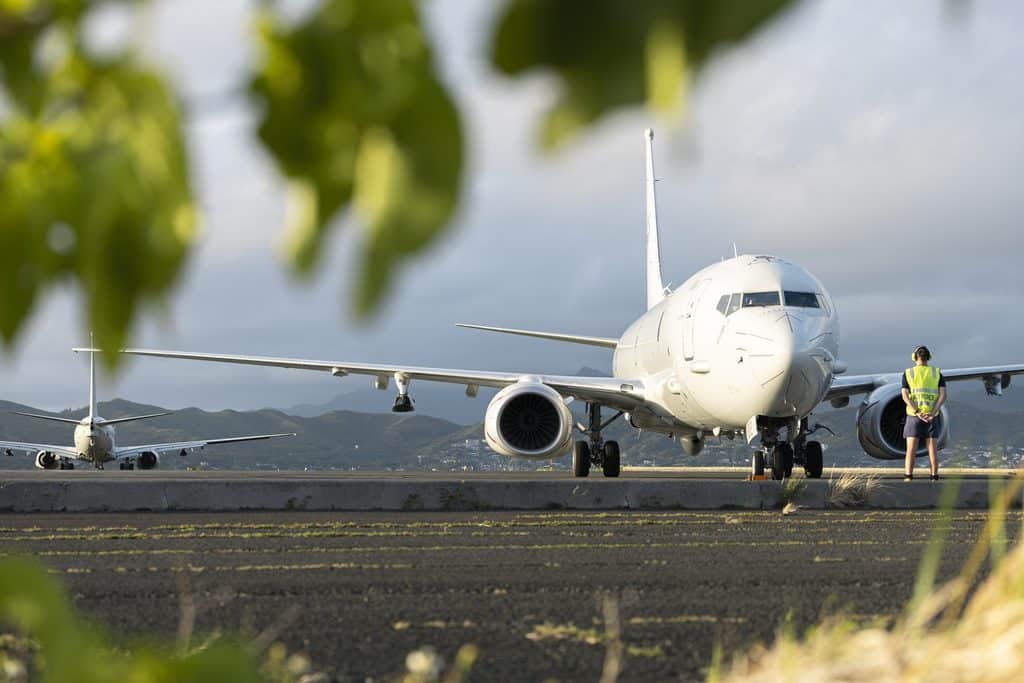
While the new Australian statement specifically mentions the P-8A and F/A-18F as launch platforms, Australia also intends to integrate LRASM and JASSM-ER on RAAF F-35A. Additionally, the Australian Defence Force is transitioning the naval surface fleet from the RGM-84 Harpoon to the Naval Strike Missile (NSM) and is also purchasing up to 220 BGM-109 Tomahawk land-attack cruise missiles for use from the Hobart-class guided missile destroyers. In addition to other modernisation measures, these steps are part of intended spending on long range maritime and surface strike missiles worth A$30 to 37 billion over the next decade, as declared in the Integrated Investment Program 2026.