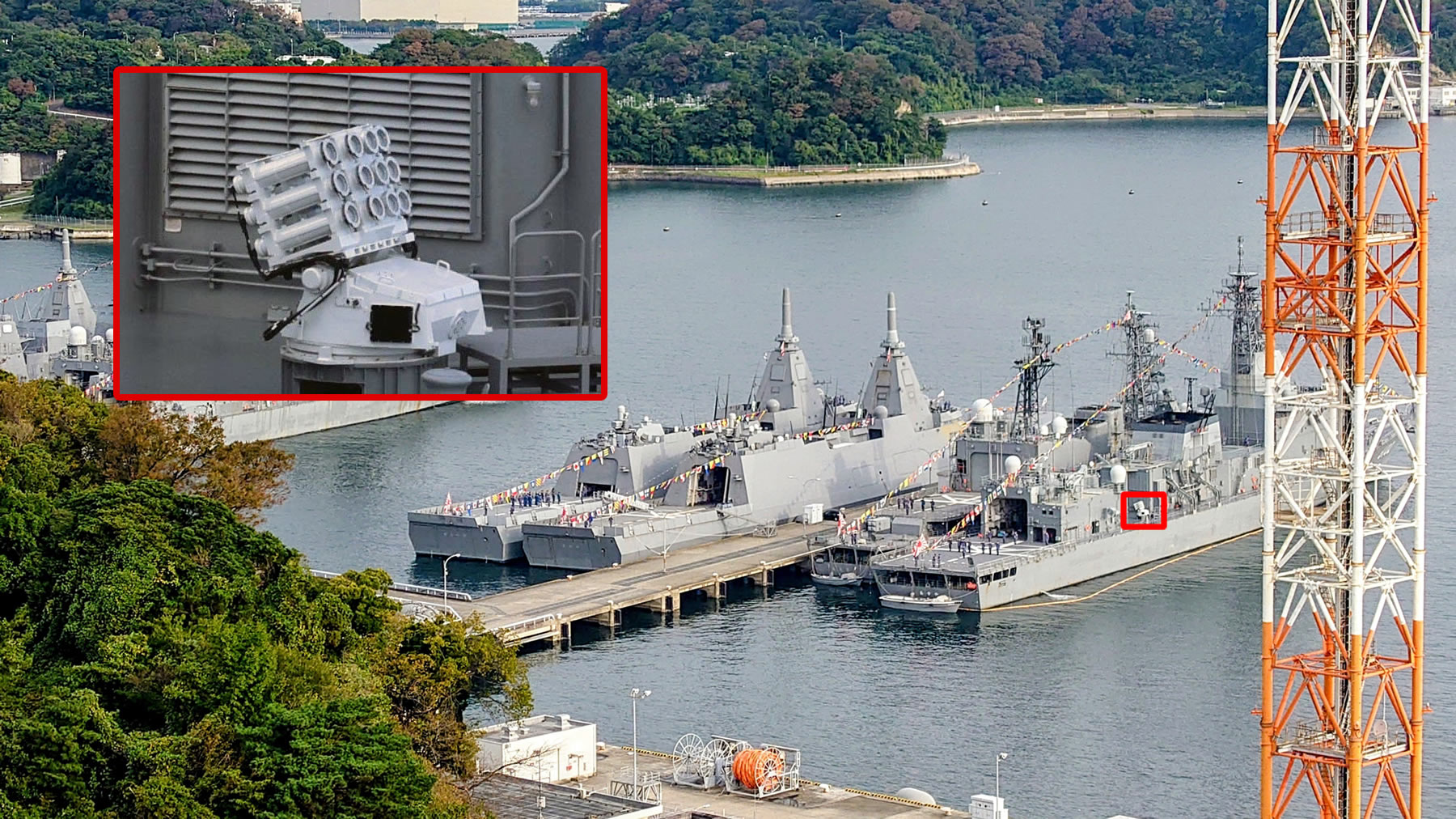
The Japan Maritime Self-Defense Force (JMSDF) test ship JS Asuka has been spotted featuring a Safran NGDS (New Generation Dagaie System) trainable decoy launcher.
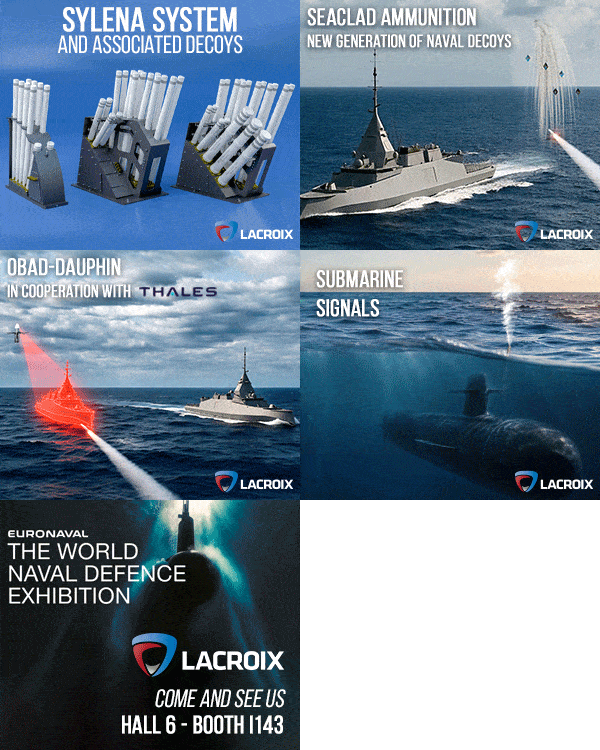
Developed by the French defense company Safran, NGDS is a trainable decoy launching system that has already been installed aboard warships operated by the French Navy and several other navies worldwide.
Unlike the traditional Mk 36 SRBOC (Super Rapid Bloom Offboard Countermeasures) system, which is operated by the U.S. Navy and other naval forces, NGDS offers greater flexibility in responding to incoming threats. While the Mk 36 uses fixed launchers that can deploy decoys only in predetermined directions, NGDS is mounted on a rotating platform, allowing decoys to be launched toward the direction of an approaching threat. This capability enables more effective deployment of countermeasures against incoming anti-ship missiles.
Another major advantage of NGDS is its ability to accommodate multiple types of decoys simultaneously, allowing the system to respond to different types of threats. These include radio-frequency (RF) decoys designed to deceive or disrupt radar-guided missile seekers, infrared (IR) decoys intended to counter infrared-guided missiles, and anti-torpedo decoys to counter incoming torpedoes.
Furthermore, NGDS is not limited to soft-kill countermeasures. The system can also be integrated with MBDA’s Mistral 3 short-range surface-to-air missile, enabling the coordinated employment of soft-kill decoys and hard-kill interceptors designed to physically destroy incoming threats.
Until now, the JMSDF has relied on the Mk 36 decoy launching system across its surface combatant fleet. However, as modern anti-ship missiles have become increasingly sophisticated, the effectiveness of conventional Mk 36 has come under growing pressure. Against this background, the JMSDF decided in 2025 to conduct trials of the NGDS system.
At present, the JMSDF’s primary interest appears to be gaining operational and technical knowledge of trainable decoy launchers. Nevertheless, it is highly likely that the JMSDF will also explore the potential integration of various types of decoys, which represents one of NGDS’s most significant advantages.
In recent years, the JMSDF has been studying the potential benefits of floating active and passive RF decoys, which are expected to provide longer-lasting countermeasure effects than conventional RF decoys (chaff) and IR decoys (flares). The JMSDF has also been holding discussions with domestic defense manufacturers regarding these technologies.

The NGDS fitted on JS Asuka appears to be the “configuration D” variant. The NGDS Configuration D decoy launcher had previously been bid by Safran for the UK’s Electronic Warfare Counter Measures Increment 1a programme (part of the Royal Navy’s wider Maritime Electronic Warfare Programme). Although not successful in that competition, the company believes there are a number of other opportunities emerging for a trainable launcher system able to fire NATO 130 mm decoy rounds, including in Japan, as reported by Naval News during DSEI Japan 2023.
For now, the installation of NGDS aboard JS Asuka is intended solely for testing and evaluation purposes, rather than indicating a decision to formally adopt the system.
Meanwhile, the British defense technology company SEA has also proposed its independently developed Ancilia trainable decoy launching system to the JMSDF.
Depending on the results of the NGDS trials, should the JMSDF decide to introduce trainable decoy launching systems into its fleet, both NGDS and Ancilia could emerge as potential candidates for future procurement.