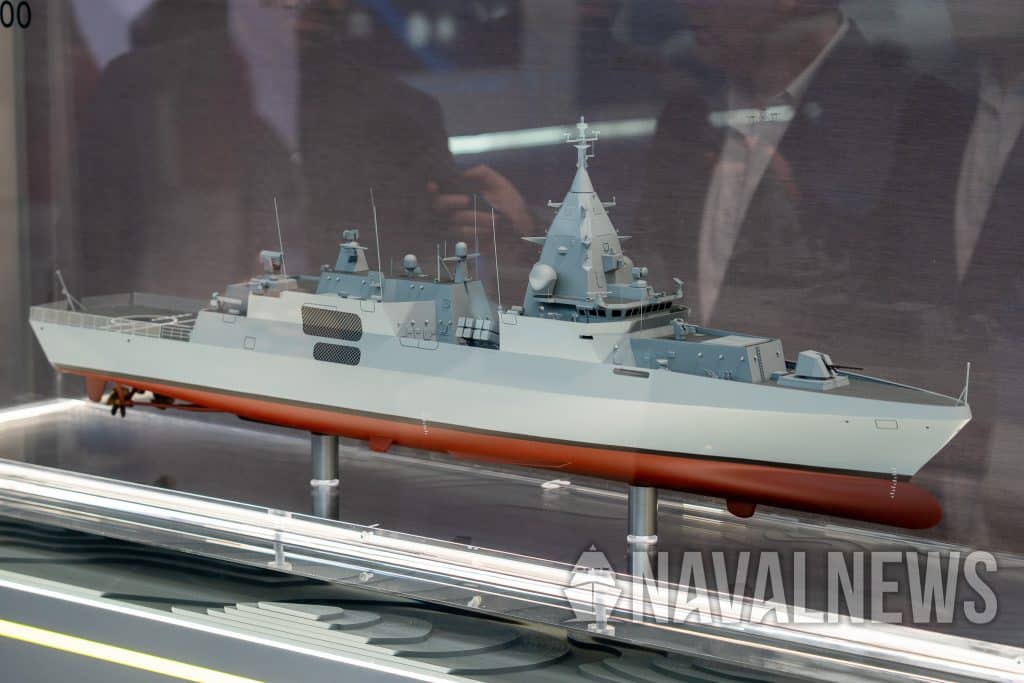
Built in the UK, the two 30-meter Fast Attack Craft will carry advanced air defense and missile systems to help the Ukrainian Navy protect the Black Sea Grain Corridor.
UK Prime Minister’s office press release
Two advanced fast attack boats for Ukraine are being jointly funded by the UK and Norway to boost Ukrainian defence and apply further pressure on Russia.
It comes as Prime Minister Andy Burnham and the Prime Minister of Norway, Jonas Støre, join allies today at a Coalition of the Willing meeting to step up support for Ukraine and strengthen its long-term security.
Jointly funded by the UK and Norway, and built in the UK, the new vessels boast frigate-like capability and will provide the Ukrainian Navy with agile and powerful offensive and air defence capabilities at a fraction of the price.
Equipped with advanced air defence, missile and self-defence systems, the 30m boats will significantly increase Ukraine’s naval capability and survivability.
They will also help protect the Black Sea Grain Corridor, supporting the exports that are critical to Ukraine’s economy and global food security.
Prime Minister Andy Burnham said:
“Funded with Norway, built here at home in the UK, and delivering game-changing capability to the Ukrainians, this project will not just strengthen Black Sea defences, but supports European security too.
“Stable and secure sea lanes are arteries of global trade, and Russia’s ongoing indiscriminate attacks in the Black Sea are not just hurting Ukraine and our European Allies but also hitting the world’s most vulnerable.
“I am proud that these British made vessels, backed by the UK and Norway, will help to deter that aggression and provide vital offensive and air defence capability to Ukraine.”
The programme will be funded equally by the UK and Norway through the Maritime Capability Coalition, which the two countries jointly lead and demonstrates how the two nations are working together to turn their support for Ukraine into practical military capability.
The boats which are built in Britain will be fitted with advanced cutting-edge systems that have been provided by European suppliers, bringing together defence technology and industrial expertise from across the continent.
Defence Secretary Wes Streeting said:
“Ukraine is the front line for freedom everywhere. The UK will stand with our Ukrainian friends for as long as it takes as they bravely resist Putin’s barbaric and illegal invasion.
“These new fast attack boats will strengthen Ukraine’s defences in the Black Sea, help protect vital trade routes and deter Russian aggression, which is critical to the security of not just Ukraine, but the whole of NATO.”
Beyond the current conflict, the boats will form an integral part of Ukraine’s long-term maritime security and deterrence in the Black Sea.
In addition to the UK and Norway’s boost to Ukraine’s maritime defensives, the Prime Minister also announced 1000 more long range strike drones to reinforce Ukraine against Russia’s callous attacks on civilians.
That followed a major package of air defence announced by Defence Secretary Wes Streeting at the Ukraine Defence Contact Group on Tuesday, and a sweeping set of stinging sanctions last week, making the UK the first country to sanction all ten of Russia’s major oil producers.
Last month, at the budget, the Prime Minister and Chancellor also announced more than £10 billion in additional financial support for Ukraine, alongside the UK’s enduring commitment of £3 billion a year in military assistance.
-End-

Naval News comments:
Notably, the UK government’s press release does not name the shipyard selected to build the two 30-meter vessels, nor does it identify the specific hull design. Prior to Russia’s full-scale invasion, London and Kyiv had pursued a much larger fast attack craft program under their October 2020 Memorandum of Intent and the February 2022 UK-Ukraine framework agreement. As Naval News previously reported when initial details emerged on the UK-built FACM vessels, that earlier plan envisioned eight 50-to-65-meter missile boats, centered on Babcock’s 50-meter P-50U Fast Inshore Attack Craft design unveiled at DSEI 2021, with the lead hulls built in Britain and the remainder in Ukraine. Shifting to two 30-meter boats represents a considerably more compact platform, leaving open whether Babcock has proposed a scaled-down design or whether another builder has been tapped, particularly as no UK naval shipyard has recent experience building a 30-meter fast attack craft of this type.
Another intriguing possibility is OCEA. The shipbuilder already has direct operational experience supplying Ukraine, having won the contract for 20 32-meter FPB 98 MkI aluminum patrol boats for the State Border Guard Service of Ukraine, the first pairs of which were spotted transiting the Istanbul Strait aboard a cargo vessel in 2023. Beyond patrol craft, OCEA maintains Fast Attack Craft Missile (FACM) designs in its portfolio, including a missile-armed variant (VFPB 98) pitched to the Philippine Navy. Crucially, following its 2022 merger with The Wight Shipyard Co., OCEA operates an aluminum shipbuilding facility in East Cowes on the Isle of Wight, giving it the domestic UK footprint needed to meet a “built in the UK” requirement. Nevertheless, because OCEA remains headquartered in Les Sables-d’Olonne and is widely perceived as a French shipyard, awarding it a flagship British-Norwegian-funded naval contract could carry political sensitivities in London.
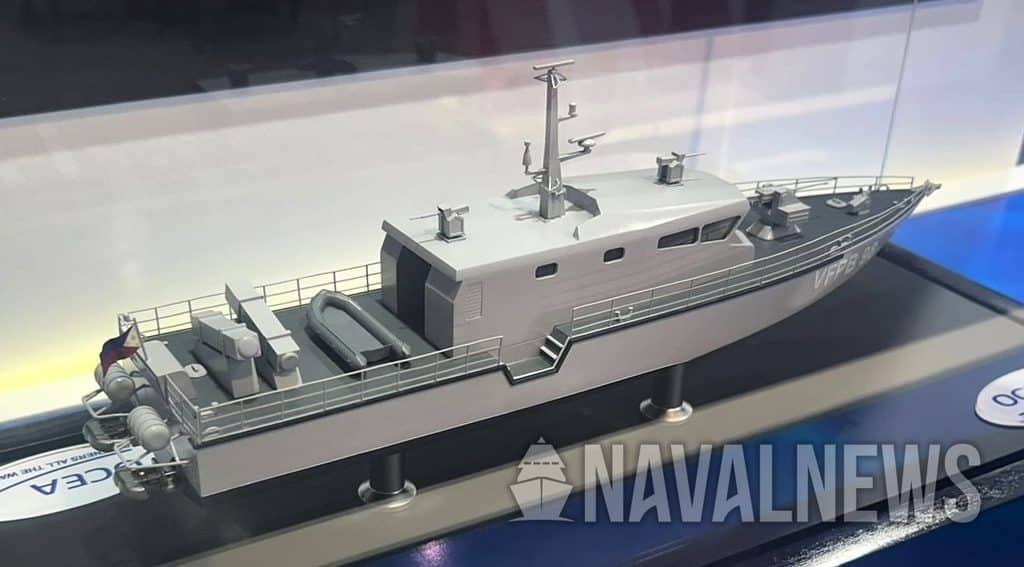
Finally, downsizing from the initial 50-meter Babcock P-50U design to a 30-meter hull carries a major logistical advantage for delivery: with the Turkish Straits closed to warships under the Montreux Convention, a more compact 30-meter vessel can likely reach the Black Sea via Europe’s inland waterways and the River Danube.