GA-ASI press release
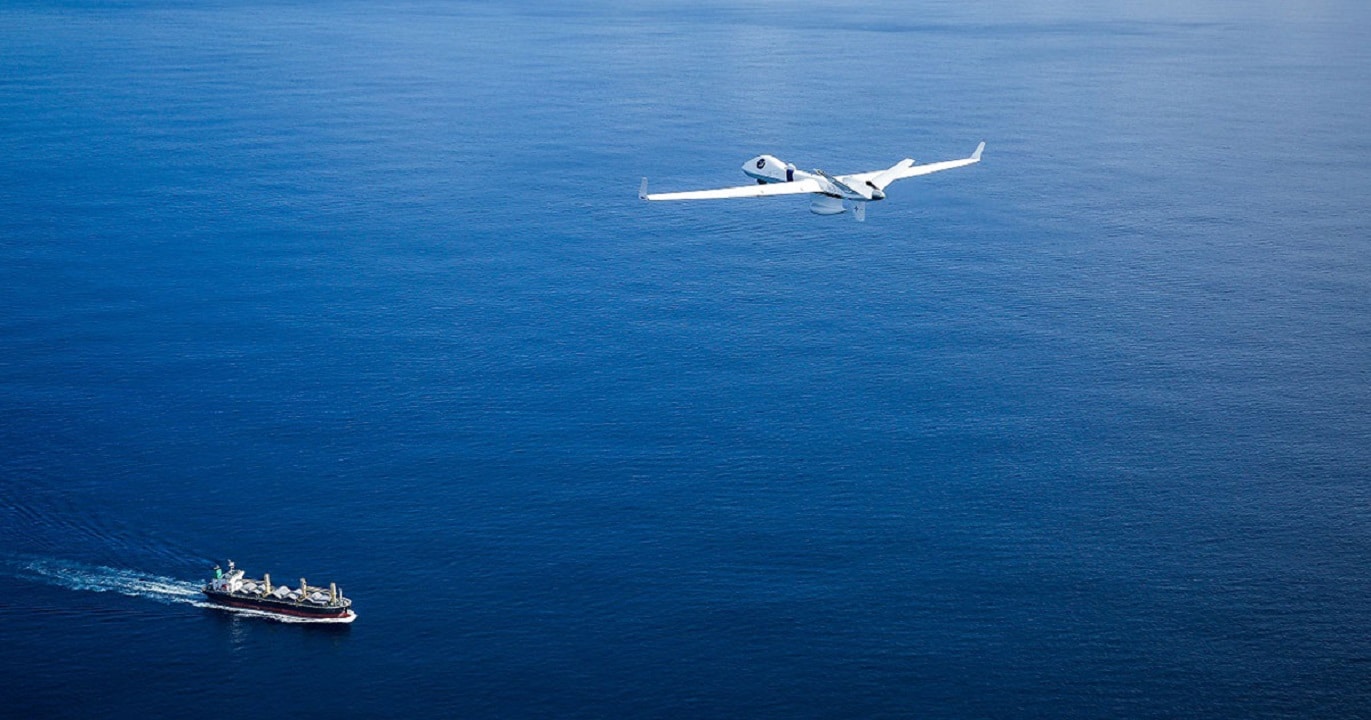
SeaGuardian will be used to conduct wide-area maritime surveillance to support JCG’s missions, which include search and rescue, disaster response, and maritime law enforcement. This project follows a series of successful JCG flight trials in 2020 that used SeaGuardian to validate the same JCG missions in accordance with Japan’s “Policy on Strengthening the Maritime Security Systems,” using unmanned aerial vehicles to perform maritime wide-area surveillance.
“We’re proud to support the JCG’s maritime surveillance mission with our SeaGuardian UAS. The system’s ability to provide affordable, extremely long-endurance airborne surveillance with long-range sensors in the maritime domain is unprecedented.”
Linden Blue, CEO of GA-ASI
SeaGuardian features a multi-mode maritime surface search radar with an Inverse Synthetic Aperture Radar (ISAR) imaging mode, an Automatic Identification System (AIS) receiver, and a High-Definition – Full-Motion Video sensor equipped with optical and infrared cameras. This sensor suite enables real-time detection and identification of surface vessels over thousands of square nautical miles and provides automatic tracking of maritime targets and correlation of AIS transmitters with radar tracks.
SkyGuardian® and SeaGuardian® are revolutionizing the long-endurance RPAS market by providing all-weather capability and full compliance with STANAG-4671 (NATO UAS airworthiness standard). This feature, along with our operationally proven, collision-avoidance radar, enables flexible operations in civil airspace.
– End –
About General Atomics MQ-9B SeaGuardian
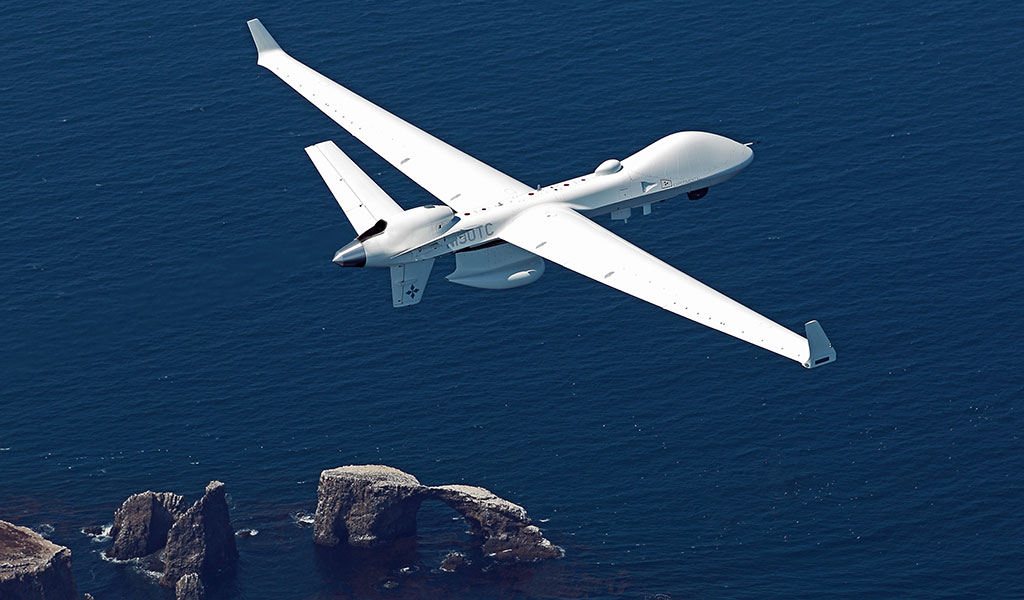
General Atomics has developed the maritime variant of MQ-9B, SeaGuardian, to perform over-the-horizon long-endurance, medium-altitude Intelligence, Surveillance and Reconnaissance (ISR) missions.
Thanks to its internal and external payload, SeaGuardian can be configured for a vast range of naval and littoral surveillance operations, including:
- Anti-Surface Warfare (ASuW)
- Anti-Submarine Warfare (ASW)
- Search and Rescue (SAR)
- Humanitarian Assistance and Disaster Relief (HADR)
- Borders surveillance and Law Enforcement
With its full range of sensors, its high endurance (more than 25 hours on station) and its low operating costs, the SeaGuardian is marketed by GA-ASI as a complementary system for navies and air forces already operating maritime patrol aircraft. The RPAS could also seduce air forces currently developing their maritime surveillance capability from scratch. With a highly modular payload and a multi-mode EO/IR system, the SeaGuardian is also able to operate most of the ISR missions of the SkyGuardian. SeaGuardian is therefore suited to operate over the open ocean as well as in a littoral environment. A capability that is rapidly convincing many air forces and navies around the world.
For ASW missions, the SeaGuardian can carry two to four sonobuoys dispensers under its wings. The aircraft carrying a sonobuoy receiver and processor internally. According to GA-ASI, the SeaGuardian could be equipped with airborne counter mine capability in the near future, expanding the range of its missions.
Japan decided to move forward with the procurement of Maritime Surveillance UAV in April 2021. Naval News’ Japan based correspondent, Yoshihiro Inaba, attended the demonstrations from Hachinohe Air Base in Aomori Prefecture, October 29, 2020: