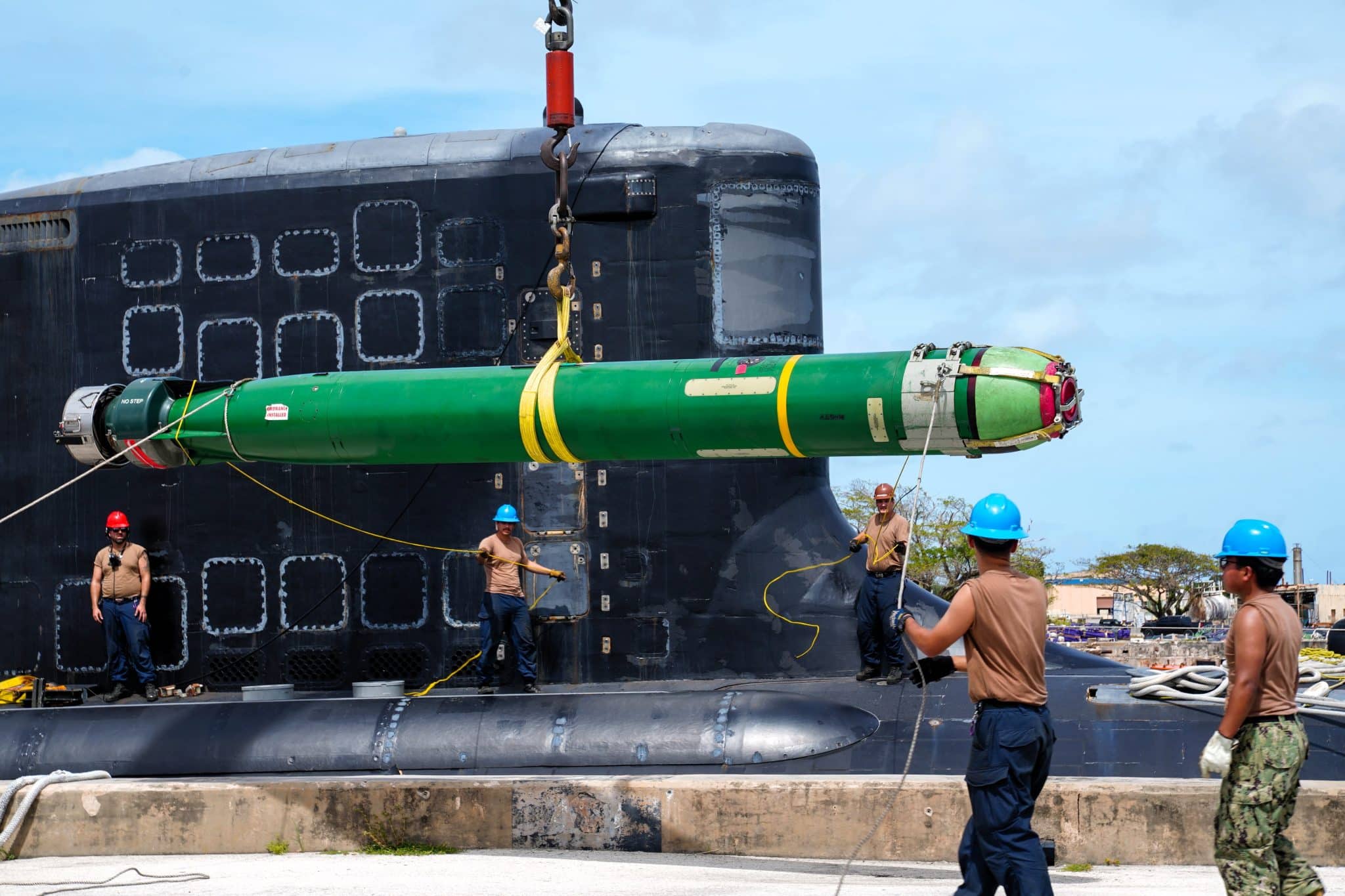
Congress made its desire for a massive torpedo inventory and production review known in the National Defense Authorization Act (NDAA) for Fiscal Year 2027, with the goal of supporting undersea weaponry quantities sufficient to maintain two major regional conflicts simultaneously.
The NDAA instructs Secretary of the Navy (SECNAV) Hung Cao to implement the initiative within 90 days of the NDAA’s enactment, which will expand to cover, “torpedo modernization, testing, production, and inventory sufficiency.” The first major component is the establishment of inventory floors for all of America’s torpedoes including the MK-48 Advanced Capability (ADCAP) heavyweight torpedoes, MK-54 lightweight torpedoes, advanced torpedo variants, training and testing rounds, and torpedo countermeasures, introducing a baseline amount of undersea arms that will be kept on hand at all times.
These inventory floors will likely be associated with the Navy’s estimate of torpedo expenditures against two peer or near-peer maritime adversaries, with the figures generated from an assessment also contained within the initiative. Accompanying inventory floors will be a report on the American industrial base’s current torpedo production capacity, including any potential bottlenecks associated with, “energetics, propulsion systems, acoustic seekers, guidance electronics, specialty metals, undersea weapon integration, facilities, and single-source suppliers.”
Additionally, the Navy is to investigate and overhaul current torpedo testing infrastructure including target vessels, undersea ranges, digital testing models, and environmental testing of America’s undersea weapons in arctic and deep water environments. The U.S. Navy will also generate the means to improve torpedo resistance against more advanced acoustic countermeasures as well as streamlined supply and transportation methods during wartime.
Increasing Production
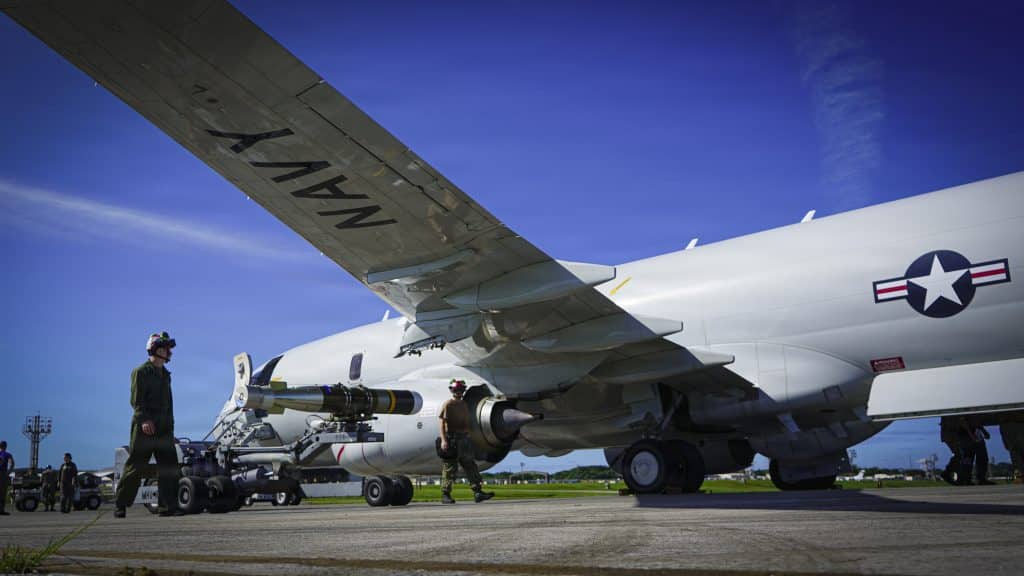
Concurrent with the above mentioned reviews and inventory reform, the NDAA also mandates that SECNAV will formulate a plan to massively increase the production capacity of the undersea weapons industrial base to support both peacetime and surge wartime production requirements.
This section of the NDAA includes instructions for the U.S. Navy to pursue possible second-source suppliers, an industrial build out of both private and publicly owned production facilities, expansions of private and public sector cooperation in torpedo production, and efficient usage of multi-year procurement authorizations. The Navy will also explore options to reinforce critical supply chain elements pertaining to sensitive or hard to acquire components, especially during wartime.
Finally, Congress mandates that SECNAV’s report on all of the above subjects be complete within 120 days of the NDAA becoming a law, at which point SECNAV will submit to congressional hearings to announce the Navy’s findings. Congress considers high-risk production and inventory pitfalls, a succinct torpedo testing methodology, estimates of wartime inventory expenditure, and investment plans to be the most important subjects.
More Weapons

This Congressional initiative represents the culmination of recent efforts carried out by the Navy to expand its selection of undersea weapons and countermeasures. The MK-58 Compact Rapid Attack Weapon which is to serve both as an offensive and defensive hard-kill anti-torpedo munition will likely be the first of two new torpedoes to make it into service, beating out the U.S. Navy’s RAPTOR low cost heavyweight torpedo meant to augment current MK-48 ADCAP inventories. Naval News has reported both on the MK–58 and RAPTOR previously.
Countermeasure improvements have also taken shape throughout the 2020s for both surface ships and submarines. In February 2026, Ultra Maritime won a contract to begin development of the next-generation Acoustic Device Countermeasure (ADC) MK6. Individual qualitative and production centered countermeasure improvements have also occurred against the backdrop of providing U.S. Navy surface ships and submarines a unified defensive architecture against torpedoes, which Naval News has also reported on.