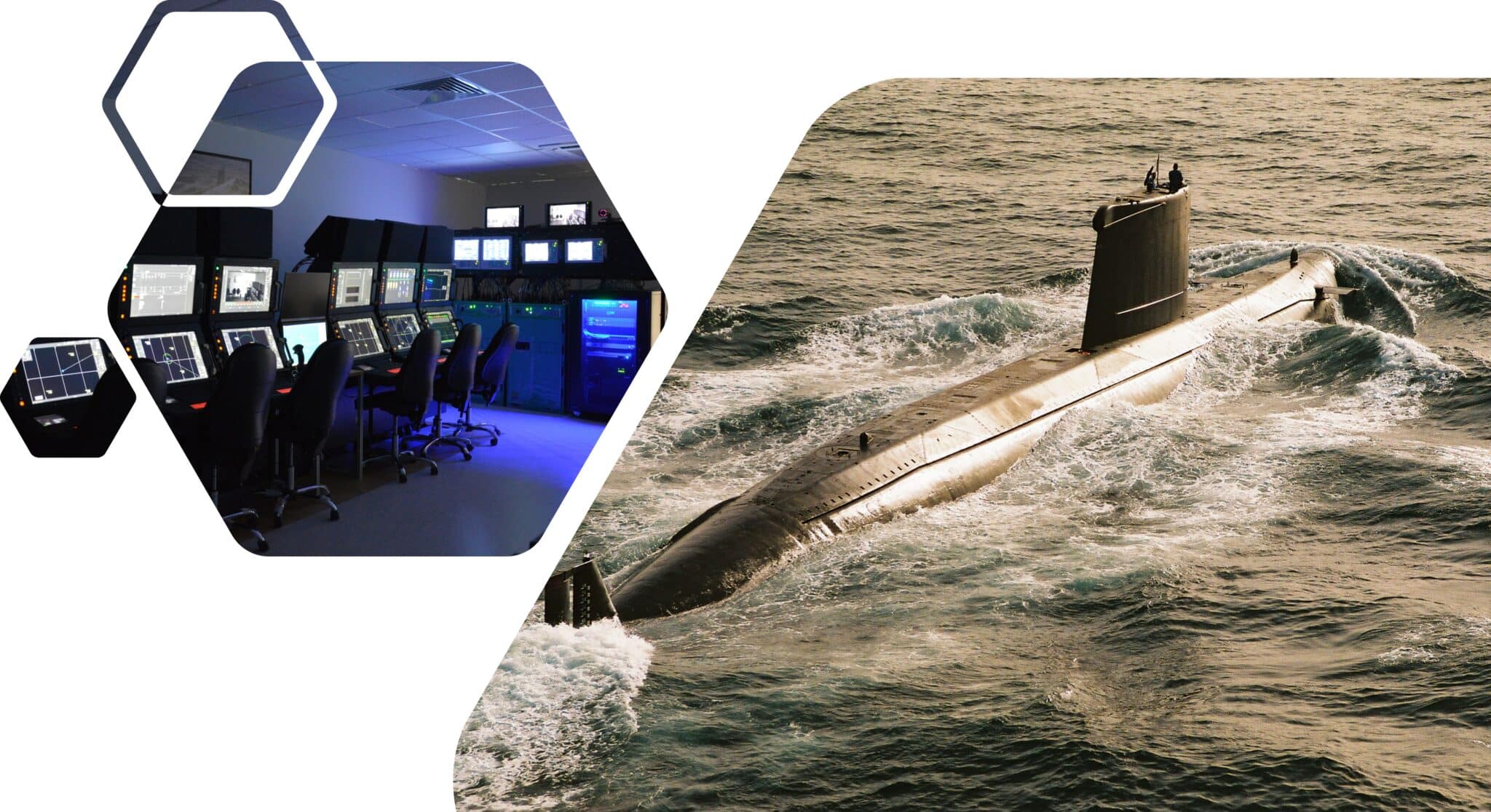
Submarines are strategic naval vessels that often carry out the most complex missions. To successfully perform such missions while maximizing operational efficiency and safety, an effective command and control system is required. Havelsan, a Turkish company that manufactures key command and control systems for the Turkish Navy and friendly countries, is introducing its “SEDA” submarine CMS solution.
The Sonar Integrated Submarine Command Control System, or SEDA (which means ” sound” in Turkish), was designed and developed by Havelsan to process data from sonar and sensors so quickly and accurately that a complete tactical underwater picture is created. SEDA simplifies submarine management while increasing process efficiency. With its ability to collect and synchronize data in real-time, the Tactical Data Link connects forces under the submarine with other elements and maximizes situational awareness.

Havelsan SEDA processes and displays data from acoustic and non-acoustic sensors, performs decision-support operations, and fires weapons. It is designed to increase the efficiency of users, decision-makers, and operations.
SEDA provides safe navigation to the submarines in challenging underwater environments ranging from coastal waters to the high seas, analyzes sensor data, defines the tactical environment, supports the command staff with decision support systems, and engages surface and submarine targets with submarine weapons.
Because SEDA is scalable and modular, it can be applied not only to submarine construction or refurbishment, but also to minehunting vessels, unmanned naval vessels, underwater sensor networks, and sonobuoy projects. SEDA enables efficient assessment, development of new components for decision-makers, and display of the new scenario resulting from sensor and weapon data after an engagement by integrating the sensors into the command and control system.

Havelsan SEDA’s first export customer is Pakistan. As part of a mid-life upgrade program, the system will be installed on AGOSTA 90B-class submarines. The export of the system proves Havelsan’s ability to take responsibility for the entire combat system of a submarine and to effectively execute this project.
SEDA provides;
- Determination and tracking of targets by controlling basic acoustic sensors (SONAR) and analyzing the data from these sensors.
- Managing sensors such as RADAR, ESM, periscope, and displaying the data from these sensors.
- Performing General Navigation and Tactical Navigation functions.
- Acoustic classification and identification
- Torpedo / Weapon Integration
Technical Features;
- Tactical Status Display
- Trace Management and Fusion
- Target Data Management
- General / Coastal / Tactical Navigation
- System Level Classification
- Threat Analysis / Vulnerability Analysis
- Torpedo / Missile Fire Control System
- Sensor Integration (ESM, RADAR, TCM, Optronics)
- Sensor Fusion
- Electro-Optical Classification
- System Management
- Redundant Work Modes
- System Simulation
- Offline Test