Only months after its commissioning on April 25, 2025, North Korea’s most advanced surface warship, the missile destroyer Choe Hyon (51), has reappeared featuring significant modifications to its weapon and sensor suites.
North Korea showcased its newest and most advanced warship, the 142-meter missile destroyer Choe Hyon, during the opening ceremony of the annual “Defense Development 2025” exhibition, held for the third consecutive year, on October 5, 2025 in Pyongyang to mark the 80th anniversary of the founding of the Workers’ Party of Korea. The event was an opportunity for North Korea to present adjustments and refinements made to the destroyer over six months of post-launch work since her official commissioning in April 25, 2025. The display precedes the destroyer’s planned redeployment to the east coast early next year.

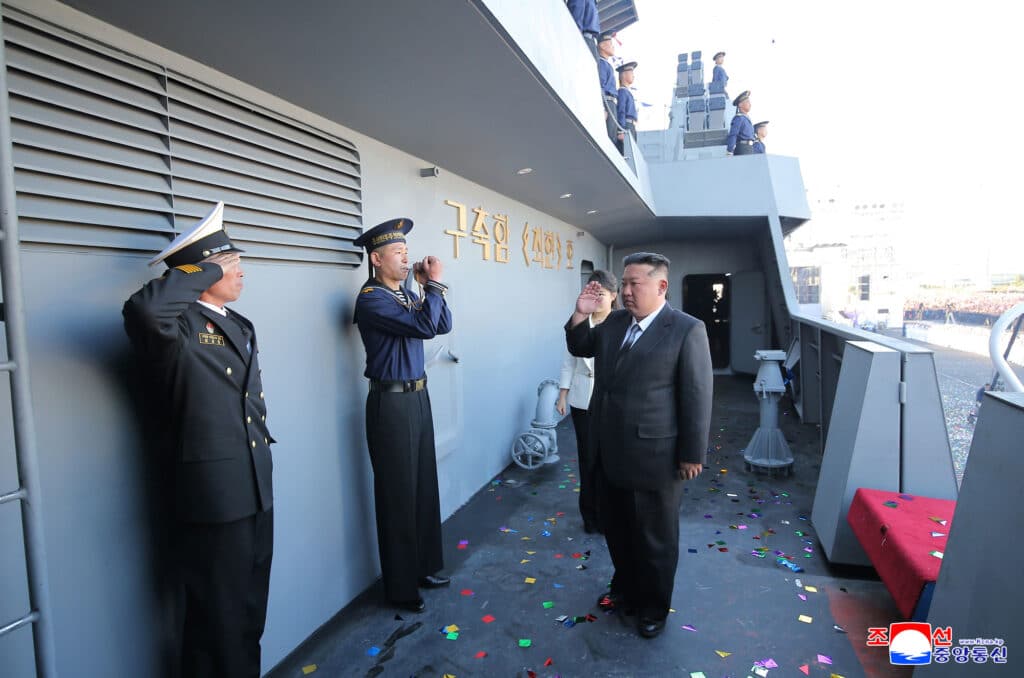
North Korean leader Kim Jong Un, accompanied by senior military and party officials as well as naval personnel, toured the ship at Nampo Port. The destroyer was also visited by other participants of the exhibition’s opening ceremony, and a reception was later held aboard by the Party’s Central Military Commission in honor of the Navy of the Korean People’s Army (KPA) officers and sailors.
Several modifications were noted aboard the new destroyer of the KPA Navy, most notably in its weapons fit and electronic suite. Moreover, for the first time, and rare for a North Korean naval vessel, official images also revealed parts of the ship’s (surprisingly very modern) interior, including the combat information center (CIC), bridge, crew accommodations, and other sections. The photos reveal an advanced configuration, featuring multi-function consoles, large touchscreens, and a comfortable, thoughtfully designed interior, a genuine surprise for observers.


In terms of weapon systems, the vessel’s two AK-630–style CIWS, featuring cupolas reminiscent of the earlier AK-230 mounts, have been replaced with installations resembling the PLAN Type 730 CIWS. Notably, the North Korean configuration employs a six-barrel gatling arrangement, in contrast to the seven-barrel configuration of its Chinese counterpart on which the design appears to be based.


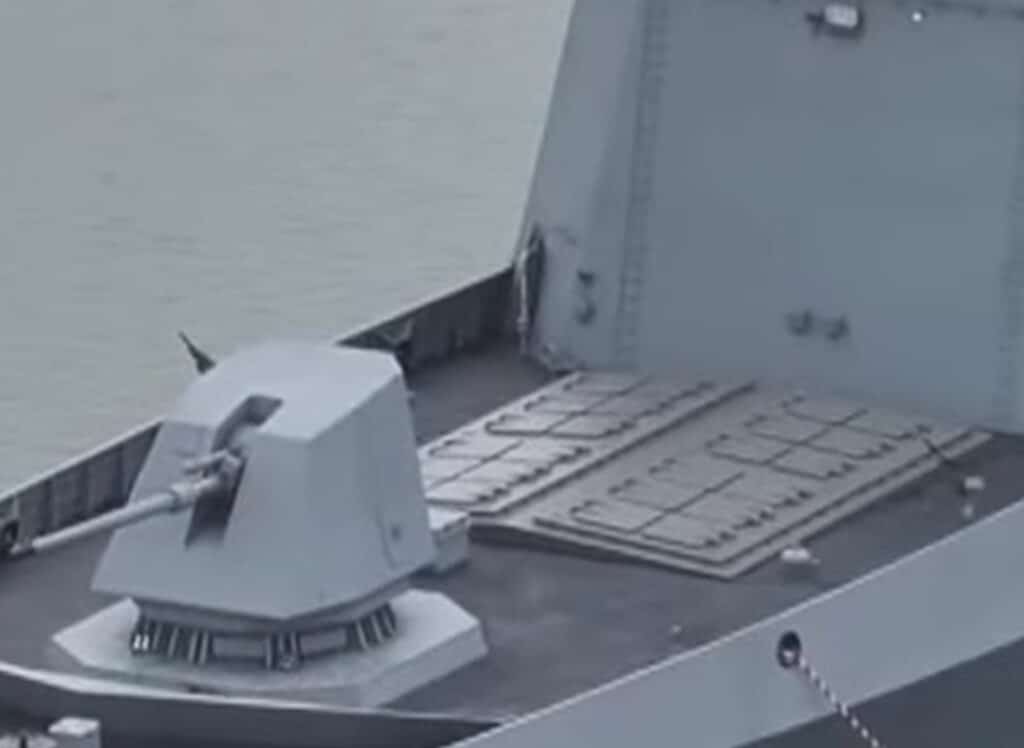
Notable modifications are evident in the ship’s vertical launch system (VLS) configuration. The forward VLS, which previously featured 32 small-diameter launch cells, now consists of 12 larger cells identical to those fitted in the aft section of the same launcher, bringing the total to 24. The aft VLS has also been reworked: the superstructure that once housed 10 oversized ballistic missile cells has been redesigned and integrated with the adjacent hull structure, creating a more continuous profile and eliminating the port and starboard gaps seen in the earlier configuration. The large cells have been replaced by a launcher similar to the forward one, and it is likely an exact bow VLS configuration containing 24 cells. As a result, the initial count of 74 cells has been reduced to 68 and possibly the rear UAV (?) storage rooms have been removed.

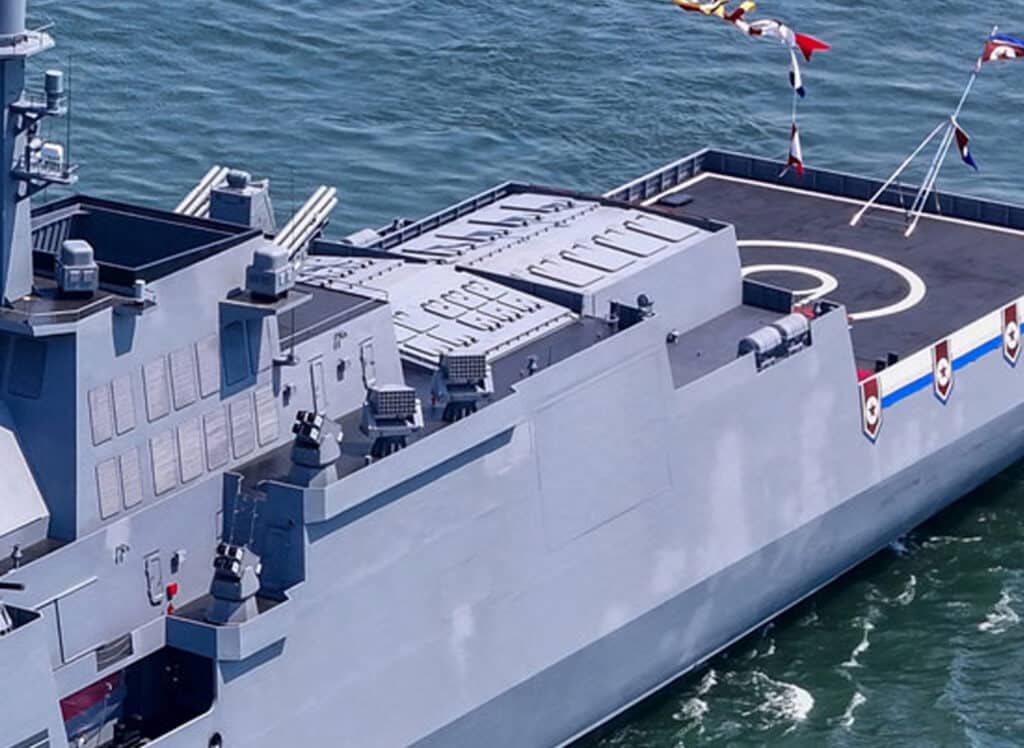

Furthermore, the four quadruple ATGM launchers were removed. The second decoy-launching system on each side has been relocated to the lower-deck ATGM-launcher position, and life-saving equipment was placed where the DLSs used to be. At least eight KPV 14.5mm KPVT heavy machine guns have been installed on pedestals; four amidships, two at the bow section and two near the aft VLS.

Changes are also apparent in the ship’s sensor suite, particularly in its fire-control radars (FCRs). The two previously fitted square-shaped radars have been replaced by circular units resembling the Chinese Type 347 FCR. Modifications are also evident in the EW systems, with two sensors relocated from atop the superstructure, which houses the four fixed radar arrays and the secondary FCR, to positions along the sides of that structure. Changes also took place in its EW antennas, those under the structure that accommodates the large radar antennas.


The fact that all weapons and related sensor systems of the destroyer were tested off Nampo on April 28–29 makes their replacement only a few months later even more curious from an operational standpoint. Furthermore, it raises questions about whether the ship’s armament, particularly the VLS, is designed for modular replacement, or if the earlier setup was tested and subsequently replaced with a more advanced version. Did the ship reduce its SAM loadout to accommodate more anti-ship or cruise missiles, or were the short-range SAMs swapped for larger variants? Curiously, the model in the commander’s cabin still portrays the ship as it appeared in April. For a detailed analysis of the equipment of the powerful 5,000-ton Choe Hyon-class destroyers, of which three more units are under construction, see the article “North Korea Commissions Heavily Armed Missile Destroyer ‘Choe Hyon’.”