The Royal New Zealand Navy (RNZN) is progressing a long-term fleet renewal programme that will reshape the service’s force structure, training model, infrastructure, and sustainment architecture over the next two decades.
Speaking at the recent Combined Naval Event 2026 conference in Farnborough, Commodore Brendon Clark, Co-Director Maritime Fleet Renewal, said the programme was a “once in a generation opportunity” to transform the navy and deliver a “modern combat-capable fleet” supported by both crewed and uncrewed systems. “It will be the largest capability and transformation programme ever undertaken by our defence force,” he said.
The Maritime Fleet Renewal effort is being driven primarily by the approaching retirement of most of the RNZN’s current fleet. Apart from the fleet replenishment vessel HMNZS Aotearoa, the navy’s remaining seven ships are expected to reach the end of their service lives by the mid-2030s.
“Without replacement, this would have a significant impact on New Zealand’s ability to protect its maritime interests in the Pacific and beyond,” Clark said.
Operational drivers
New Zealand’s geographic location continues to shape force structure and capability requirements. The country’s exclusive economic zone covers approximately 4 million sq km, while its search-and-rescue region extends across around 30 million sq km of ocean stretching from Tokelau in the north to Antarctica in the south.
Clark said maritime security remains central to New Zealand’s safely, economic prosperity and international connectivity. “Much like the UK, New Zealand is an island nation with significant maritime responsibilities that require specialist equipment and personnel with the requisite skills, knowledge and experience,” he said.
The future fleet is expected to support a wide range of functions, including maritime security patrols, combat operations, sealift, hydrography and diving operations, assistance to other government agencies, while also supporting humanitarian assistance and disaster relief (HADR) tasks and coalition operations.
Fleet rationalisation and commonality
A central feature of the RNZN renewal effort is increased commonality. The current fleet comprises eight ships across five separate classes, which has created challenges around sustainment and training.
Clark said that differences in platform design and onboard systems mean that additional training and certification is required whenever personnel transfer between ship classes. Limited systems commonality across platforms also complicates logistics and sustainment support.
“Please don’t also forget that we are at the bottom of the world,” he added.
As a result, the RNZN is exploring options to simplify the future fleet structure and reduce the number of platform types in service.
“The importance of a common design to maximise crew training, qualification, and ultimately flexibility, while reducing costs of ongoing maintenance and support, is what we are targeting,” Clark said.
The final composition of the future fleet will be determined through the course of the programme and individual business cases.
Work transformation
The RNZN intends to redesign aspects of its training and force-generation pipeline as part of the wider transformation programme.
According to Clark, much of the operational training and certification will shift from sea- to shore-based delivery in a bid to increase workforce generation capacity. To this end, the RNZN is examining a “Ship Zero” concept that would provide simulation-based training ashore.
Clark also outlined plans to introduce more flexible crewing arrangements.
Under the future model, specialist personnel will increasingly operate as deployable teams rather than being permanently assigned to individual ships.
“These teams will go beyond traditional approaches to crewing force elements so as to include a broader range of specialists able to deploy where needed to delivery a specific operational effect,” Clark said. “This could range from core operational activities to support functions routinely throughout a deployment life cycle.”
Clark said that the RNZN will also redesign career pathways and workforce structures to better align with future capability requirements.
While he stated that RNZN recruiting pipelines are currently full, he acknowledged that retention of experienced personnel remains a significant challenge.
“We readily acknowledge that the next generation of sailor coming through will be different from the current, and we need to make sure that we have the technology embedded to enhance their careers, to train them in place, grow them, and give them the experiences that align with their values and the platforms for them to fight,” he said. “We must redesign the roles to ensure they align with our future needs, and we must have clear and flexible pathways for them.”
Uncrewed systems development
The RNZN plans to expand its focus on uncrewed maritime systems as part of the fleet renewal programme.
Clark said that while crewed ships are expected to account for the majority of future investment, the RNZN is also assessing complementary autonomous and remotely operated systems that will be able to operate across a range of environments.
“Development of uncrewed systems and preparation for the future fleet will be our priority for the next four years, while most maritime fleet investments will occur in the next decade”, he said.
The deliberate phasing of procurement activity into the early 2030s is intended to allow for the adoption of new and emerging technologies to achieve transformational change across training, trades, and infrastructure, he noted.
Frigate replacement studies
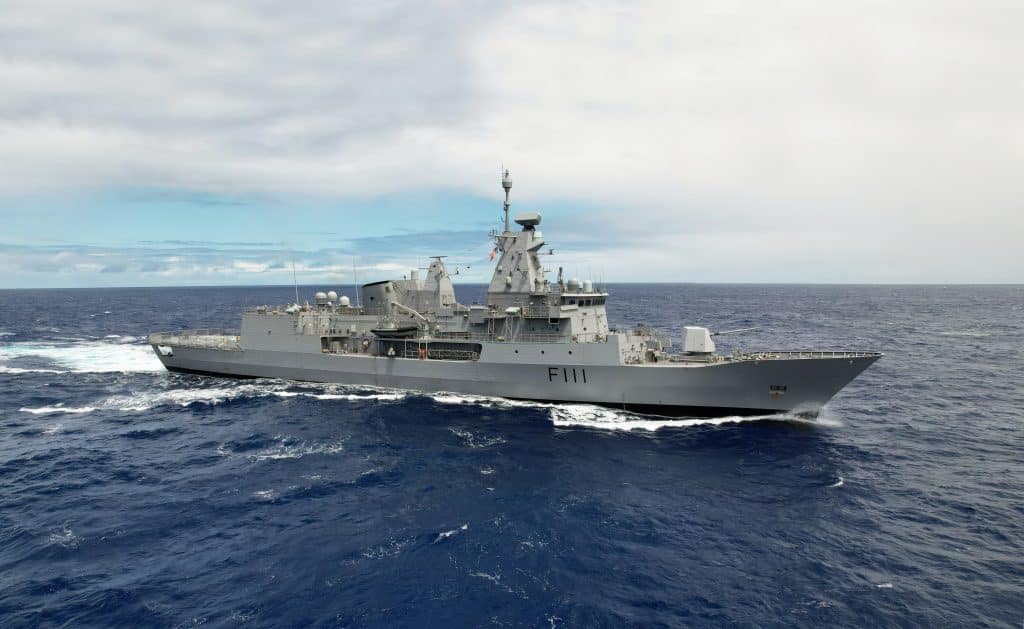
The RNZN is also progressing work to replace its two ANZAC-class frigates, HMNZS Te Kaha and HMNZS Te Mana, as part of a broader effort to strengthen New Zealand’s defence capabilities.
Clark said that discussions are under way with both the Royal Australian Navy and the UK Royal Navy to inform the next stage for potential frigate replacement and support arrangements.
The RNZN is examining two existing programmes to support its future combatant business case: the Japanese Mogami-class frigate selected under Australia’s future general-purpose frigate programme, and the UK Royal Navy’s Type 31 frigate programme.
“The decision to prioritise discussions with our partners … reflects our need to be interoperable and leverage efficiencies from a partnership with another navy,” Clark said. “Importantly, New Zealand is looking at future modern combat-capable vessel programmes that are at the stage that allows adequate analysis against New Zealand’s requirements.”
Clark stressed that no final decision has yet been made on the future combatant requirement. Formal advice is expected to be presented to government at the end of 2027.
Future projection capability
The RNZN is also reviewing options for future maritime projection and sealift capability.
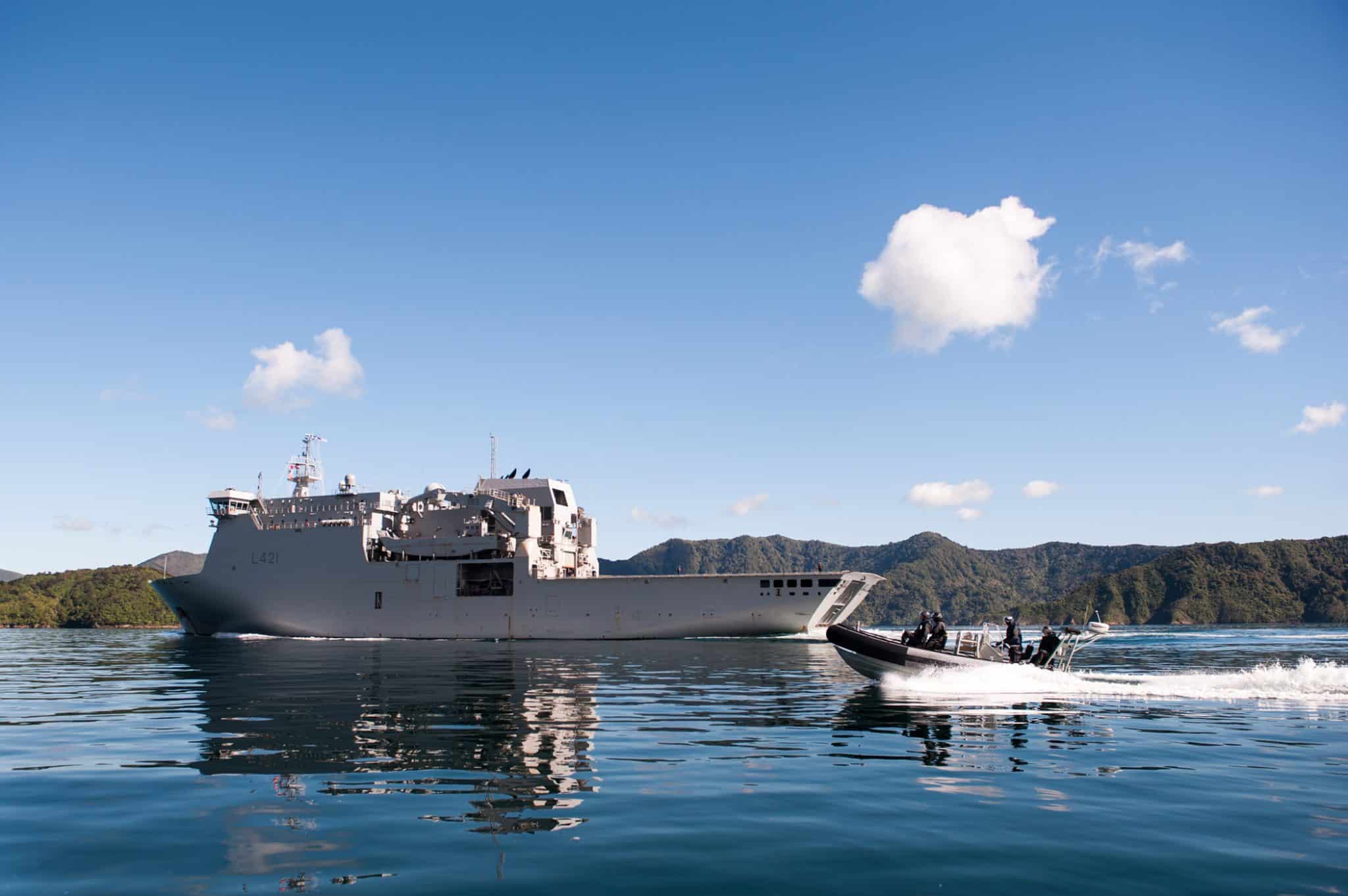
HMNZS Canterbury currently provides the navy’s primary sealift and amphibious support capability, including the transport of personnel, vehicles, helicopters, and equipment.
Clark said New Zealand’s geography and operating environment place significant demands on sealift platforms and must be central to future capability decisions. “Deployments to Australia into the Southwest Pacific typically involve transits of at least 1,000 n miles, often across heavy seas,” he said.
According to Clark, future projection capability may comprise a mix of shipping, littoral assets, and autonomous systems designed to deliver tailored and scalable effects rather than relying solely on a single platform.
The RNZN is also assessing whether future requirements should include a well-deck capability.
“This decision has important implications for how the navy supports and deploys littoral forces, operates landing craft, uncrewed systems, and projects forces over the shore. It will also influence design, cost, crewing and infrastructure requirements,” he said.
“The projection capability will be about increasing flexibility, resilience, and operational choice, ensuring the New Zealand Defence Force can project elements and deliver effect across long distances in challenging environments, now and into the future.”
Maritime helicopter replacement
Although not formally part of the maritime fleet renewal programme, Clark also addressed the New Zealand Defence Force’s maritime helicopter replacement effort.
New Zealand’s current Kaman SH-2G(I) Seasprite helicopters are approaching the end of their service lives. The New Zealand government announced in 2025 that the Sikorsky MH-60R Seahawk had been selected as the preferred replacement platform.
Clark said the Seahawk will improve surveillance, force protection, and operational support capability across the future fleet. The helicopters are expected to operate from frigates, offshore patrol vessels, HMNZS Aotearoa, and future projection platforms.
Infrastructure and logistics
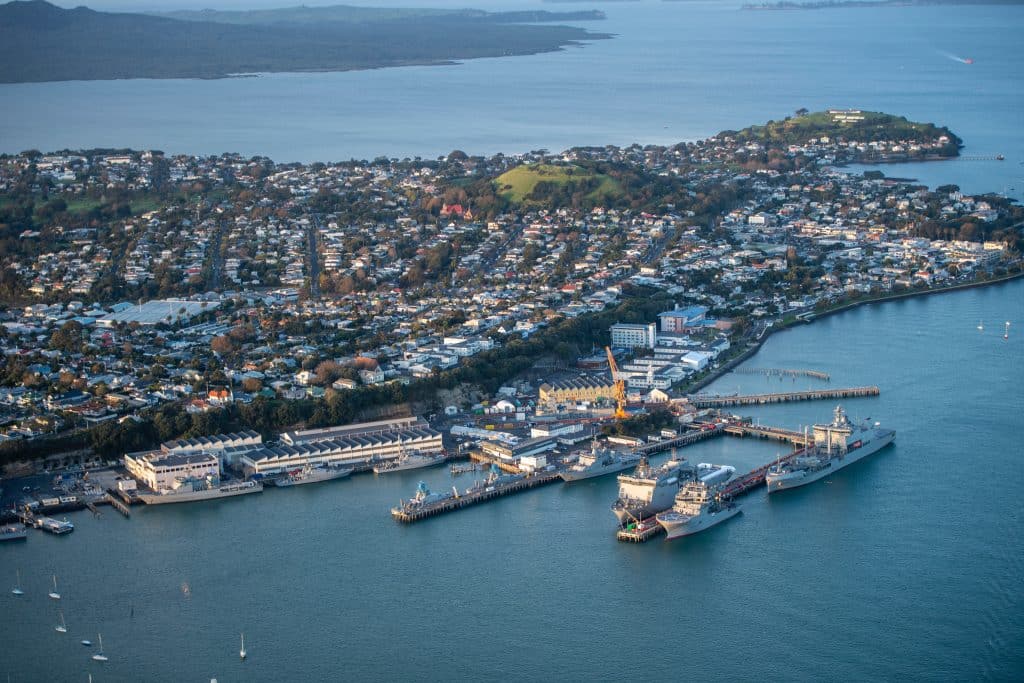
The fleet renewal programme also includes infrastructure modernisation at Devonport Naval Base in Auckland. Clark said the RNZN plans to develop upgraded wharf facilities, dockyard infrastructure, training environments, and enhanced secure operational facilities and office spaces.
He identified logistics resilience as another priority area. According to Clark, disruptions associated with the COVID-19 pandemic and the war in Ukraine demonstrated the vulnerability of New Zealand’s supply chains.
“A defence force can only operate while it has access to essential supplies,” he said. “Logistics is therefore a critical enabler … and investment will be required to build more resilient and reliable supply chains.”
The New Zealand government unveiled its defence budget for FY2026/27 on 28 May. Follow this link to learn how the new budget is impacting the RNZN.