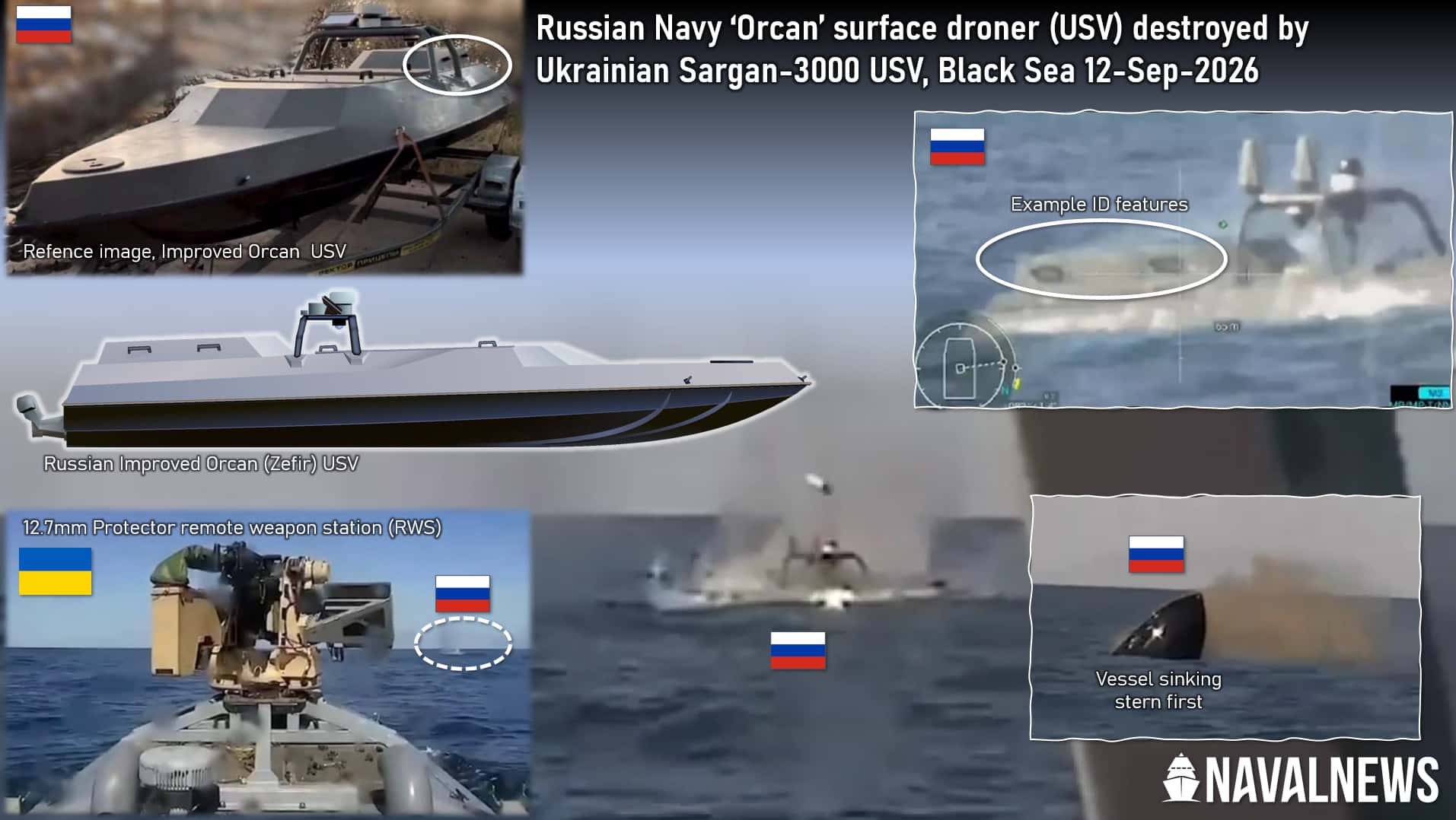
For the first time in history, an uncrewed surface drone (USV – uncrewed surface vessel) has destroyed another USV in combat. The Ukrainian Navy Sargan-3000 USV, operating on intelligence from the Main Intelligence Directorate (HUR), interdicted a Russian attack USV in the Black Sea. The Russian naval drone was sunk.
The Russian USV can be positively identified as an improved Orcan type (also referred to as Zefir in some Russian sources). The Orcan is a relatively small drone intended for explosive attacks, being very similar in size and concept to Ukraine’s original Magura V3 and V5 types. It has an internally mounted motor driving a jet ski type steerable water jet. This makes it fast and agile.
Russian Surface Drones
The Orcan surface drone is typical of those being used by Russia for attacks on Ukrainian ports and naval vessels. These are becoming more frequent, and more of a threat. Several strikes have been reported, primarily on Odesa, and more have likely been foiled. Several Ukrainian warships and naval vessels have been destroyed, although the ship count and strategic initiative remains with the Ukrainians.
Russia has been basing these USVs in northwestern Crimea, in Chornomors’ke, and in a new special base on Lake Donuzlav. The latter base features dispersed revetments dug into the shoreline to protect the USVs before launching their mission.
During attacks the Russian USVs work closely with deep strike drones, particularly the Geran (Shahed) type which can provide oversight and control. The aerial drones are equipped with trainable cameras and can act as repeaters to extend the range of the USV’s mesh radios.
The Duel
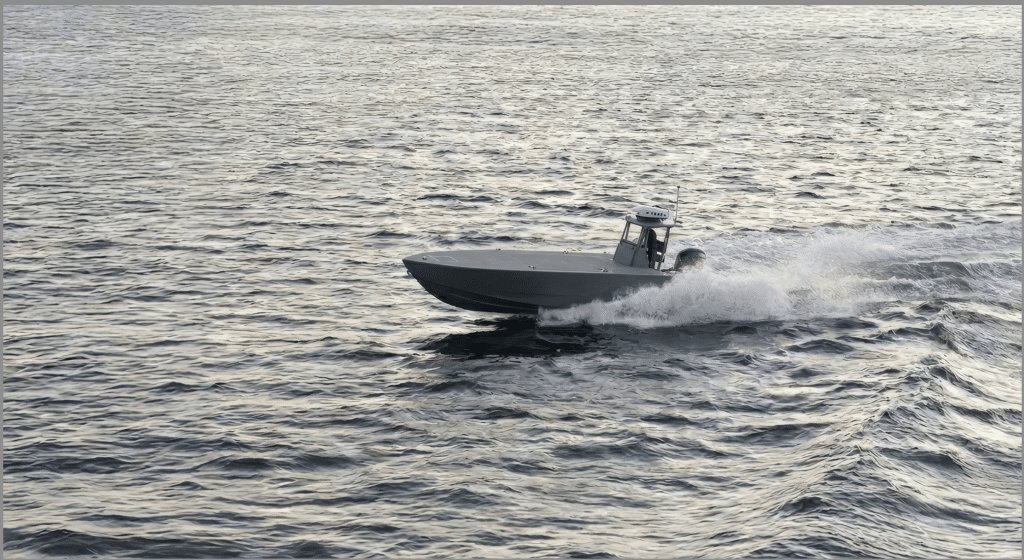
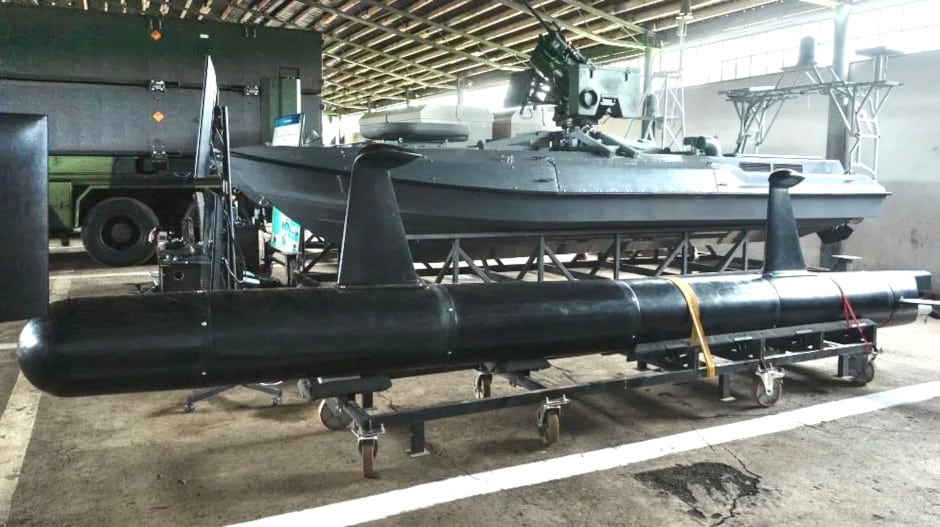
Also known as the Seawolf, the Sargan-3000 is one of the main types of USV associated with the Ukrainian Navy (VMS-ZSU). Built by Nordex, it is also increasingly associated with Norwegian defense firm Kongsberg, whose remote weapon station was used in this case. The Sargan can also carry the Sea Dragon air defence system; a ‘FrankenSAM’ system using Sidewinder or Soviet-era AA-11 Archer missiles. Another notable variant is equipped with extensive electromagnetic warfare (EW) equipment.
The exact vicinity of the fight has not been reported but is most likely to be in the Northwestern Black Sea between Odesa and Crimea. The Orcan will likely have been armed with a ramming charge, while the Sargan-3000 was armed with a Kongsberg Protector RWS (remote weapon station) with a 12.7mm machine gun. The Ukrainian Navy USV used this to sink the Russian USV.
USVs are intended to be expendable and the loss of one unit in this way is not in itself significant from an attrition perspective. But the way that it was done is consequential. It will likely lead to an evolution of tactics on both sides.