Video: Day 2 at SNA 2020
Day 2 at SNA 2020, the Surface Navy Association’s national symposium.

Day 2 at SNA 2020, the Surface Navy Association’s national symposium.

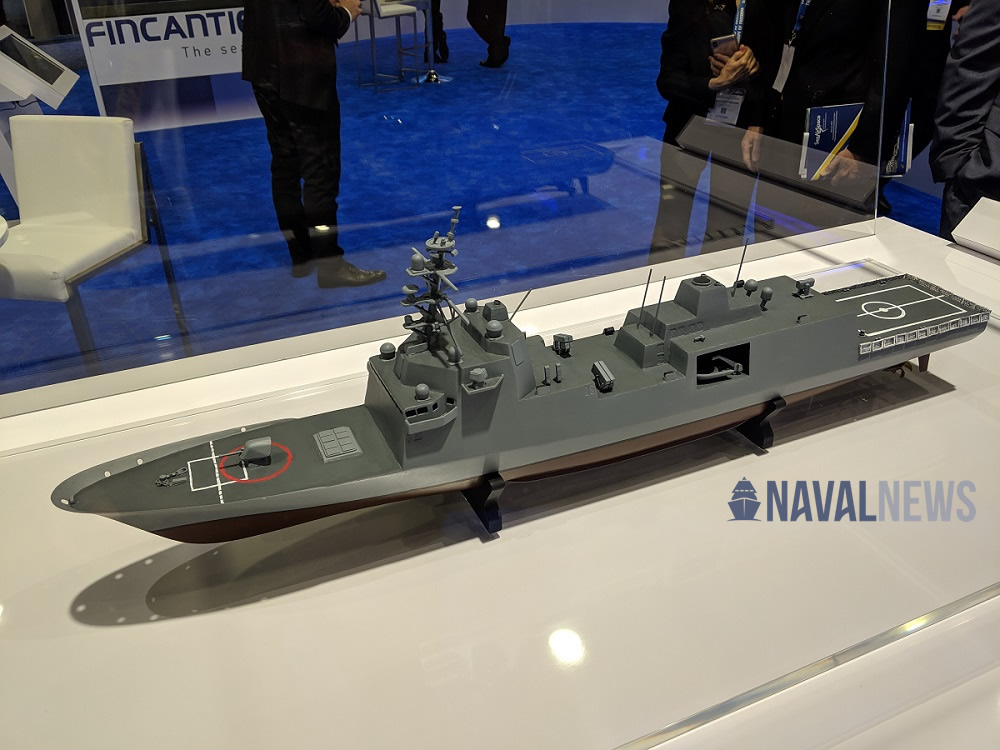
In the contest to build the Navy’s new class of guided-missile frigates, bidders are counting on power generation as the difference-maker as the service nears awarding a contract.

The Belgian Navy plans to deploy the Léopold 1er (F930) frigate within the French carrier strike group, the 2020 operational plan of the Belgian Defense Ministry reveals.

In a European first, the French Navy (Marine Nationale) demonstrated a cooperative engagement between two of its surface vessels. The “Veille Coopérative Navale” test took place in September 2019.

Thales sonars and acoustic systems will provide the Spanish Navy’s five F110 frigates with a latest-generation anti-submarine warfare (ASW) capability. The key components of the integrated suite are the BlueMaster (UMS 4110) and CAPTAS 4 Compact sonars, the TUUM-6 underwater communication system, and the BlueScan digital acoustic system already in service with other European navies.

Damen Shipyards Group and its partner PT PAL have completed the installation of combat systems to the first Indonesian Navy (TNI AL) SIGMA 10514 Perusak Kawal Rudal (PKR) guided missile frigate, the KRI Raden Eddy Martadinata.

Lockheed Martin recently signed a contract with Navantia to equip five new F-110 multimission frigates and their land-based test site (Centro de Integración de Sistemas en Tierra or CIST) – with Lockheed Martin’s first naval installation of its solid state S-band radar. The new F-110 frigates will be built by Spain’s national shipbuilder, Navantia.

The Royal Netherlands Navy (RNLN) frigate De Ruyter (F804) will leave for a six months deployment in the Persian Gulf starting on January next year, the Dutch government announced on November 29.

The Philippine Navy’s first-ever guided-missile frigate, BRP Jose Rizal (FF-150), set sails from the Hyundai Heavy Industries (HHI) shipyard in Ulsan yesterday November 23 to begin its initial sea trials.

In Part 1 of this article, we presented the DGA Techniques hydrodynamiques, its missions and the numerous programs it is involved in. In Part 2, you’ll discover the impressive facilities used everyday by DGA-TH engineers.