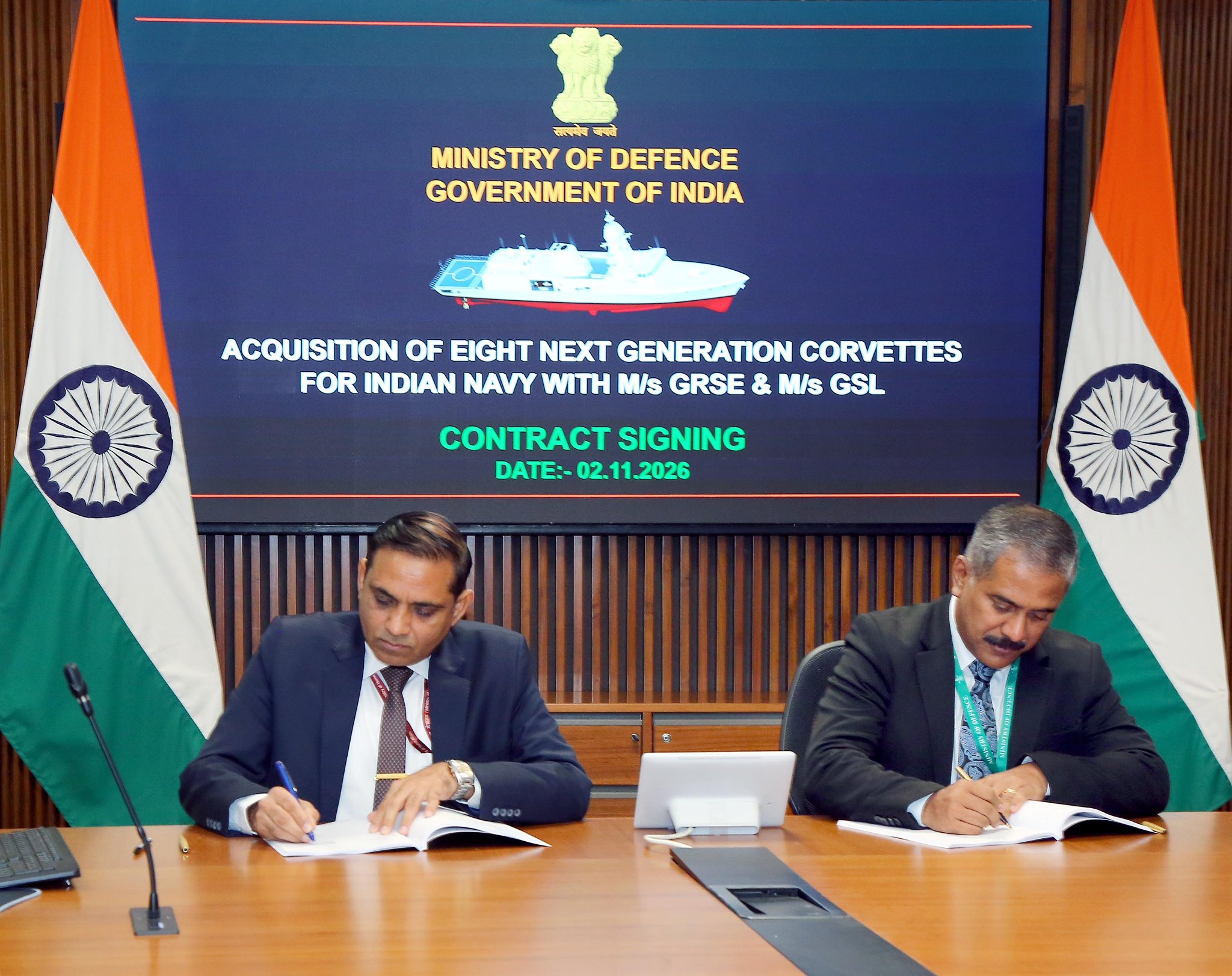
On November 2, 2026, India’s Ministry of Defence signed contracts worth ₹53,866.5 crore ($5.7 billion) with Garden Reach Shipbuilders & Engineers Limited (GRSE) and Goa Shipyard Limited (GSL) for the acquisition of a total of eight Next Generation Corvettes (NGCs) for the Indian Navy.
Under the contracts, GRSE will construct five corvettes for about ₹32,000 crore ($5.7 billion), while GSL will construct the remaining three. GRSE had emerged as the lowest bidder for the project. The Project 28A NGC is the first project in which the ships are indigenously designed by the Indian Navy and constructed by Defence Public Sector Undertakings (DPSUs) selected through a competitive process, instead of a nomination process.
The Request for Information for seven NGCs was floated in 2016 equipped with at least eight Surface to Surface Missiles (SSMs) and a towed array sonar, among other equipment. The number of ships was later increased to eight when the Defence Acquisition Council (DAC) approved the project in June 2022. Clearance by the Cabinet Committee on Security was granted on October 28, 2026.
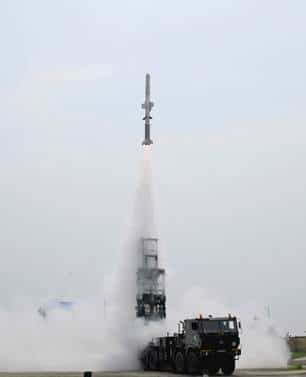
It appears that the NGC will be among the first new surface combatant classes to be equipped with the NASM-MR turbojet propelled anti-ship missile being developed by DRDO. The maiden test of the NASM MR was conducted in June 2026. A November 2023 DAC approval exists for procurement of Medium Range Anti-Ship Missiles (MRAShM) for surface platforms of the Indian Navy, with the MRAShM envisaged as a lightweight Surface-to-Surface Missile which will be a primary offensive weapon onboard Indian Naval Ships.
GRSE’s press release stated:
The proposed systems include Medium Range Anti-Ship Missiles, Medium Range Surface-to-Air Missiles (MRSAM) and 324 mm torpedo tubes. The armament suite will also include an OTO Melara 76 mm Super Rapid Gun Mount (SRGM) with the latest upgrade, an AK-630 Close-In Weapon System (CIWS) and 12.7 mm Stabilised Remote-Controlled Guns (SRCGs) integrated with an Electro-Optic-based Fire Control System (EOFCS). The sensor suite will include an Electro-Optical Infrared Search and Track (EOIRST) system and a Multi-Function Surveillance, Track and Guidance Radar (MFSTAR).
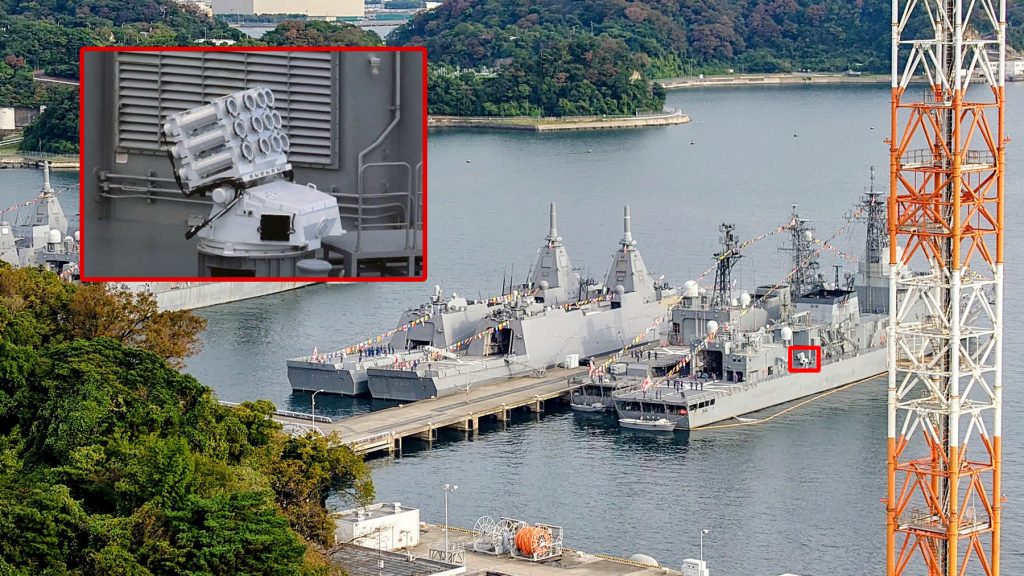
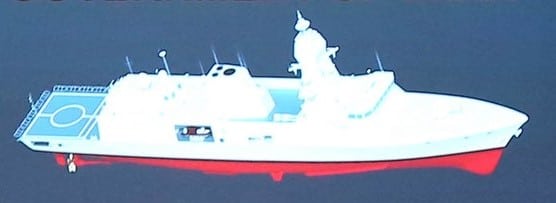
In a low resolution render of the NGC design seen during the contract signing ceremony, two inclined launchers each with four tubes are visible amidships facing starboard, with hints of a similar arrangement on the port side. If accurate, this could mean that the NGC can carry up to 16 MRAShM missiles. Most Indian surface combatants feature the BrahMos supersonic cruise missile, with even Soviet-derived legacy vessels set to be retrofitted with the missile system. While it has greater range and other defining characteristics, the BrahMos is heavy and expensive compared to subsonic missiles like the MRAShM. India is building other subsonic missiles like the LRLACM and associated SLCM as well as NASM SR for various roles and range regimes.
The render appears to lack the RBU 6000 based Indigenous Rocket Launcher, a signature weapon of Indian Navy ships for decades. The NGCs will feature 16 MRSAM missiles across two eight-cell vertical launch units. Unlike with the NGMV, the VLSRSAM is not expected to be installed initially.

The NGCs will have the following specifications:
- Length: 127.4 meters
- Beam: 17.6 meters
- Displacement: 4,950 tons
- Maximum speed: 26 knots
The NGC will be crewed by 11 officers and 139 sailors. The corvettes will feature an Combined Diesel and Gas Turbine–Cross-Connect (CODAG-CC) propulsion arrangement, driving two controllable pitch propellers. A hangar capable of accommodating a helicopter or UAV will be present.
GRSE has experience building the Project 17A Nilgiri class frigates, ASW SWC and other naval vessels. GSL has built multiple OPVs and is building the last two Talwar class frigates. Both GRSE and GSL will utilize private partners to speed up construction of the vessels. The delivery of the ships are expected to commence by 2031 with both shipyards aiming to launch the first corvettes in late 2029.
Major roles of the NGC include offensive attack using SSMs, ASW, escort, air defence and to be a part of surface action groups. The corvettes will be larger than some of India’s current frigates including the Talwar class. The Indian Navy has been aiming to build larger surface combatants across categories.
Updates on Other Warship Programs
Times of India had reported in 2025 that four Next Generation Destroyers (NGDs) with a displacement of about 10,000 tons each are in the pipeline for approval. Five to ten Next Generation Destroyers (NGD) / Next Generation Frigates (NGF) were also mentioned in TPCR 2025 as reported by Naval News.
On October 26, 2026 the DAC approved the procurement of “other major Naval platforms” which were vaguely described as indigenously designed and constructed platforms possessing modern-day warfare capabilities which will enhance the combat capability of the Navy. The Tribune reported that this approval is for four NGDs. A formal confirmation of this approval is yet to be issued. An approval would allow the NGD project to proceed towards a formal design and procurement pipeline, culminating in a contract with shipyards in the next few years.
In a separate event in October 2026, the Indian Navy’s Vice Chief revealed that the Navy had invited bids from select shipyards through a request for proposal for construction of four Landing Platform Docks. Navantia has teamed up with Larsen and Toubro (L&T) to participate in the LPD program. DAC approval for the project was granted in October 2025.