Two new pieces of equipment have recently joined the ranks of the US Marine Corps (USMC): the NMESIS – short for Navy-Marine Expeditionary Ship Interdiction System – and the MADIS (which stands for Marine Air Defense Integrated System). Both items were put through their paces in the Philippines in the multinational Exercise Balikatan held from 20 April to 8 May 2026.
The Hawaii-based 3d Marine Littoral Regiment (3d MLR) fielded both the NMESIS and MADIS during Balikatan 2026. It is itself a relatively new formation in the USMC, after being created in March 2022. In addition, the 12th MLR was formed in Okinawa, Japan last year. Notably, both these MLRs belonging to III Marine Expeditionary Force are located in the Asia-Pacific region. The 4th MLR was slated to be created in Guam next year, but it was later decided to keep the formation as a reinforced marine infantry regiment.
1st Lieutenant Duncan Stoner, Director, Communication Strategy & Operations at 3d MLR, explained to Naval News what a marine littoral regiment actually is. “We’re a purpose-built, informed formation designed to operate and persist in contested littoral environments in tandem with regional forces. In real-world terms, our function is to enable and deliver multi-domain effects that expand the decision space for the broader combined and joint force in the region. We integrate maritime fires, multi-domain awareness and robust sensing capabilities to enhance combined and joint kill webs, ultimately supporting our allies and partners across the multinational force.”
Stoner said MLRs are a direct result of the commandant’s Force Design 2030 modernisation initiative. “Our leaders recognised a need for an agile, sustainable formation that can seamlessly integrate and enable a larger, multinational force in a complex theatre. We characterise this as the stand-in force concept.
Anti-ship reach
Whilst attending Exercise Balikatan 2026, Naval News was invited to travel by US Air Force C-130J Hercules aircraft to Basco in the Batanes Islands. Located in the Luzon Strait, which separates the Philippines and Taiwan, Basco is actually closer to the Taiwanese mainland than it is to Luzon. Located there was a NMESIS section of the 3d MLR.
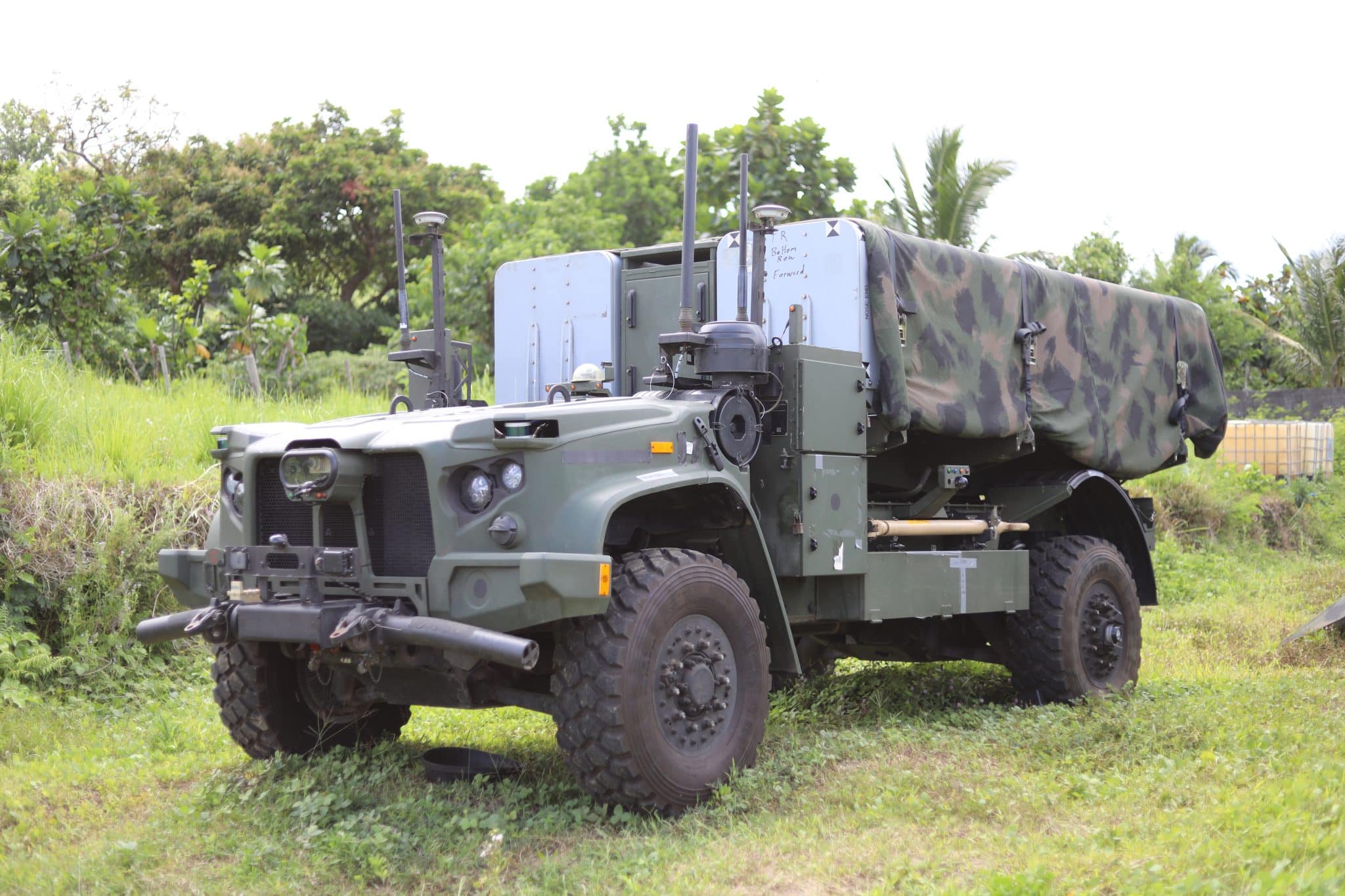
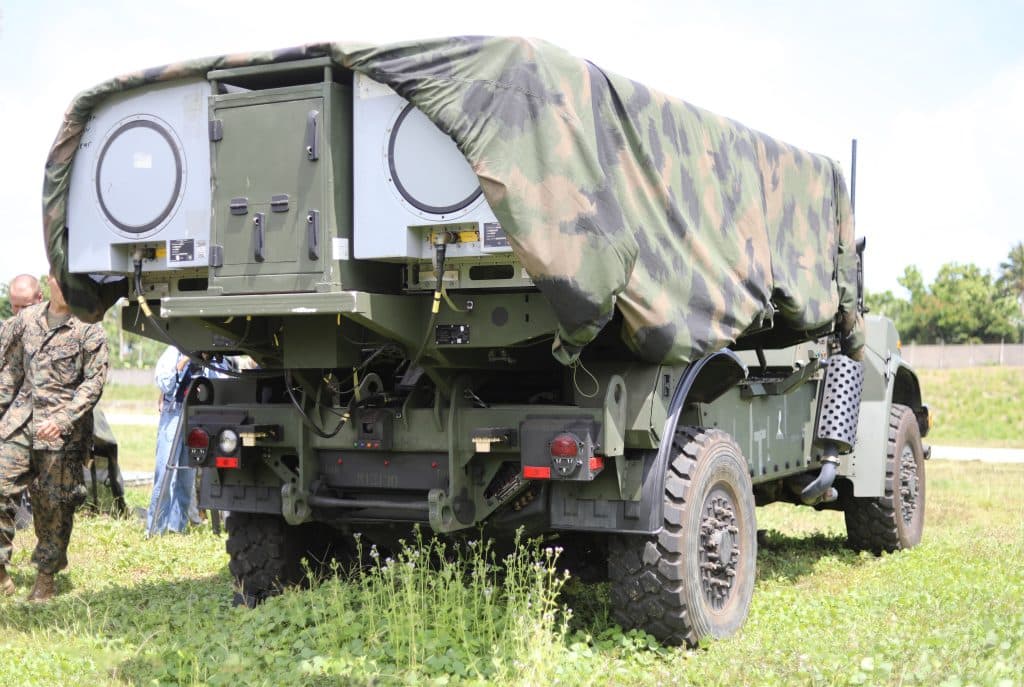
A NMESIS section features three vehicles based on the Oshkosh JLTV 4×4 chassis: the Remotely Operated Ground Unit for Expeditionary Fires (ROGUE-Fires) that carries and fires two Kongsberg Naval Strike Missiles (NSM), a leader vehicle and a command vehicle. Each ROGUE-Fires comprises an unmanned JLTV integrated with Forterra’s AutoDrive offering a self-driving capability.
The 3d MLR was the first USMC unit to receive the NMESIS, which occurred in 2023. These six launchers are allocated to the 3d Medium-Range Missile Battery, but the aim is to eventually increase this to 18 as production continues.
During Balikatan 2026, the USA, Philippines and other partners performed key maritime security operations. This involved moving weapon systems like the HIMARS and NMESIS by USAF Hercules aircraft, or by US Army LCU-2000 landing craft, to remote islands in the Luzon Strait. Once emplaced there, they conducted simulated anti-ship missile launches, before being exfiltrated approximately 72 hours later.

Stoner shared, “Even back home in Hawaii, we regularly rehearse these complex logistics missions with platforms like the army’s Maneuver Support Vessel Light.” However, the Philippines represents a real-world environment, for it forms a critical part of the so-called First Island Chain, an imaginary line running from Japan, down through Taiwan and the Philippines to Indonesia.
In any conflict involving a Chinese invasion or blockade of Taiwan, control of the First Island Chain could dictate success or failure for the People’s Liberation Army (PLA). The US and allies would attempt to control chokepoints such as the Luzon Strait south of Taiwan, and the Miyako Strait north of Taiwan, in order to contain the Chinese navy. The First Island Chain is thus an important containment line, utilising geography to prevent the PLA from breaking out into the Western Pacific. By siting weapon systems like the NMESIS and HIMARS equipped with Precision Strike Missiles on remote islands, the US military could ostensibly prevent the passage of Chinese warships in a contingency.
Staff Sergeant Darren Gibbs, a section chief in the 3d MLR’s Medium-Range Missile Battery, described NMESIS “as an autonomous missile system that’s essentially used for protection of our straits and sea lines”. He said the Balikatan training in Batanes “allows us a different environment than what we normally operate in, so it gives us unique opportunities to actually utilise the system”.
Stoner also commented: “This is our fourth year participating in Balikatan, and as the regiment continues to evolve, this exercise is where we validate our tactics alongside our highly capable regional allies and partners. Last year, we successfully pushed NMESIS out to the Batanes for the first time. This year, we built upon that foundation by emplacing systems across three different islands at Balikatan exercise locations. It’s a phenomenal opportunity to strengthen our partnerships, get reps in employing systems like NMESIS, MADIS and our sensing systems, and really exercise our ability to execute distributed command and control.”
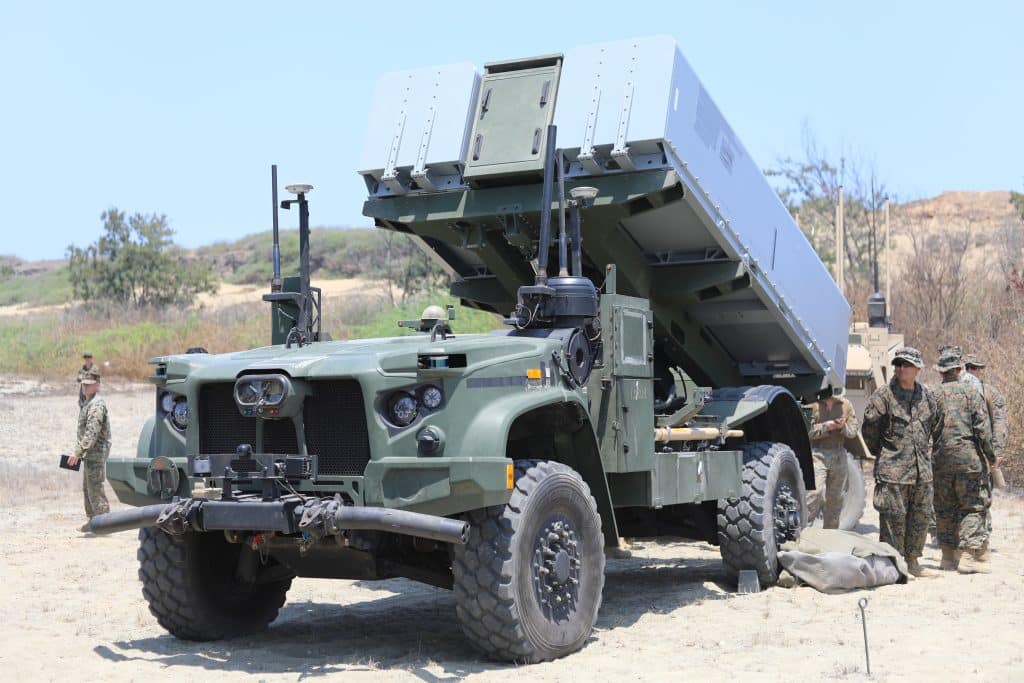
The NMESIS was also present at a maritime strike live-fire event near Laoag in northwest Luzon on 6 May. Although it did not fire an NSM on that occasion, the 3rd MLR provided command and control for a Japanese Type 88 anti-ship weapon system that fired two missiles at a ship target. The NMESIS is yet to fire a missile in the Philippines.
Stoner also told Naval News: “3d MLR is unlike any traditional infantry regiment in the marine corps. The key difference lies in our focus and our toolkit. We’re fundamentally a tactical naval formation, purpose-built and capable of supporting modern maritime campaigns. Alongside a highly capable infantry component, we possess specialised littoral logistics planners, advanced air domain awareness, sensing capabilities and maritime fires. Additionally, our headquarters element is incredibly robust.”
Illustrating its ability to operate from dispersed locations, the 3d MLR had personnel strung across 17 locations in the Philippine archipelago at one point during Balikatan 2026.
The first ROGUES-Fire contract was awarded to Oshkosh in 2022, representing the first semi6autonomous platform fielded by the USMC. Then, on 29 May 2026, the USMC awarded Oshkosh Defense two contracts worth US$92 million for ROGUE-Fires Block 2 vehicles. This signifies that more NMESIS will be joining the USMC through till September 2028.
The upgraded Block 2 platform has enhanced autonomous driving capabilities that can still work in GPS-denied environments, expanded missile integration options, and a more flexible architecture able to support future weapons. The latter includes the Multiple Launch Rocket System family of munitions.
Counter-drone capabilities
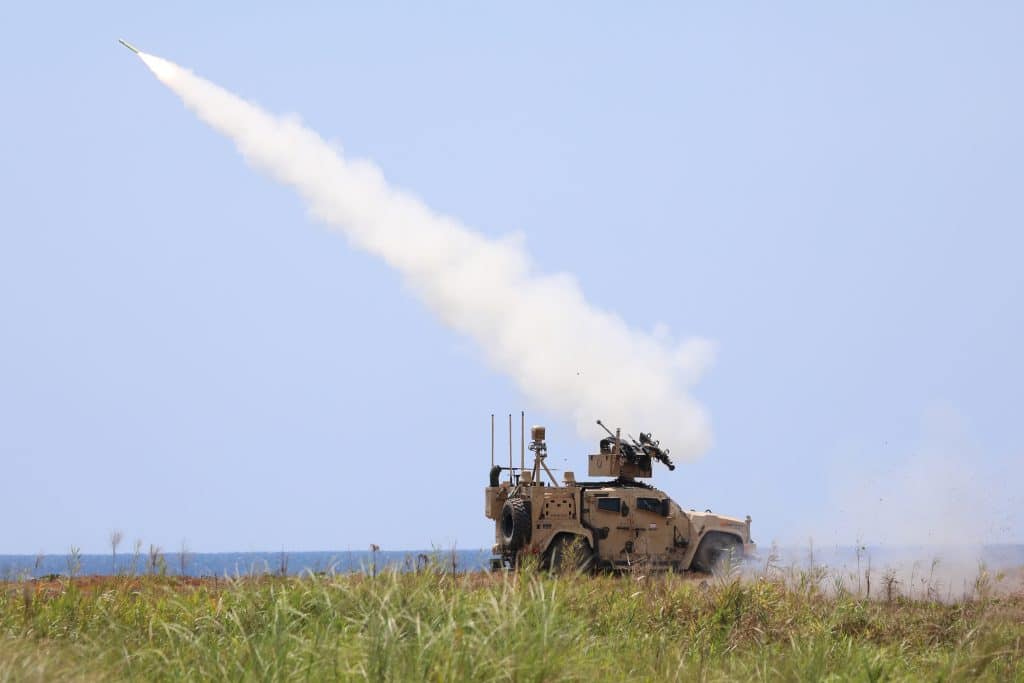
The 3d MLR contains more than 2,000 marines and sailors, and Stoner explained the organisation of the unit. “At the top, we have a headquarters element manned by subject matter experts across all seven joint warfighting functions. Beneath that, we have three main subordinate elements. First is the 3d Littoral Combat Team, built to secure maritime terrain and deliver decisive fires using our NMESIS. In addition, 3d LCT has infantry companies that are notably equipped with newly fielded attack drones as of this year. Next is the 3d Littoral Anti-Air Battalion, which handles our air domain awareness and anti-air warfare utilising the TPS-80 radar and the MADIS. Finally, we have the 3d Littoral Logistics Battalion, specifically equipped to tackle the unique challenges of sustaining operations in a distributed, littoral environment.”
The USMC fielded the MADIS counter-unmanned aerial system (C-UAS) only last year, and Naval News observed the system during an integrated air defence live-fire demonstration in Zambales, Philippines on 28 April. The MADIS again calls upon the JLTV chassis to move around various C-UAS soft-kill and hard-kill elements. A marine explained: “This system, at the end of the day, was primarily made to shoot down drones – small ones to big ones – helicopters and fast jets.”
The first series-produced MADIS was unveiled in September 2025, with 20 delivered by the end of the year. By 2035, the USMC is seeking to field 190 MADIS systems to the 1st, 2d and 3d LAABs, as well as the 3d and 12th MLRs. The MADIS protects manoeuvre elements as well as important assets like the NMESIS. Indeed, at a maritime strike event at Balikatan 2026, a pair of MADIS vehicles provided protection for anti-ship missile launchers.
There are two complementary JLTV-based vehicles in a MADIS section – the Mk1 Stinger variant and the Mk2 C-UAS variant. The first is primarily aimed at neutralising fixed-wing aircraft and helicopters, while the Mk2 focuses on drone threats.
On a Kongsberg-produced roof-mounted turret, the MADIS Mk1 carries two rail-mounted FIM-92 Stinger missiles, a Northrop Grumman XM914E1 (M230LF) Bushmaster 30mm cannon and an M240C 7.62mm machine gun. (There is also a man-portable Stinger launcher for dismounted operations.) Its multifunction electronic warfare system is Sierra Nevada Corporation’s Modi II, plus there is a CACI/Ascent Vision Technologies CM262 optical sensor.


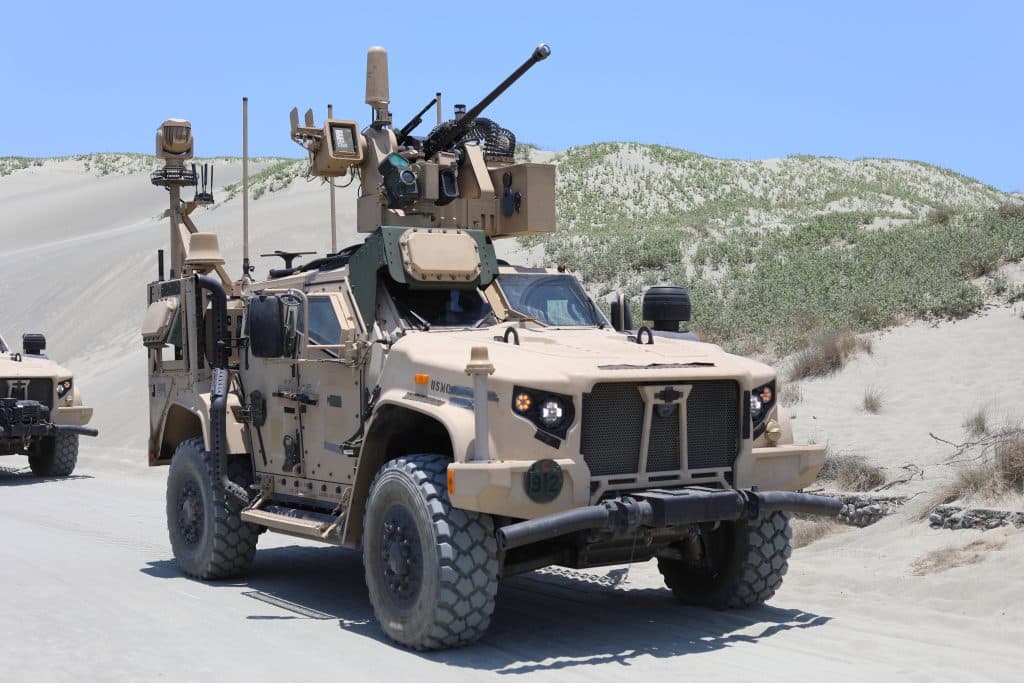
As for the MADIS Mk2, which is more of a command-and-control vehicle, its turret carries a 7.62mm machine gun and 30mm cannon. In addition, it has an RPS-42 Advanced Compact Hemispheric Radar from Leonardo DRS to detect, classify and track drones over 360° of coverage. It has the same Modi II and CM262, plus it has a Mode 5 identification, friend or foe interrogator, and beyond-line-of-sight gateway/server capability.
The USMC is also fielding the Light MADIS (L-MADIS) based on a Polaris MRZR 4×4 all-terrain vehicle (called the Ultra-Light Tactical Vehicle in the USMC) in low-altitude air defence battalions. The L-MADIS is organised with similar Mk1 and Mk2 vehicles, but they do not possess the kinetic capability of their larger JLTV-based brethren. The first ten L-MADIS units were to be fielded this year.
The 3d Littoral Anti-Air Battalion also has the AN/TPS-80 Ground/Air Task Oriented Radar (G/ATOR), of which nearly 60% of planned fielding across the USMC had been achieved by the end of FY2025.
The author witnessed a battery of MADIS vehicles shoot down various kinds of quadcopters and fixed-wing drones in Exercise Balikatan 2026. Staff Sergeant Noah Konien, a platoon sergeant in the 3d Littoral Anti-Air Battalion, enthused about the opportunities the Philippine exercise offered his unit, including firing a Stinger missile against a Banshee target drone. The unit is based on Oahu in Hawaii, so MADIS crews face limitations when live-firing at home.
Asked about future trajectories of USMC MLRs, Stoner responded: “3d MLR operates right at the forefront of the marine corps. We’re constantly evolving as a service to meet the needs of the larger joint force, and we maintain a strong culture of learning that drives us to experiment and find new creative ways to win. The MLR is truly an example of modernisation in action.”
He concluded: “Regardless of specific systems, we’re continually experimenting with advanced sensing capabilities, exploring more survivable command-and-control tactics, and pushing the envelope on multi-domain operations to ensure we remain effective and ready in any situation with our allies and partners in the region.”